
Humanitarians in the Gaza Strip continue to face significant challenges in reaching communities located near the so-called "Yellow Line" in northern Rafah, the UN aid coordination office OCHA said on Tuesday.
This comes a day after the UN and partners consulted with representatives of 17 displacement sites hosting some 3,000 families following reports of movements of Israeli forces and disruptions to humanitarian services in the area.
The Israeli military established the buffer zone following the October 2025 ceasefire agreement with Hamas. Stretching some 45 kilometres, it divides the Gaza Strip in two.
Community representatives reported that the yellow blocks marking the line had moved northward.
They also described daily movements of Israeli tanks, construction of sand embankments, and recurrent gunfire, with families reportedly remaining inside their tents most of the day because they are afraid of being injured by gunfire or stray bullets.
Military activity stepped up
OCHA said humanitarian partners received reports on Tuesday afternoon of intensified military activity in the vicinity of displacement sites near the "Yellow Line," including reported tank movements towards one of these areas.
Initial reports indicated that one Palestinian was killed and three others were injured at one site.
The insecurity is severely disrupting the delivery of essential aid, including water, food, bread, hygiene support and routine site-management services, OCHA said. The agency noted that a water-truck driver was reportedly injured by gunfire last Wednesday.
Across Gaza, 1.1 million children face uncertain access to water every day, according to UN child rights agency UNICEF .
Some 82 per cent of households are water insecure, UNICEF said, while up to 70 per cent of the population is unable to collect the recommended minimum of six litres of water per person per day for drinking and cooking.
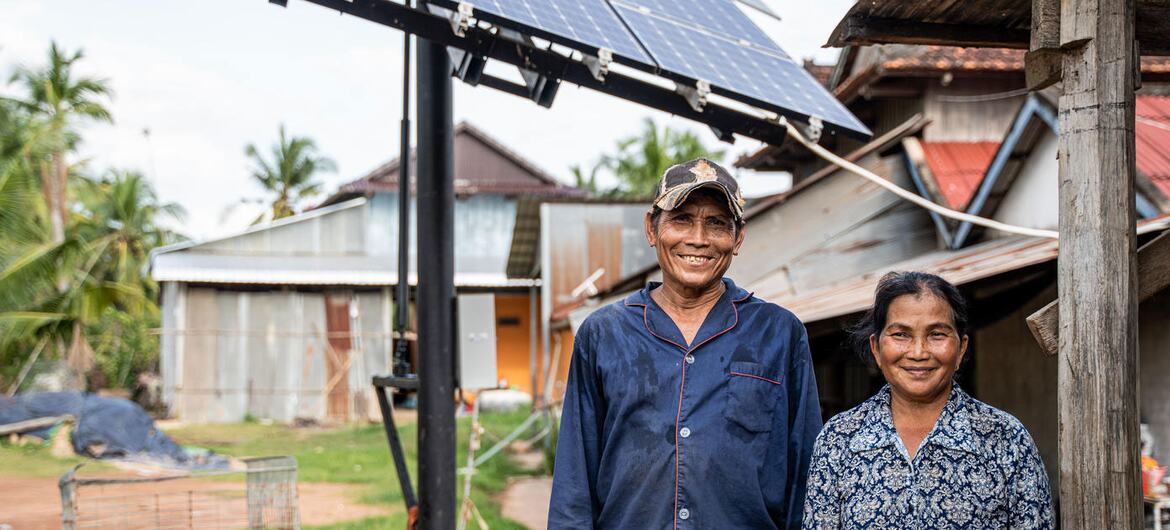
Advancing clean energy shift 'has never been more urgent' as temperatures rise
The global shift to renewable energy "is now unstoppable - but it still needs to move much faster," UN Deputy Secretary-General Amina Mohammed said on Tuesday in remarks to the High-Level Meeting on Critical Energy Transition Minerals.
She stressed that advancing this transition - at speed and scale - has never been more urgent or vital.
"The climate crisis is driving us deeper into planetary overshoot with rising temperatures pushing us closer to irreversible catastrophic tipping points," she said.
Fossil fuel 'folly'
"At the same time, a global energy crisis is exposing the folly of a world still hooked on hydrocarbons, with limited access to cleaner fuels for the poor, and accelerated destruction of our natural systems, pushing ecosystems to the brink," she added.
Ms. Mohammed pointed out that these crises have one common cause-fossil fuels.
She underscored that they demand the same answer, namely "a fast, fair and inclusive transition to clean energy, along with shared benefits from decarbonisation, and a surge in adaptation finance, resilient infrastructure and climate justice for those already facing climate harm."
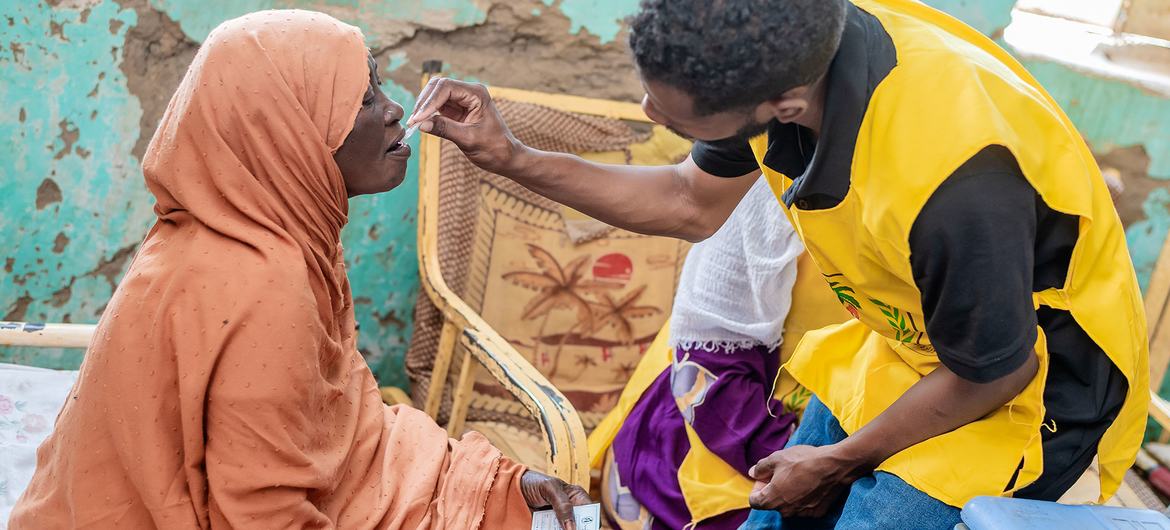
Sudan cholera outbreak expands amid multiple drone attacks
Cholera continues to spread in Sudan as new drone attacks endanger both civilians and humanitarian operations, the UN aid coordination office OCHA said on Tuesday.
Multiple drone attacks have been reported across the Darfur and Kordofan regions, the agency said in an update .
Humanitarian partners reported that on Sunday, a drone reportedly struck a fuel station in the Al Malaja area of El Obeid, capital of North Kordofan state.
That same day, a drone also struck several trucks traveling in North Darfur along the road between El Fasher and Um Kadada. A separate drone attack resulted in civilian casualties in Kubum town in South Darfur state.
The strikes are happening as cholera continues to spread to new areas in Darfur and Kordofan.
More cholera cases emerge
New cases reportedly were confirmed in Kampala displacement camp in South Darfur, OCHA said, while Tawila locality in North Darfur reported its first suspected case.
"In West Kordofan, which has seen the highest number of cases, six new suspected cases and two associated deaths had been recorded by health partners, while in North Kordofan, 32 new suspected cholera cases were reported on Sunday in Gharb Bara locality," the agency added.
The outbreak is unfolding as the war in Sudan rages on. As of 7 July, there were 1,330 confirmed cases and 114 deaths, according to the World Health Organization ( WHO ).
Sudan faced a major cholera outbreak around the same time last year that resulted in more than 80,000 suspected cases and over 2,000 associated deaths.
Meanwhile, the UN and partners continue to pre-position supplies and scale up their response. For example, UNICEF delivered essential health supplies to El Fula in West Kordofan on 12 July that will support nearly 430,000 people.
OCHA again called for the protection of civilians and civilian infrastructure, while underscoring the need for rapid and flexible funding for humanitarian operations.


