
The fragile ceasefire in the Gaza Strip is making a difference to the lives of over a million children, and improving overall access to food - but more aid still needs to enter.
That's the assessment of two senior officials from the UN Children's Fund ( UNICEF ) and the World Food Programme ( WFP ), speaking on Monday to journalists in New York following a week-long visit to the enclave and the occupied West Bank.
The two agencies have brought more than 10,000 trucks of aid into Gaza since the 10 October truce between Israel and Hamas, representing some 80 per cent of all humanitarian cargo.
Famine reversed
Three months later, "the food security situation has improved and famine has been reversed," said Ted Chaiban, UNICEF Deputy Executive Director, Humanitarian Action and Supply Operations.
Carl Skau, WFP Deputy Executive Director, added that most families he met "were eating at least once a day" - sometimes twice.
Commercial goods have reappeared in Gaza's markets, including vegetables, fruits, chicken and eggs. Recreational kits to help children heal from the stress and trauma of two years of war are now in their hands.
'These gains matter'
UNICEF and partners have provided more than 1.6 million people with clean drinking water and distributed blankets and winter clothes to 700,000. They have also restored essential life-saving paediatric intensive care services at embattled Al Shifa Hospital in Gaza City.
The second round of a Gaza-wide "catch-up campaign" for routine childhood vaccinations is currently underway, while another 72 UNICEF-supported nutrition facilities have been established, bringing the total to 196.
"These gains matter," said Mr. Chaiban. "They show what is possible when the fighting pauses, political commitments are sustained and humanitarian access opens."
Hot meals and school snacks
WFP has also scaled up massively over the past 100 days, said Mr. Skau, speaking from Rome. Teams have reached more than a million people every month with full rations for the first time since the war began.
They are "serving 400,000 hot meals every day and delivering school snacks to some 230,000 children in 250 temporary learning centres," in addition to operating hundreds of distribution points and some 20 warehouses.
Other humanitarian organizations are bringing in tents, blankets, mattresses and other essentials thanks to WFP's shared logistics services.
The agency is also helping to facilitate more regular aid convoys and is expanding common storage facilities so that more aid can be positioned closer to the population. It has also ramped up cash support to roughly 60,000 households.
Situation still deadly
Although more aid is entering Gaza, quantities are not yet sufficient to meet the immense needs. Furthermore, "the situation also remains extremely precarious and deadly for many children," said Mr. Chaiban.
"More than 100 children have been reported killed in Gaza since the ceasefire of early October. Despite the progress with food security,100,000 children remain acutely malnourished and require long term care. 1.3 million people, many of them children, are in urgent need of proper shelter."
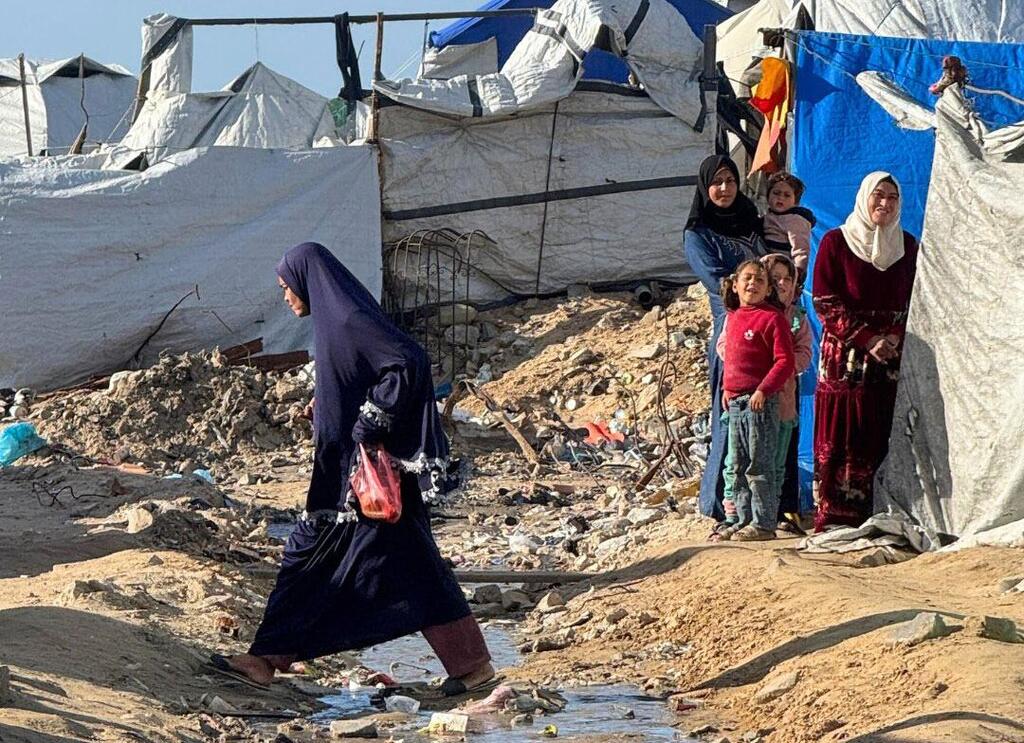
Families are shivering in fabric tents and bombed-out buildings amid freezing temperatures that have killed at least 10 children this winter season.
Mr. Sklau met a young woman with a 10-day-old baby who "was sitting on a wet mattress in this cold tent on the beach," describing their plight as "just absolutely brutal."
Hopes for a brighter future
Yet hope blossoms in the Gaza Strip. UNICEF and partners are supporting over 250,000 children to resume learning - a critical element to mental health and psychosocial support for more than 700,000 students who have been out of school for two years.
Mr. Skau recalled a conversation with young girls at a temporary learning space who "were happy to be back learning and eating more regularly," he said.
"They could see a future again as nurses or engineers or restaurant owners, and they seemed impressively confident and determined to build a future for themselves."
Change the trajectory
Humanitarians need essential items - such as water and sanitation provision, as well as educational supplies - to be allowed to enter Gaza which can help jump start recovery and reconstruction.
Mr. Chaiban said WFP and UNICEF are ready to scale up operations.
"The children of Gaza and the State of Palestine including the West Bank, which is also experiencing a wave of violence do not need sympathy. They need decisions now that give them warmth, safety, food, education, and a future," he said.
"We have an opportunity, a window, to change the trajectory for these children. We can't waste it."


