
From "Why are you making statements on Gaza?" to "Why are you campaigning to tax the super-rich and against private jets" to questions about Greenpeace's stance on meat and dairy consumption and "overpopulation" and the persistent question of what individual actions and habits can help combat climate change and biodiversity collapse. These are the top 5 questions Greenpeace frequently received in social media comments in 2025 - and their answers.
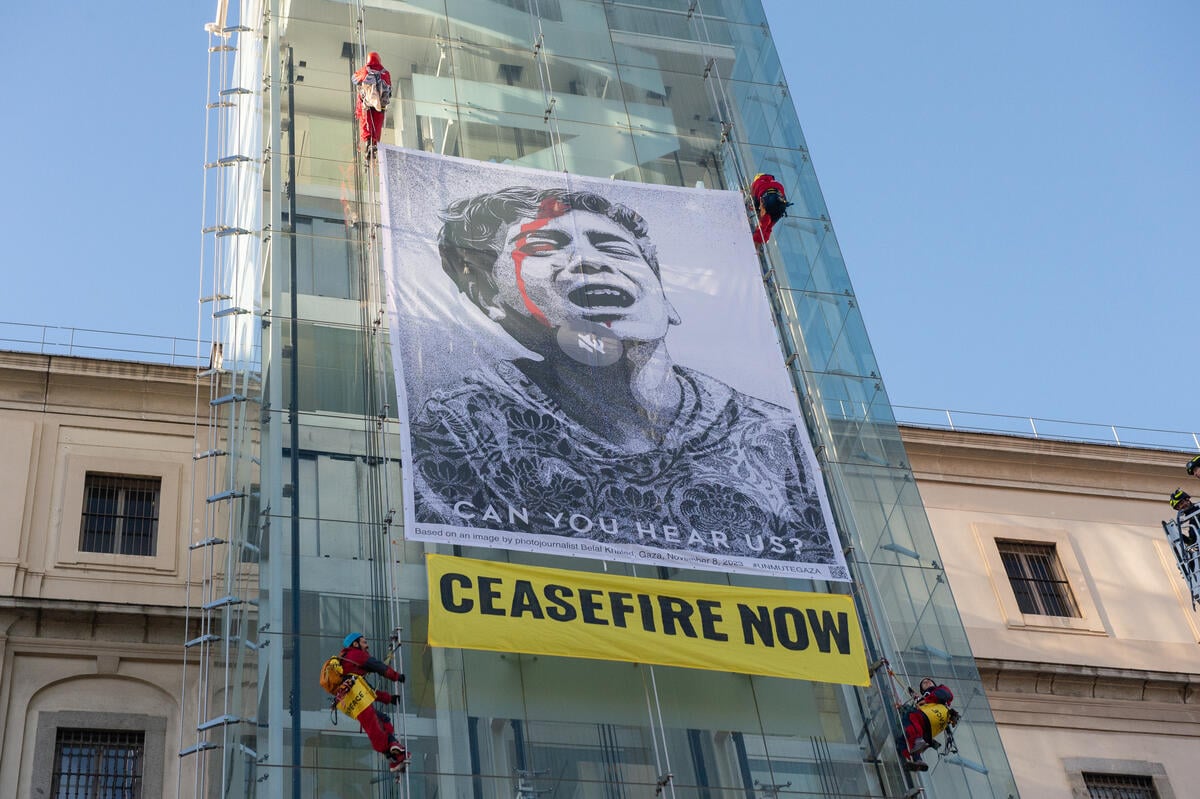
1. Greenpeace, why are you commenting on wars/conflicts like Gaza? Stay in your lane!
We stand against war crimes, 'manmade' famine, ethnic cleansing, genocide and ecocide - defending human rights and protecting the conditions for all life go hand in hand.
Founded 50 years ago to stop the testing of nuclear weapons, the name "Greenpeace" represented the intersection between peace and ecology movements, and the vision of a green, just and joyful future for all life on Earth.
It is part of our mission to "promote peace, global disarmament and non-violence." We understand that we are a part of, not apart from, nature. What we do to nature we do to ourselves and what we do to each other we do to nature. We pursue peace to protect people and our shared home.
A peaceful world is one built on cooperation, community and connectivity, where we can all enjoy our right to a safe and healthy environment and live life free from violence and fear.
Greenpeace has always, and will remain, an organisation that campaigns for peace.
We know the environmental impact of war is catastrophic, with the collapse of infrastructure, widespread, long-term degradation of ecosystems and profound risks to human health. A toll that persists for generations after the conflict ends, leaving a legacy of contaminated landscapes and exposed communities.
In Gaza, Israeli airstrikes have set fuel depots ablaze and destroyed sanitation infrastructure - dumping raw sewage into the sea and polluting local water sources. Bombing and explosions have flattened farmland and left rubble, toxic dust and hazardous debris across entire neighbourhoods.
A catastrophe for human health and the environment, carbon emissions from the first 15 months of Israel's war on Gaza exceed the planet-heating emissions of more than 100 individual countries, exacerbating the global climate emergency on top of the huge civilian death toll.

Power struggles over energy resources have been a conspicuous factor in fossil fuelled wars from Iraq to Sudan and Ukraine. Greenpeace will continue to speak out on the cost of such conflicts. We call for urgent action to protect human rights, people's health, the environment, and the climate. And to invest in safe, secure renewable energy systems for all.
2. Why are you campaigning for taxing the super-rich and banning private jets?
We believe in a world where everyone is safe, secure and free to thrive on a green, liveable planet. A world where every family can put food on the table and look ahead to a hopeful future. But we live in a world where a minority - the richest 1% - are responsible for more emissions than 66% of the world's population, polluting and plundering the planet for their own gain. According to Oxfam, these wealthiest 1% own more wealth than 95% of the world's population but reportedly contribute just 0.3% in taxes.
Instead of hoarding wealth, trashing the planet and destroying nature, if the super-rich paid their fair share in taxes, there would be enough money for a green and fair world for all.

The money for health, education, climate action, and nature protection is there, it's just in the wrong hands. Which is why we urge governments to tax the super-rich and support fair global tax rules to protect the future of people and the planet and reduce inequalities.
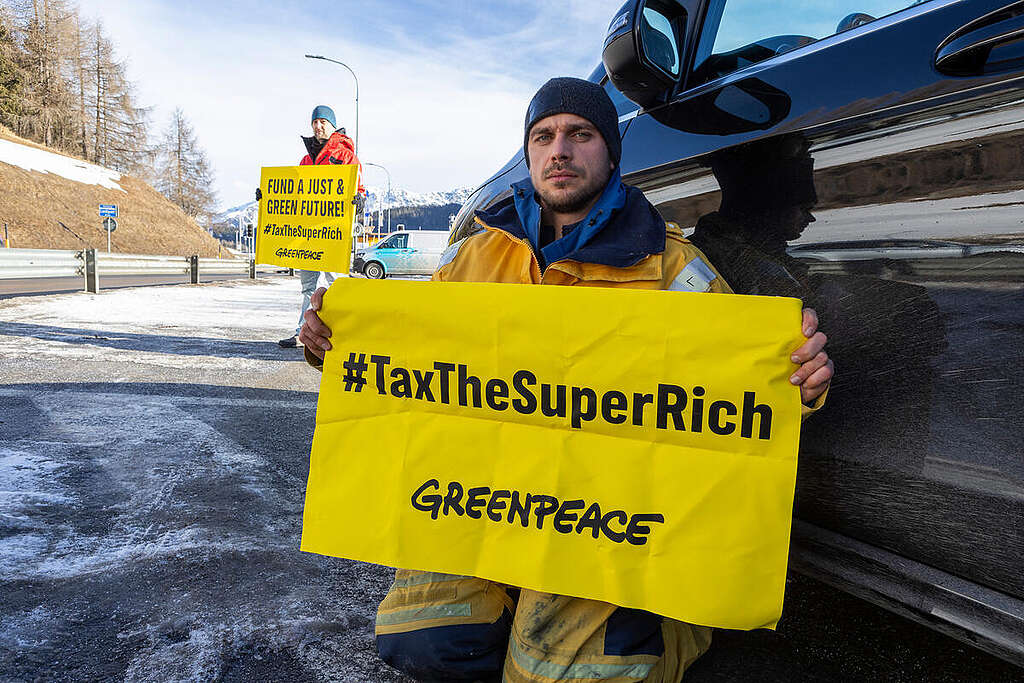
Together, let's urge governments to tax the super-rich and fund a green and fair future.
Why ban private jets? They are the epitome of said inequalities. They are used by a tiny ultra-wealthy minority, while the environmental costs affect the entire planet, especially the most vulnerable communities.
Private jets are the most polluting form of transport. They have a disproportionate carbon footprint. A private jet flight causes about 10 times more CO2 emissions per person than a regular commercial flight and 50 times more than a train. The excessive, non-essential emissions contribute to the accelerating climate crisis.

Private jets are wasteful and unsustainable. They are inherently inefficient, typically carrying a small number of passengers while consuming vast amounts of fuel. Flying short distances, which many private flights do, is particularly fuel-inefficient. Banning private jets would be a powerful demonstration of commitment to tackling the climate crisis and sends a clear message that "luxury emissions" are no longer acceptable.
Only 1% of people are responsible for half of global aviation emissions, the vast majority of people (80%) have actually never flown. The aviation industry invests in greenwashing and false solutions to appear as a beacon of climate protection but the truth is flying remains the most climate-damaging means of transportation per passenger and per kilometre. While air travel benefits from unfair tax privileges, train travel is penalised and this needs to change.
This is an issue of social and climate justice, as the polluting lifestyle of the super-rich and the footprint of their destructive investments contrasts starkly with the reality of billions who have minimal carbon footprints but face severe climate impacts.
3. Why are you not saying anything on 'overpopulation'?
'Overpopulation' is a distracting myth that takes the focus away from the real, solvable problem: Overconsumption.
Some people suggest that the best (or only) way to reduce the damage humans do to the environment is to reduce the human population. But the evidence shows that wasteful overconsumption - driven mostly by the richest people and societies - causes far more damage. From a moral and practical perspective, it's also a much easier problem to solve.
Many of the people who raise concerns about population are well-intentioned. But the idea that 'overpopulation' is causing climate change is inaccurate, and unfairly places blame on poorer societies in the Global South. These societies have faster-growing populations, but much lower consumption. This argument also diverts attention from the much greater responsibility of richer societies in the Global North to reduce their emissions.
Because most people in the Global South are people of colour, there is a racial justice dimension to the population control argument. Regardless of the intention, it can reinforce racist attitudes and feed long-standing racial inequality and injustice.
"Population control" is not a solution to the climate and nature crisis. Campaigning for "population control", while doing little to propose reductions in consumption in the richest countries and address the extreme inequality crisis, would be unfair and ineffective. Instead, Greenpeace campaigns to stop the overconsumption of plastic, fossil fuels, and industrial meat, and we fight for a fair and fossil free global economy.
4. What are the most impactful things I can do to combat climate change and biodiversity collapse?
You can't make every change, and that's okay. Focus on what you can do while remembering that governments must rein in polluting corporations for real change. The most impactful actions include:
- Food: Switching to vegetarian or vegan diets and shifting towards plant-based production can dramatically cut emissions and pollution and free up land from factory farming. We must collectively call out industrial meat and dairy giants for driving deforestation and biodiversity collapse, and push leaders to break Big Ag's grip on our climate and our future - and build a just food system that supports farmers, respects animals, and delivers healthy food for all.
- Plastic: Keep recycling but also try reducing your use of plastics (which can protect you against microplastics' health impacts), and demand a strong Global Plastics Treaty to drastically cut plastic production and boost refill and reuse systems, protecting marine life.

- Transport: Choose trains, buses, cycling, or walking over cars, ships, and especially planes to reduce reliance on oil, air pollution, and climate breakdown. Governments must invest in affordable, low-carbon alternatives. Transport makes up 60% of oil demand globally. Support the movement for greener, fairer transport systems.
- Tech and Digital: Extend the life of your devices by repairing, buying second-hand, or swapping to reduce demand for critical minerals and mining (read more in Greenpeace's guiding principles on minerals for energy transition). Encourage energy transition solutions that increase technological efficiency and generate new mineral supply through recycling old products. Be mindful of the environmental impact of AI's high electricity and water demands and hold tech giants accountable for their harmful practices.

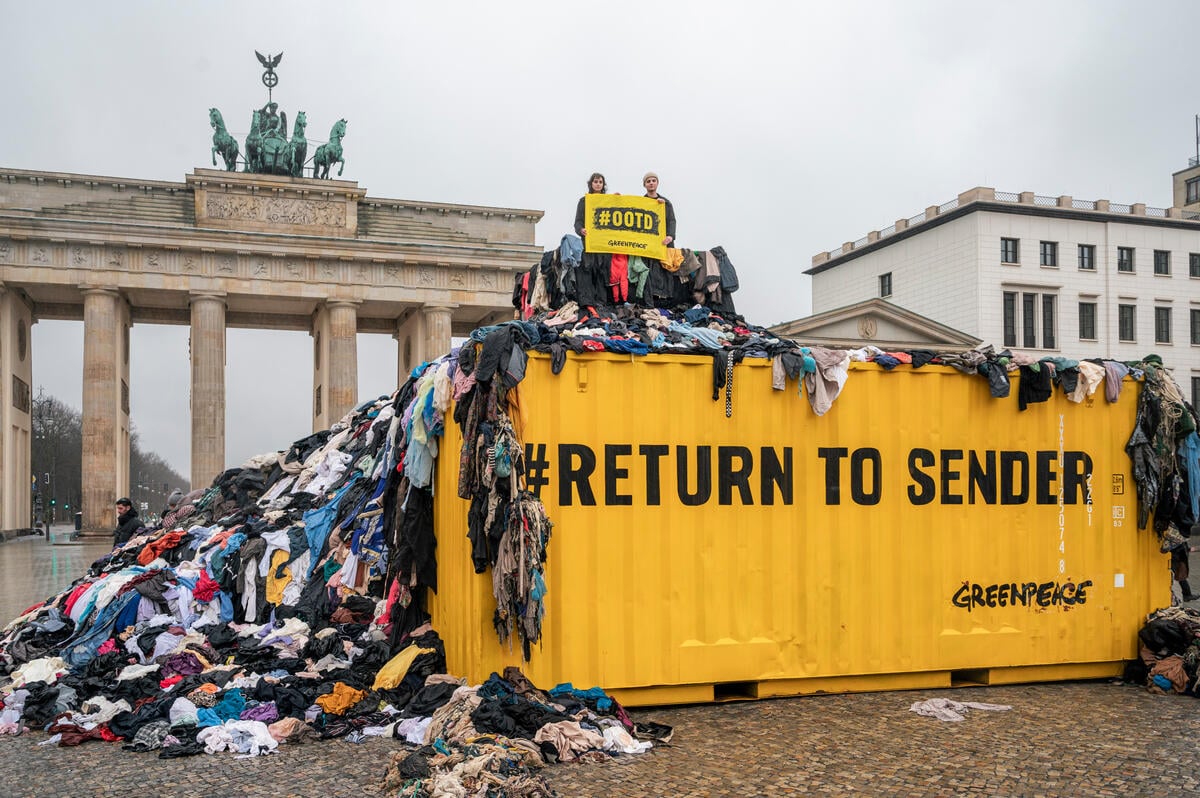
- Clothing: Buy fewer new clothes, repair what you have, and choose second-hand to cut the demand for materials that pollute water and destroy habitats. Fast fashion will never be green. Systemic change requires calling out fast fashion giants for their environmental and human costs.
- Energy at Home: In wealthier countries, improve insulation and switch to renewable energy suppliers. Everyday steps like turning off lights and using efficient appliances also help. Governments must invest in affordable, energy-efficient housing and community renewables.
Ultimately, individual actions matter, but the biggest impact comes from joining forces through online mobilisations (e.g. petitions), protests, community organising, and voting to pressure leaders and hold corporations accountable.
5. What's Greenpeace's stance on meat and dairy consumption?
Greenpeace has been exposing the links between industrial meat and dairy production and deforestation for more than 20 years, beginning with the Eating Up the Amazon report in 2006. It revealed that about 80% of the world's soya harvest is used for animal feed and that this demand was driving large-scale destruction of the Amazon rainforest.

Since then, Greenpeace organisations around the world have continued to investigate and expose the harmful practices of meat and dairy giants such as JBS, Fonterra, Arla and Danish Crown, companies repeatedly linked to deforestation, land grabbing and other environmental damage.
Industrial meat and dairy are among the main drivers of climate breakdown and deforestation. To protect people and the planet, we need to stop the expansion of these industries, end destructive factory farming and support farmers through a fair transition toward more sustainable food systems. Our fight is against polluting corporations and broken policies, not individuals.
At the same time, we cannot ignore the consumption side. Reducing meat intake or shifting towards plant-based diets is one of the most effective ways to act for the climate, forests and biodiversity. The science is clear: without reducing production and consumption, the world cannot stay within the 1.5 °C climate limit.

Greenpeace analysis from 2020 found that Europeans eat about twice as much meat as the global average and almost three times as much dairy. To tackle farming's contribution to climate breakdown, EU meat consumption would need to fall by around 70% by 2030 and 80% by 2050.
The Less is More report shows that eating less than 300 grams of meat per week and shifting to more plant-based foods could save millions of lives each year while significantly cutting emissions. Greenpeace calls for global meat and dairy production and consumption to be cut in half by 2050 to keep the Paris Agreement within reach.
Learn more about the intensive livestock industry, and how their actions are cooking the planet.
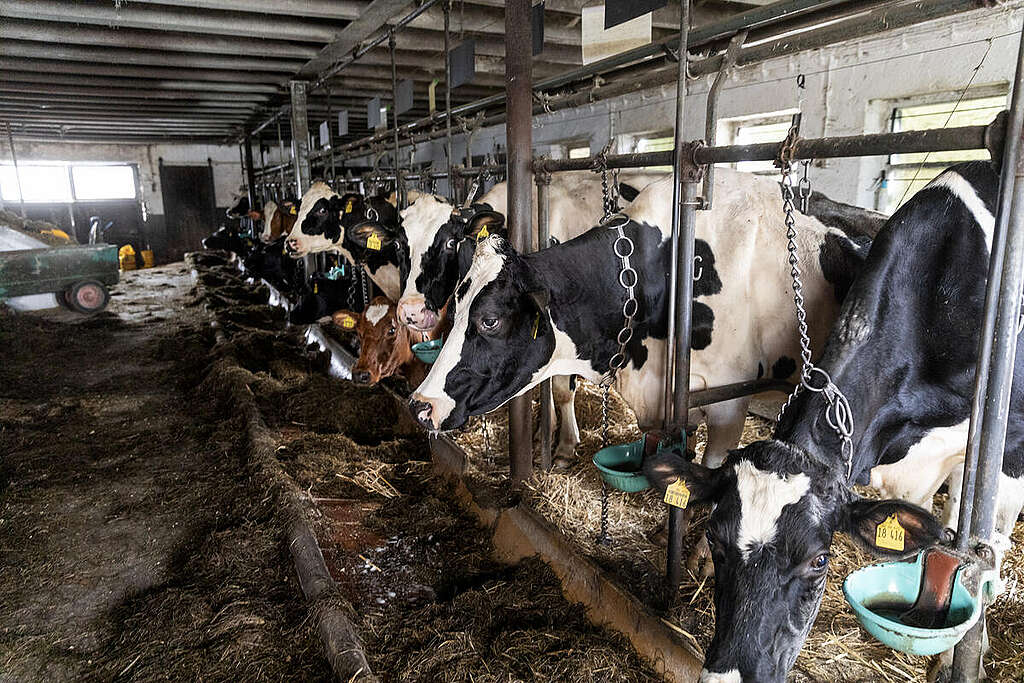
It's time to cut through corporate lies, cut agriculture emissions and shift towards sustainable agroecology.
Yousra Rebbani and Mehdi Leman are content editors for Greenpeace International, based in Hungary and France.


