
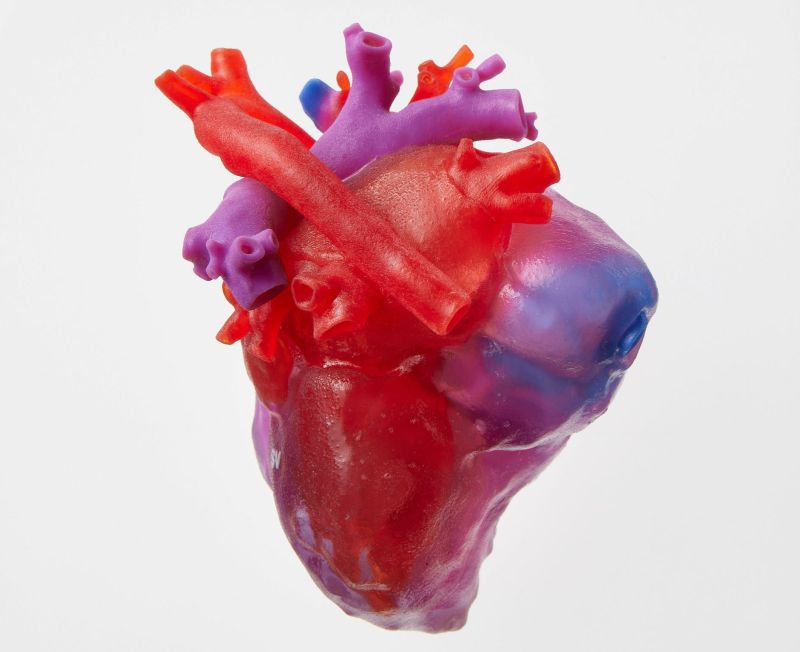
University of Melbourne design experts and Royal Children's Hospital (RCH) heart specialists have collaborated to create the world's first anatomically accurate set of three-dimensional paediatric heart models.
The innovative project, called Heartrium, is now in use at the RCH helping families better understand complex congenital heart conditions that often require surgery in infancy.
The project solves a long-standing challenge that paediatricians face when trying to explain the intricacies of a child's heart condition. Each colourful model is based on real heart scans and can be held in the palm of the hand.
Every year, an estimated 2,400 Australian children are born with a congenital heart condition. These diagnoses can be overwhelming — and until now, explanations were often delivered through hard-to-understand diagrams and hand drawn sketches.
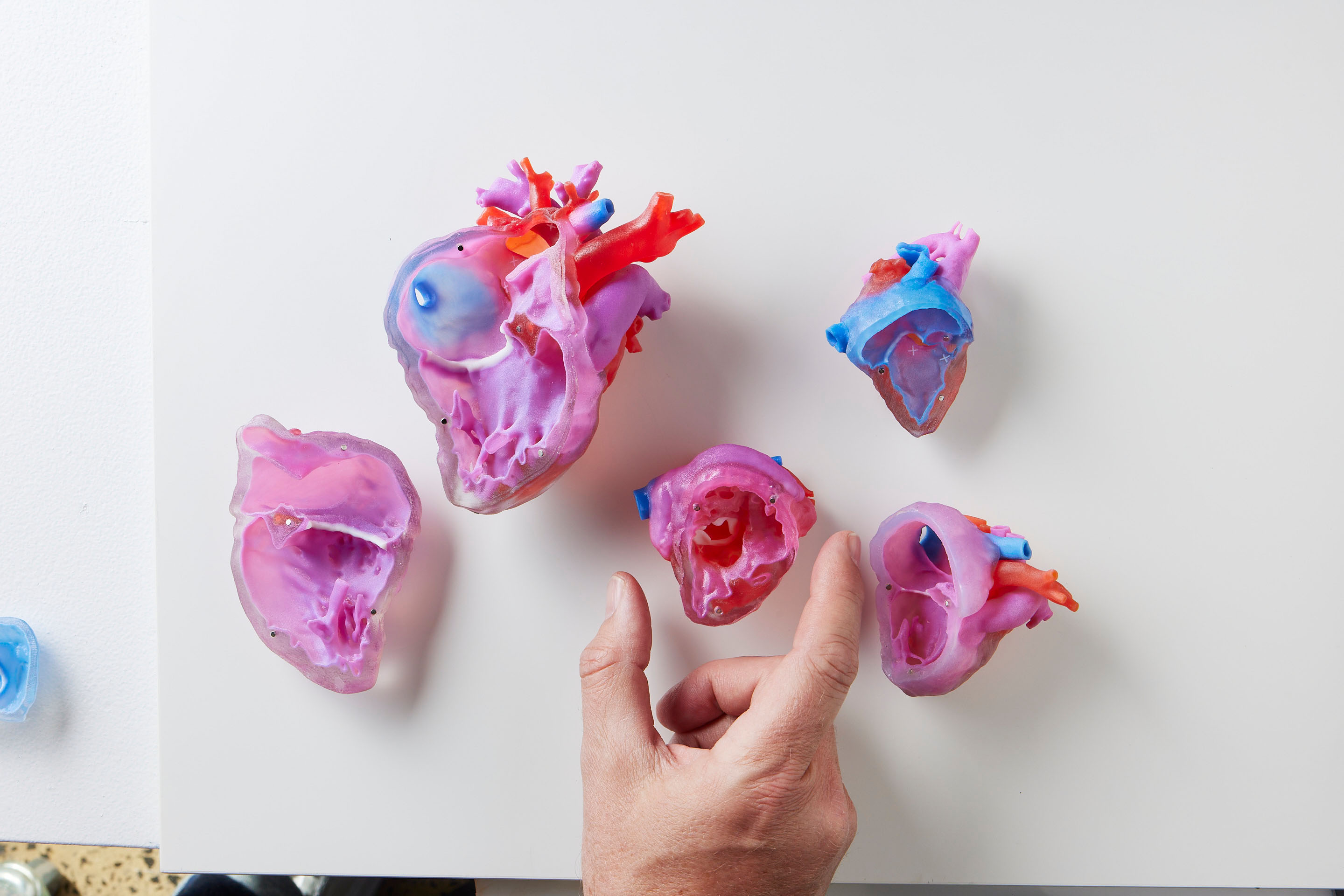
World's first anatomically accurate set of three-dimensional paediatric heart models. Image Supplied by Heartrium.
Heartriummodels — developed by a cross-disciplinary team of experts and led by University of Melbourne Associate Professor Rochus Hinkel and Dr Charles Larson, Paediatric Intensive Care Specialist at the Royal Children's Hospital — allow families to touch, explore and understand their child's condition.
"These are the most accurate paediatric heart models ever created," said Associate Professor Hinkel. "Parents are absorbing complex, frightening information at a time of immense stress. By giving them a tactile model and a clear visual map, we replace confusion with understanding — and support more empowering conversations."
The life-size models fit in a briefcase and can easily be used at the bedside, on the ward, or in teaching.
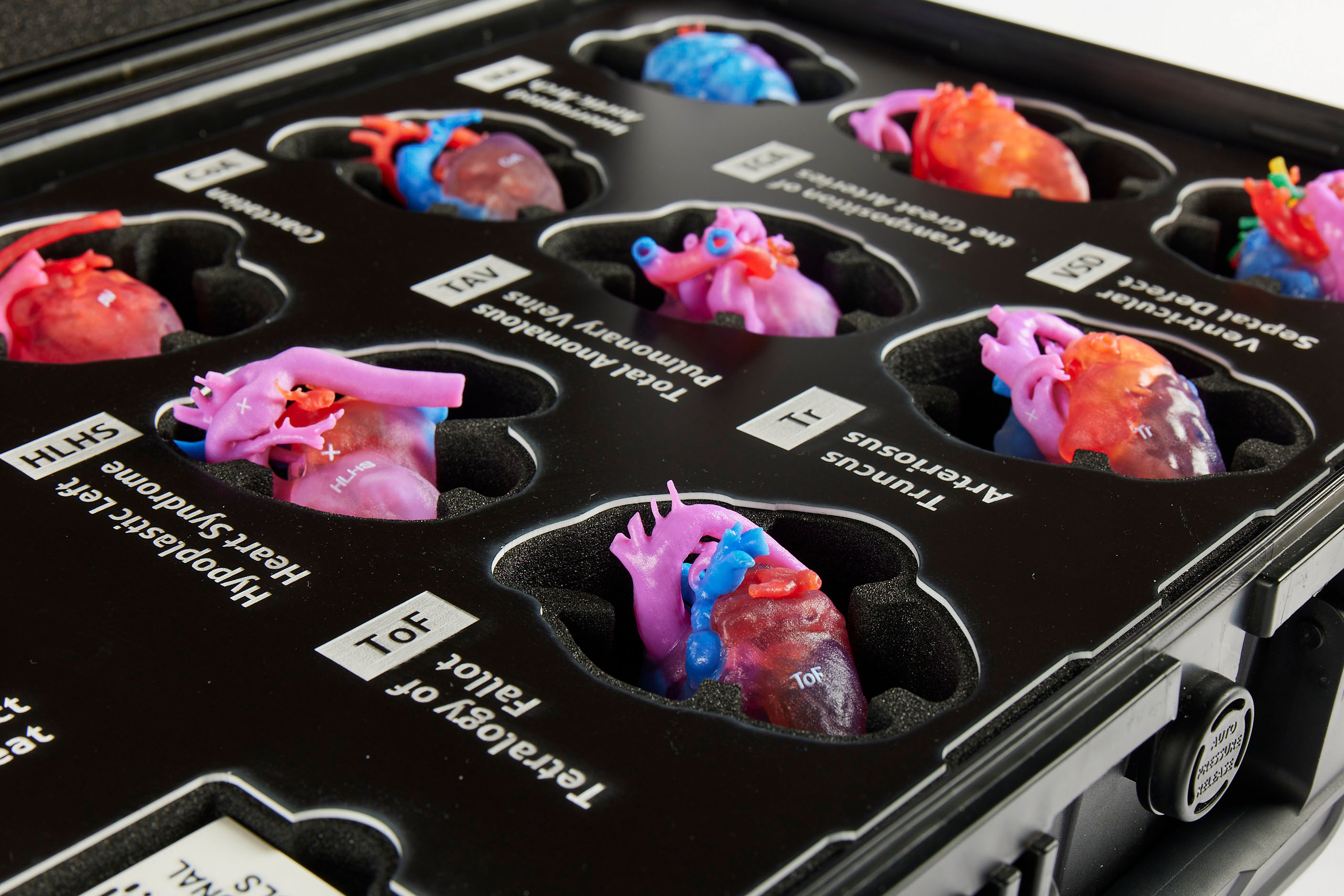 Image Supplied by Heartrium.
Heartrium was designed through advanced digital design and fabrication processes at the University's New Experimental Technology Lab, capturing tiny structures in infant hearts with exceptional precision.
Dr Larson said the colour-coded models would be invaluable to all clinicians.
"These hearts allow us to explain conditions in a way families immediately grasp," Dr Larson said. "They can point to the area of concern, turn it over in their hands, and build confidence before surgery or treatment."
One family to benefit from the models during their development were Tamina and Goran Petrusev, and their 13-month-old daughter, Lili.
During a routine pregnancy ultrasound, Lili was found to have hypoplastic left heart syndrome, a condition where the heart forms abnormally before birth, and the left side of the heart is severely underdeveloped and unable to pump.
When Lili was born, she was immediately started on lifesaving medication and transferred to the RCH.
After her second surgery at just three months of age, Lili became critically unwell and needed machines to support her weakened heart.
Tamina said: "Being able to hold the 3D model and see just how small the left ventricle took my understanding of Lili's heart condition to a whole new level."
For Goran, "seeing the heart and scale helped me understand. I felt calmer afterwards".
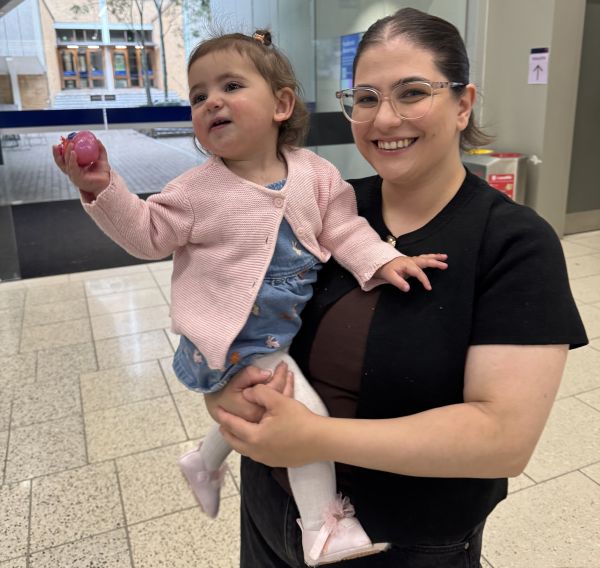 Lili and her mother, Tamina.
At the time, the kit had no model representing Lili's particular stage of surgery. Her parents generously agreed to let the team scan her heart so that a new model could be made to help other families understand the condition.
In addition to helping hundreds of families undergoing heart surgery every year at the RCH, Dr Larson expects the kits to become a powerful tool for training junior doctors, nurses, and enhancing communication between multidisciplinary care teams in hospitals globally.
The project is supported by The Royal Children's Hospital Foundation and Finnan's Gift. After losing their son, Finnan, to congenital heart disease in 2011, Olympic gold medalist Alisa Camplin-Warner and her husband Oliver Camplin-Warner created Finnan's Gift to honour his memory and to help enable better outcomes for other patients and their families. To date, the charity has funded fifteen years of transformative cardiac care projects at The Royal Children's Hospital.
"This project embodies everything Finnan's Gift stands for — excellence, game changing innovation, tangible outcomes, and providing families with clarity and compassion when they need it most," Ms Camplin-Warner said. "It has the potential to set a new global standard for paediatric cardiac care and education."
Heartrium is supported by the University's Research Innovation and Commercialisation (RIC) and the Translating Research at Melbourne (TRAM) teams to spin-off as a social venture to be able to provide service and products globally.


