In a village in eastern Democratic Republic of the Congo (DRC), health workers arrived a few days ago to help bury a person who had died from Ebola. Instead, they were threatened, told armed rebels would be called if they stayed, and forced to leave.
The family carried out the burial themselves - potentially exposing dozens more people to the virus.
The incident offers a stark illustration of one of the biggest obstacles facing efforts to contain the latest deadly epidemic, which has infected 381 people and claimed 64 lives in DRC as of 3 June.
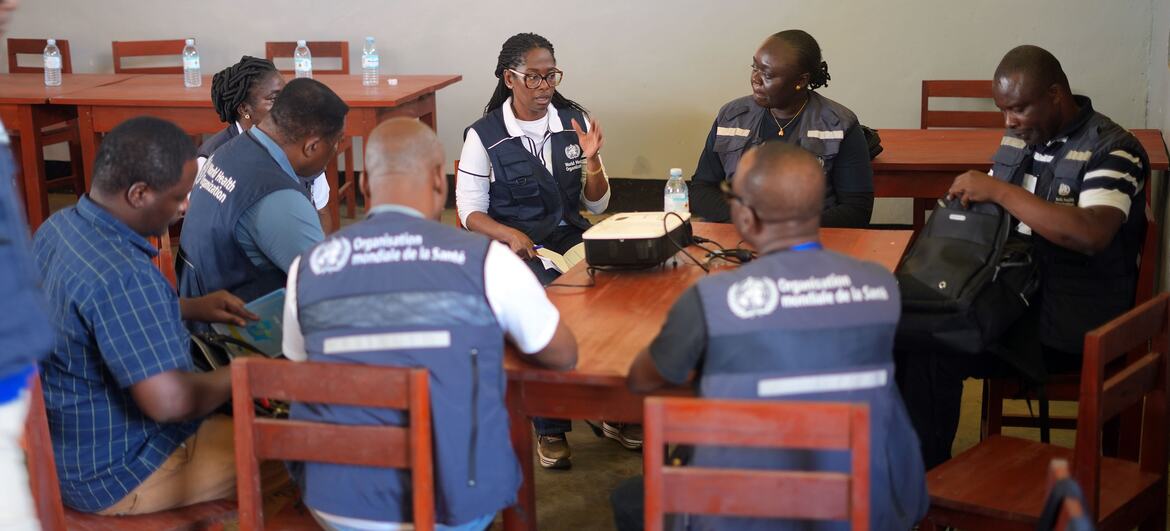
For Marie Roseline Belizaire , the World Health Organization's ( WHO ) Emergency Preparedness and Response Director for Africa, the most challenging part is not always the virus itself - it can be sitting with families who believe the disease is caused by witchcraft, persuading traditional healers to work alongside health teams or health teams returning to communities that threatened them - only days earlier.
"We are not trying to overcome their culture," she said. "We're trying to involve the science in their own belief."
Progress, but not yet control
The outbreak, caused by the rare Bundibugyo strain of Ebola virus - for which there is no vaccine or treatment - continues to spread in eastern DRC while cases have also been reported across the border in Uganda.
Speaking to UN News from Bunia, in Ituri province, Dr. Belizaire said the response has made significant gains in recent weeks, particularly in testing capacity.
At the start of the outbreak, laboratories could process about 40 tests a day. That capacity has now expanded to 800 daily tests, allowing suspected cases to be confirmed or ruled out much more quickly.
"All the tests that we are receiving, we are rolling them out at the same day, almost," she said. "The time to expect your result has been reduced. Twenty-four, maximum 48 hours you have the result."
Community alerts are first investigated in the field, with those meeting the outbreak's case definition tested and either confirmed or ruled out - allowing suspected cases to be cleared from the system more quickly than at the start of the outbreak.
Firmer trace
Contact tracing rates have improved from around 25 per cent to 45 per cent, but that remains far below the 90 to 95 per cent coverage needed to effectively contain transmission.
"We still have a lot of challenges," she said, adding that the outbreak's regional dimensions remain a concern.
Uganda has recorded 15 confirmed cases and one probable case linked to the outbreak. One Congolese national also travelled through the United Arab Emirates before arriving in Uganda, highlighting how quickly infectious diseases can move across borders.
"When there is an outbreak and you have mobility, it is always a concern," Dr. Belizaire said, stressing however that mechanisms such as WHO's International Health Regulations help countries share information rapidly and coordinate responses.
Trust in public health
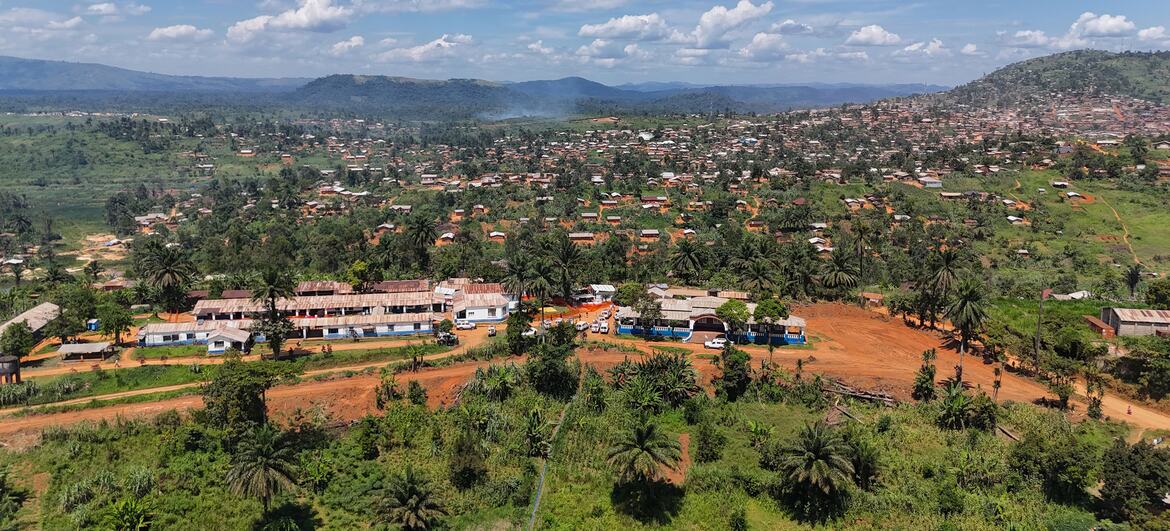
For WHO teams on the ground, one of the most complex tasks is building trust. Many communities in affected areas have experienced years of conflict and insecurity. Cultural beliefs and misinformation can also shape how people interpret illness and death.
"The disease symptoms are very malaria-like in the community," Dr. Belizaire explained.
Some families attribute deaths to witchcraft or poisoning rather than infection.
Health workers therefore focus on coexistence rather than confrontation.
"We don't stop them to believe in witchcraft, to believe any other things in their culture," she said. "We just ask them to simultaneously believe in the disease existence also."
Ancient and modern
Traditional healers are also being engaged as partners rather than excluded.
"We don't stop them going to traditional healers," she said. "We ask [the healers], if you see someone with those symptoms, refer it also to us."
The approach reflects lessons learned from previous Ebola outbreaks, where mistrust often proved as dangerous as the virus itself.
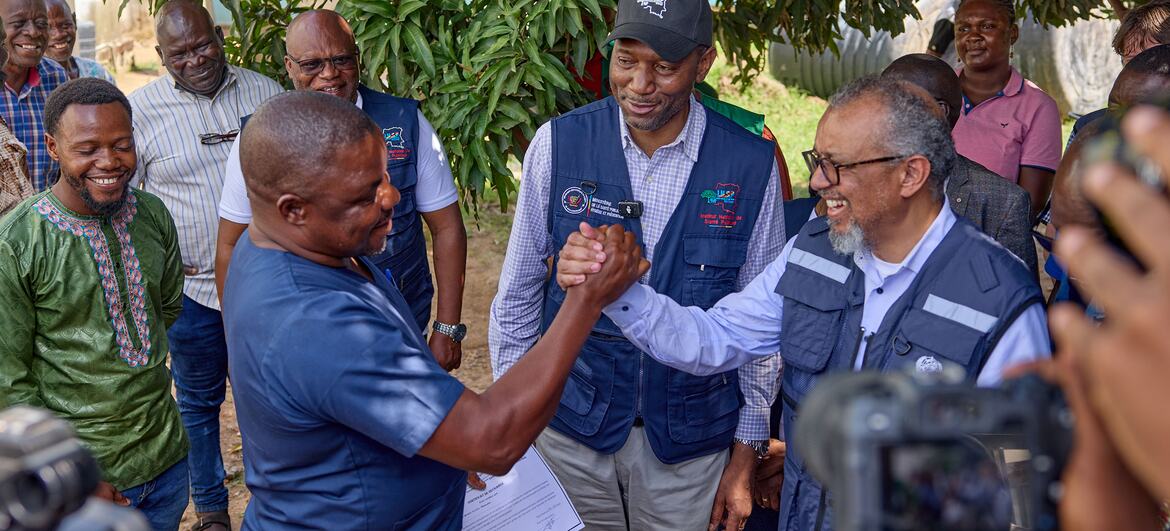
WHO Director-General Tedros Adhanom Ghebreyesus, who recently visited the outbreak's epicentre, warned that "misinformation is almost as dangerous as the virus itself, and spreads just as fast."
Reasons for hope
Despite the difficulties, there have been encouraging signs. Seven people have recovered from Ebola, including six healthcare workers.
Most sought treatment early and received intensive supportive care, including rehydration and treatment for symptoms while their immune systems fought the infection.
"They recovered because they went early to the hospital," Dr. Belizaire said.
'No country faces Ebola alone'
WHO and the Africa Centres for Disease Control and Prevention (Africa CDC) on Friday launched a joint continental preparedness and response plan to combat the Bundibugyo Ebola outbreak and strengthen readiness across the continent.
The six-month plan aims to mobilize $518 million under a "One Response" approach bringing together governments, UN agencies, humanitarian partners and communities.
It supports ongoing national response plans in DRC and Uganda while strengthening preparedness in neighbouring countries at risk of cross-border transmission. The plan focuses on emergency coordination, clinical care, research, surveillance and testing, infection prevention and control, community engagement and logistics.
"The only way to beat this outbreak is through close partnership...no country faces Ebola alone," WHO Director-General Tedros said.
Africa CDC Director-General Jean Kaseya highlighted the urgency of the response, stating "Ebola moves fast. Africa must move faster," he said.
Candidate vaccines under development
There is currently no licensed vaccine or approved treatment for the Bundibugyo strain, although candidate vaccines are under development.
But Dr. Belizaire stressed that even a vaccine would not replace the need for early detection and treatment.
"The key is, as soon as you have symptoms, you go to the healthcare centre," she said.
A survivor's determination
Among the encounters that have stayed with Dr. Belizaire most is that of a healthcare worker who contracted Ebola while caring for a patient. The female medic later recovered.
Rather than leaving the profession, she said she intends to continue serving others.
"She said she will not stop," Dr. Belizaire recalled. "She said she was born to give care to others, and it is what she will continue doing."
That story reflects the resilience of health workers and communities confronting the outbreak every day.