
The United States and Ecuador are deepening their security cooperation against a backdrop of serious human rights violations by Ecuadorian forces, unexplained drone attacks on fishing boats, and the disappearance of several fishermen, Human Rights Watch said in a report released today. The US Congress should urgently scrutinize these incidents and the broader security relationship between Ecuador and the United States.
The 94-page report, "A Dangerous Partnership: Abuses, Unanswered Questions, and US-Ecuador Security Cooperation," documents serious human rights violations in a rural community on the Colombia-Ecuador border, as well as attacks on and the disappearance of fishermen at sea near the Galápagos Islands. Each incident either clearly implicates the US-Ecuador security partnership or surfaces questions about responsibility. Ecuadorian forces tortured and arbitrarily detained four farm workers, and later burned and struck a dairy farm, during what the United States called a "partnered operation." And drones of unknown origin attacked two fishing vessels, injuring several crew members. A third vessel remains missing.
"US-Ecuador cooperation on security has been too opaque and too dangerous for Ecuadorians," said Juanita Goebertus, Americas director at Human Rights Watch. "Before more harm is done, the US Congress should demand real answers and effective safeguards."
In recent months, the United States and Ecuador have each taken steps to undermine human rights safeguards on the use of force against organized crime and have committed unlawful acts, including enforced disappearances and extrajudicial executions, that they have sought to justify by mischaracterizing their efforts to confront drug trafficking and organized crime as a kind of armed conflict.
Between March and June 2026, researchers interviewed 62 people, including victims of abuses in an attack on a rural settlement and fishermen whose boats were attacked, as well as lawyers, witnesses, affected community members, and others. Researchers reviewed and analyzed more than 100 photographs and videos provided by lawyers and interviewees or published online on social media, along with satellite imagery, vessel monitoring data, fire detection data, medical records, and judicial documents.
Human Rights Watch requested information from the Ecuadorian and US governments about these events, but has received no response.
Since President Donald Trump took office and Ecuadorian President Daniel Noboa was re-elected in 2025, the two governments' security cooperation has deepened, with the stated goals of responding both to surging violence in Ecuador and organized crime across the region. The United States has become a key partner in Ecuador's security response, providing equipment, training, intelligence, and direct military support.
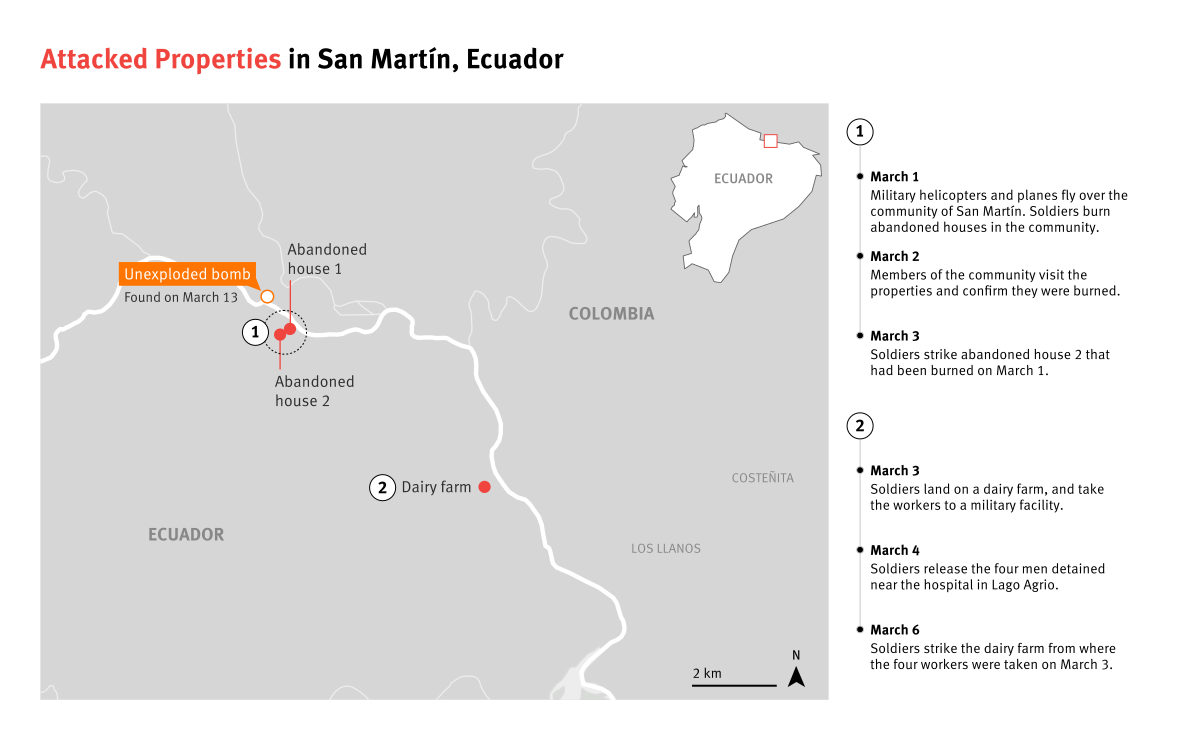
Between March 1 and 6, Ecuadorian military forces conducted a series of joint operations with the United States in the San Martín community, a rural settlement on the Colombia-Ecuador border. Ecuadorian soldiers burned three properties, later struck two of them with air-dropped munitions, and arbitrarily detained and tortured four dairy farm workers.
"They tortured me with electricity, with a taser," one of the men told Human Rights Watch. "They poured water on me and then shocked me, and I passed out. I lost consciousness at least twice."
Both Ecuadorian and US authorities said this was a partnered operation. Ecuadorian authorities said the operation targeted facilities of the Border Commands (Comandos de la Frontera), an armed group that has for years operated on both sides of the border, and that the four men were detained "for investigative purposes" over alleged ties with the group. The head of US Southern Command, General Francis L. Donovan, praised the operation, telling the US Senate Committee on Armed Services that it was "professionally executed."
Human Rights Watch found no credible evidence that the three destroyed properties had any connection with criminal armed groups. Based on a review of photographs, videos, satellite imagery, property records, and commercial receipts; and interviews with the properties' owners, nearby residents, and others, one of the properties burned and later struck appeared to be a dairy farm, and the other two appeared to have been abandoned for years. The men detained had no criminal records, and prosecutors did not file charges because soldiers failed to provide any evidence against them.
Between January and March, the fishing vessels La Negra Francisca Duarte II and the Don Maca came under attack in the Eastern Pacific. A third vessel, the Fiorella, disappeared on January 20 with eight of its crew members.
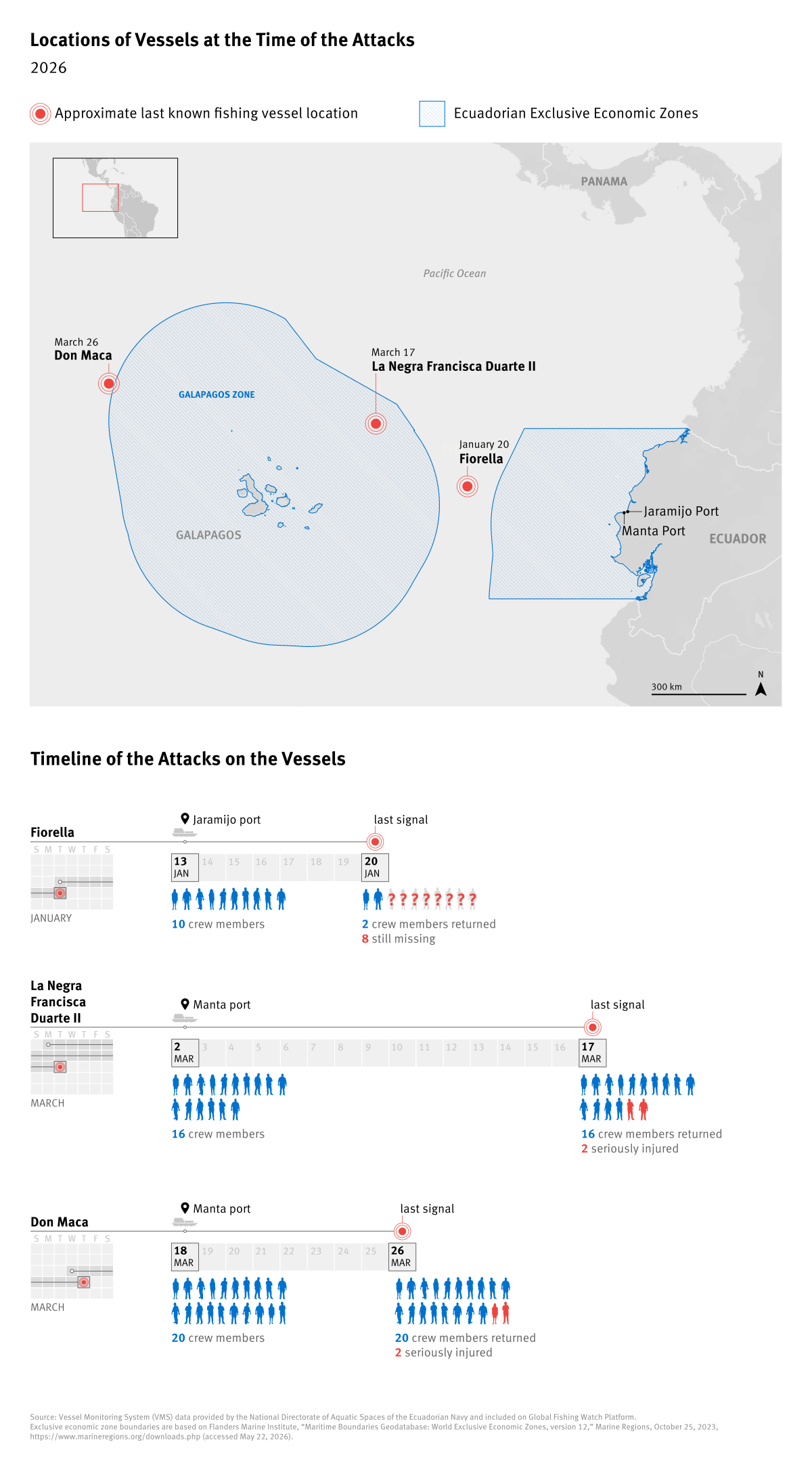
On March 17 and 26, crew members of La Negra Francisca Duarte II and the Don Maca, respectively, said they were attacked by armed drones. Survivors said that armed US nationals wearing military-style uniforms bearing US flag insignias detained them aboard a nearby blue-and-white vessel, and then transferred them to the Salvadoran Coast Guard. Salvadoran authorities later allowed them to return to Ecuador. At least four crew members suffered serious injuries during the drone strikes.
Crew members of the Don Maca said that after their ship was attacked, a boat flying a US flag approached them. "How many are you? How many dead? How many injured?" a man asked them, they said. The survivors said they boarded the vessel while officers speaking English pointed "long guns" at them.
The US Department of Defense and Coast Guard have denied responsibility for the attacks on La Negra Francisca Duarte II and the Don Maca, and the disappearance of the Fiorella. However, Human Rights Watch research, including interviews with 13 survivors, indicates that US authorities most likely had some level of involvement in, or knowledge of, these attacks. Other evidence reviewed was largely consistent with crew members' accounts.
Despite extensive verification efforts and multiple inquiries to Ecuadorian and US authorities, many questions about these incidents remain unanswered, including what happened to Fiorella's crew.
The US Congress should demand clear answers from the Trump administration to the many questions surrounding its security cooperation with Ecuador. It should also examine whether there are appropriate safeguards given the growing number of human rights violations under the Noboa administration. The Ecuadorian government should also reassess its determination that there is an "armed conflict" in the country and focus its efforts on strengthening justice sector capabilities to fight organized crime.
"Joint security operations against organized crime should not become a cover for abuses," Goebertus said.


