
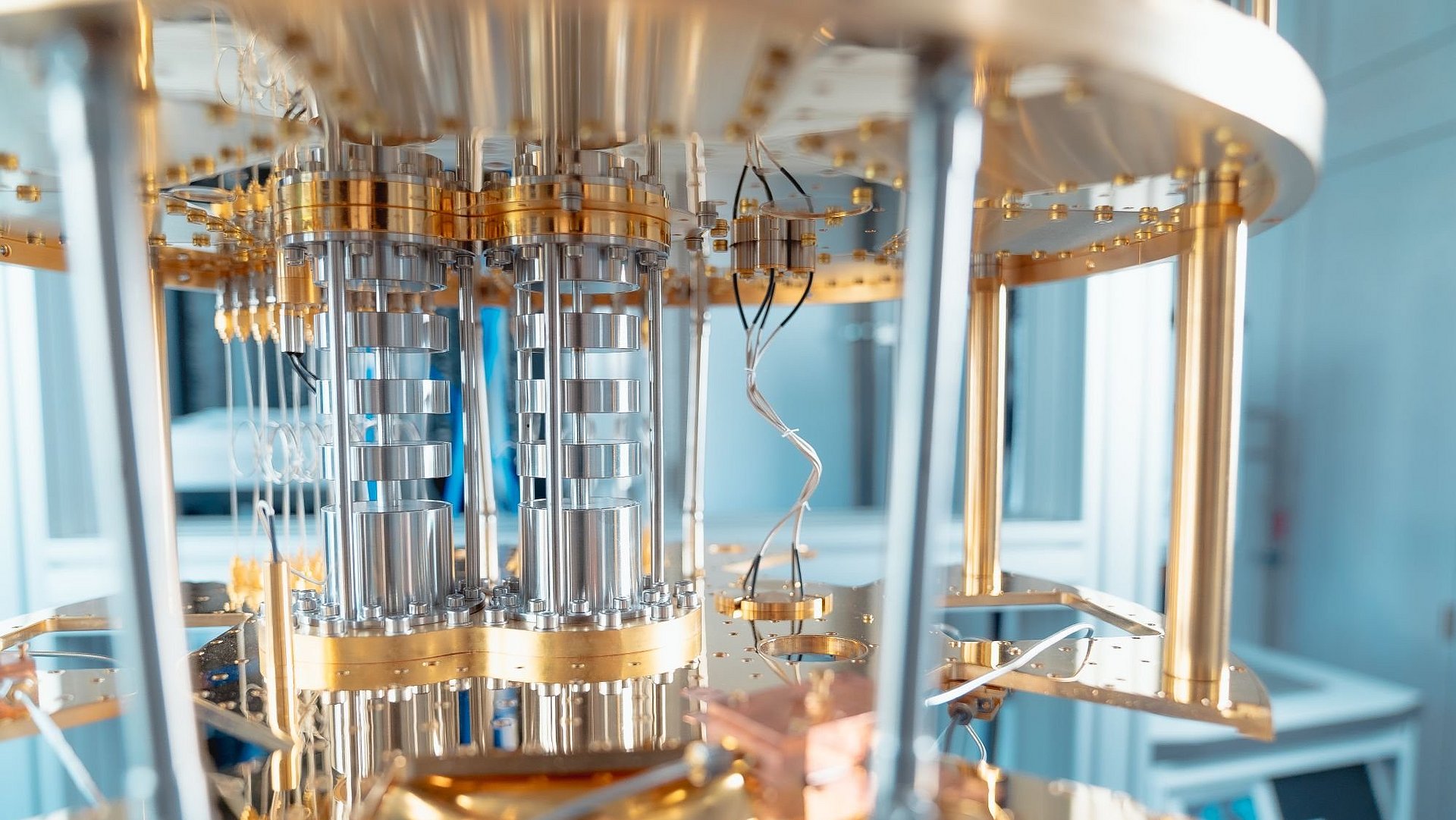
TUM has opened the Center for QuantumEngineering (ZQE). The institute brings together research on quantum technologies and bridges the gap between basic research and applications in the fields of quantum computing, secure communication, high-precision sensor technology and simulations of new materials. At the same time, it offers optimal conditions for early-career researchers. In this way, the ZQE strengthens Munich's position as a leading hub for quantum research.
 Astrid Eckert / TUM
Quantum technologies are considered key technologies of the 21st century. Technological advances now make it possible to precisely control individual quantum systems, thereby opening up new possibilities in numerous fields of research and application. With the Munich Center for Quantum Science and Technology (MCQST) , a Cluster of Excellence, the Munich Quantum Valley (MQV) , its two Universities of Excellence, the Max Planck Institutes and the Walther Meissner Institute, Munich ranks among the most internationally prominent venues for quantum research. Within this ecosystem, the ZQE will serve as TUM's central institutional and physical hub in the future. The Free State of Bavaria has provided approximately 35 million euros in funding for the research building on the Garching campus. As part of the Bavarian High-Tech Agenda, five additional professorships, along with their equipment, were established. The federal government has provided approximately 20 million euros in funding for the building as part of the federal-state program for research buildings at universities.
100 scientists
The ZQE's research focuses on solid-state-based hybrid quantum systems at the intersection of basic research and application. The approximately 100 scientists at the ZQE work on three interdisciplinary research areas: hybrid quantum devices and quantum circuits, functional quantum materials and the modeling of complex quantum systems.
The research findings are intended to contribute to the further development of key application areas of quantum technologies. At the same time, the ZQE creates an environment for young researchers in which they can engage in interdisciplinary work early on and take on responsibility in one of the most important technological fields of the coming decades.
"Contribution to Europe's technological sovereignty"
Dr. Silke Launert, Parliamentary State Secretary at the Federal Ministry of Research, Technology and Space, emphasizes: "Germany has the opportunity to position itself at the forefront of quantum technologies as a key technology. With the ZQE, a nationally outstanding center is being established at the Technical University of Munich that aims to address one of the great scientific challenges of our time through interdisciplinary research and the effective use of innovative quantum technologies: the transformation of quantum physics into practical, industrial applications. This also contributes to our country's technological sovereignty. As an internationally visible driver of innovation, the ZQE will exert influence far beyond its location and contribute to the goal of Germany's High-Tech Agenda: to make our country a leading technology nation."
Bavaria's Minister of Science Markus Blume says: "A workbench for the quantum computer - the new Center for Quantum Engineering at TUM combines theory with application as well as basic research with German engineering excellence. Smartphones, lasers, the Internet and modern medicine - none of this would be possible without the insights gained from quantum research. In the future, quantum computers will solve problems that are too complex for today's computers. One thing is clear: quantum sciences are crucial for technological progress in all fields. The Free State of Bavaria has provided approximately 35 million euros in funding for the ZQE's research facility, with the federal government contributing an additional 20 million euros. As part of the Bavarian High-Tech Agenda, we have also established five additional research professorships tailored to the center's needs. Our quantum ecosystem centered around Munich is one of the strongest in Europe. From Bavaria, we are driving Europe's quantum agenda forward. After all, technological sovereignty will determine our future!"
TUM President Prof. Thomas F. Hofmann says: "At the Center for Quantum Engineering, TUM showcases two of its greatest strengths: seamless collaboration across different disciplines and the translation of basic research into practical applications. With researchers from the natural sciences, mathematics, electrical engineering and computer science, we will harness the fascinating potential of quantum sciences to develop technologies that benefit us all. Munich's innovation ecosystem with its Munich Center for Quantum Science and Technology, a Cluster of Excellence, is thus making a significant contribution to Europe's technological sovereignty."
Quantum Technologies
Quantum technologies will transform everyday life in the coming years. We are conducting cutting-edge research in this field. Learn about our most important projects and facilities.
 C. Hohmann / MCQST


