
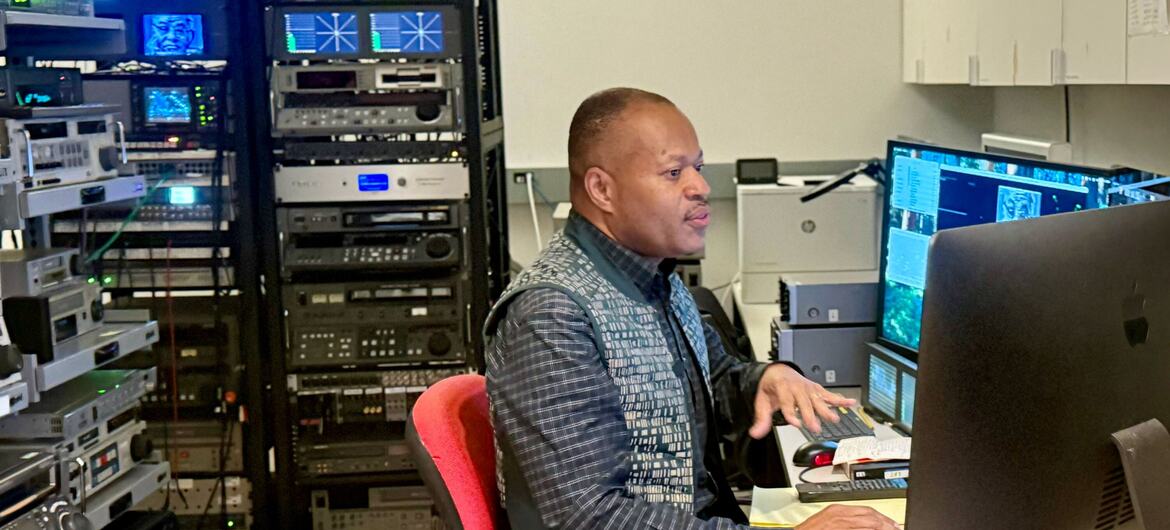
"I tell my kids I work in a time machine," said Rhony Dostaly. In a basement beneath Lincoln Center, the media preservation engineer rescues moments from the past. "I go back in time, and I grab elements, and I make them available for people today."
He and his colleagues at the New York Public Library (NYPL) are working against the clock to preserve the contents of film, tape, discs and cylinders that hold more than a century of sound and moving images.
The records are decaying, and the machines that can play them are disappearing.
Learning from the past
For Mr. Dostaly, it's not just about technology. He has watched other people's lives unfold through the archive.
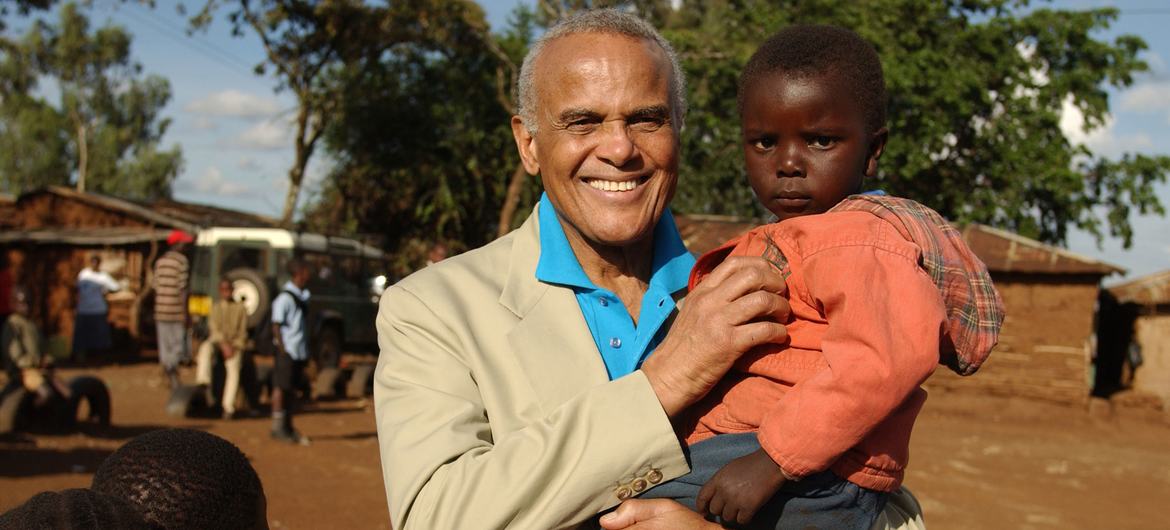
Harry Belafonte, the legendary American singer, actor, civil rights activist - and longtime UNICEF Goodwill Ambassador - filmed his family for decades, from teaching his son to ride a bike in Central Park to trips abroad.
"I've actually seen his kids from toddlers all the way to adults," Mr. Dostaly said.
Films of the African American civil rights leader Malcolm X's travels, including footage from Mecca, moved him the most. "I'm the one who's going to be making it available for everyone to see," he remembered thinking.
By looking through footage like this - he hopes - young people "will realize the importance of events that took place before they were here on Earth."
Cultural heritage
Next door, Casey McNamara, a media preservation coordinator, bends over a reel of film with a jeweller's loupe or magnifying glass, checking it frame by frame for tears, splices and shrinkage.
On the white leader she has written "BHARATA NATYAM," the name of one of the oldest Indian classical dance forms.
Films may reach her "in a rusty tin, on an old projection reel, or in a rag box, in plastic bags." Without the work she does, some collections "would remain mostly unseen."
The lab is part of NYPL's Digital Collections Operations. Once digitized, most of the material will be accessible to anyone with a library card.
"The tapes and the decks are no longer being manufactured, but the history needs to be preserved," explained lab manager Shahed Dowlatshahi.
Work like this is exactly the kind of project that the UN's World Day for Audiovisual Heritage , marked annually on 27 October, is designed to highlight and assist.
Preserving UN history
In the audio room, Jeffrey Willens slides a 16-inch disc from a brown paper sleeve marked: A Year To Remember.
The UN Radio Division produced it for broadcast on New Year's Day 1949, when the Organization was still headquartered at Lake Success on Long Island.
Copies would have been mailed to radio stations and UN offices around the world. Mr. Willens places it on a turntable with a microscope mounted above it, and the voices of actor Fredric March and sportscaster Ted Husing fill the room.
Down the corridor, engineers are digitizing the archive of William Greaves, a pioneering African American documentary filmmaker.


