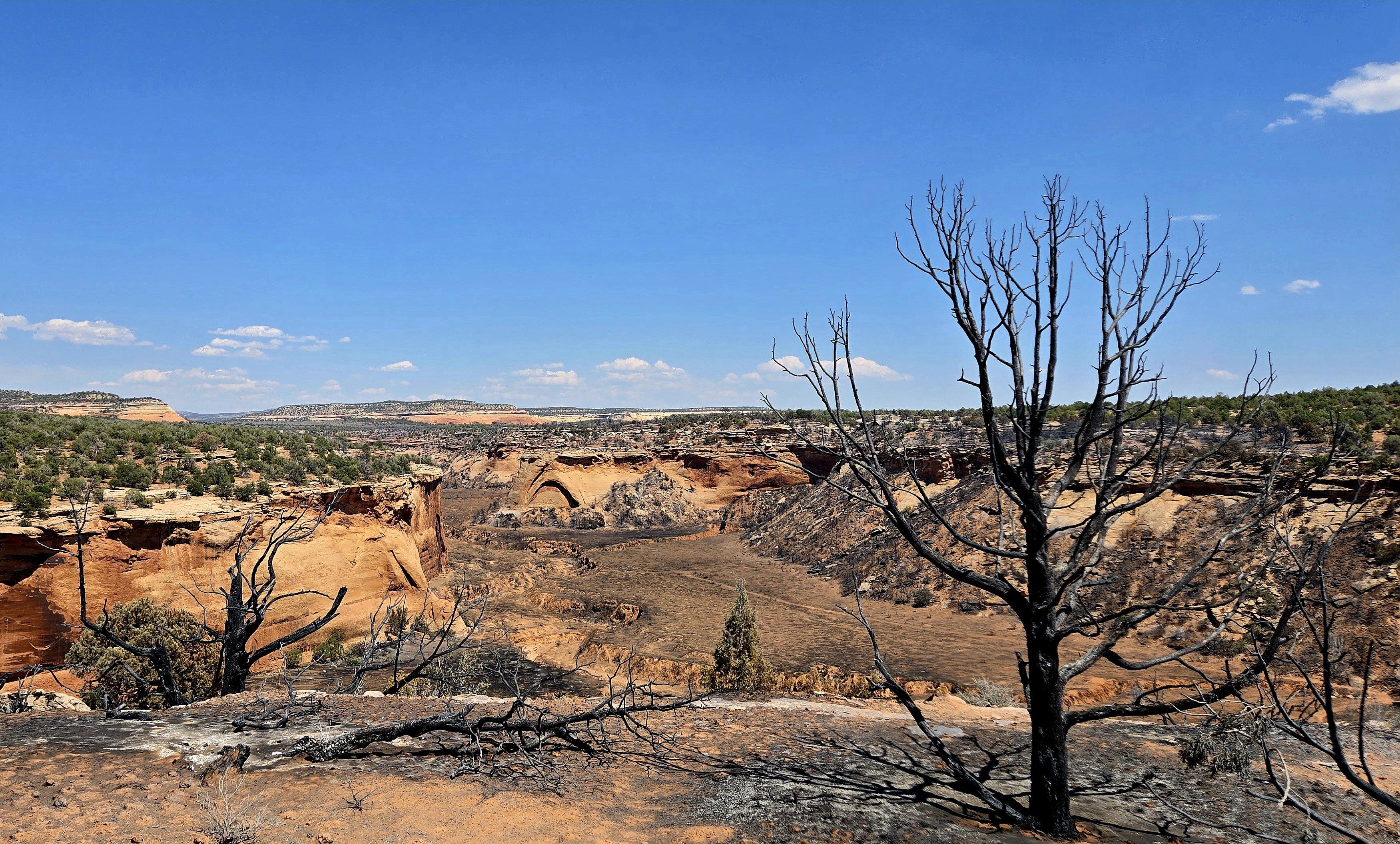
The Department of the Interior today released the findings from the joint U.S. Wildland Fire Service and U.S. Forest Service investigation into the June 27 accident on the Knowles Fire in western Colorado in which four federal wildland firefighters died and a fifth was injured.
"Every day, wildland firefighters answer the call to serve and protect their fellow Americans, and their safety will always be our highest priority," said Secretary of the Interior Doug Burgum. "To the families of our fallen heroes, Emily Barker, Nick Hutcherson, Nathan Matthews, and Sydney Watson: we know that there are no words to refill your hearts of the loss of your dearly loved ones. It is our duty to always remember their service and sacrifice. To the closeknit community of firefighters across the country, we dedicate ourselves to apply the lessons of this report in their honor, and in the serve of protecting all those who follow."
"Emily, Nick, Sydney and Nathan were out there for the people of western Colorado," said Deputy Secretary of the Interior Kate MacGregor. "While there is nothing on this earth that can eliminate the profound loss and severe grief that their families, crew members, and the whole DOI family feels from their loss, we honor them by better understanding the circumstances of this fire and searching for every modern technological improvement to better support our firefighters. That is a priority for the Department, and this report will help inform that work."
The Knowles Fire Serious Accident Investigation Report details the circumstances surrounding a burnover incident that claimed the lives of firefighters Emily Barker, Nick Hutcherson, Sydney Watson, and Nathan Matthews and injured a interagency helitack crew member. They were engaged in initial attack operations on the Knowles and Gore fires in western Colorado when they were overtaken by the larger Snyder Fire, which crossed complex canyon and mesa terrain at a speed and scale not previously observed in wildfires in the area.
The investigation found that this tragedy resulted from the cumulative interaction of complex factors, including extraordinary fire behavior, strained communications, incomplete situational awareness, jurisdictional complexity, gaps in aerial supervision, and extreme operational tempo.
"Throughout the investigation, we remained committed to honoring the sacrifice of our fallen firefighters by following the facts wherever they led," said U.S. Wildland Fire Service Chief Brian Fennessy. "This report is the culmination of a thorough, methodical and rigorous examination of this tragic event, and it provides insights into the contributing factors that can help improve the safety of firefighters across the wildland fire community."
The findings identify opportunities to improve communications, real-time fire observation, airspace awareness, dispatch coordination, and situational awareness. The lessons learned from this report will help improve firefighter safety across the wildland fire community. Learning from what happened is how the U.S. Wildland Fire Service carries the legacy of our fallen firefighters forward and better protects those who follow them.