Key points
- Tony Murphy, a CSIRO chief research scientist, has won the 2026 Australian Academy of Science's Ian Wark Medal for outstanding scientific, industrial and environmental contributions.
- Tony researches thermal plasmas, one of the four fundamental states of matter, found in the stars, harnessed for welding and used to destroy hazardous chemicals.
- Companies and research groups all over the world use Tony's plasma data sets.
Plasma. It's not just in blood. In fact, you'd be surprised how many uses it has. So, who better to tell us all about it than Dr Tony Murphy?
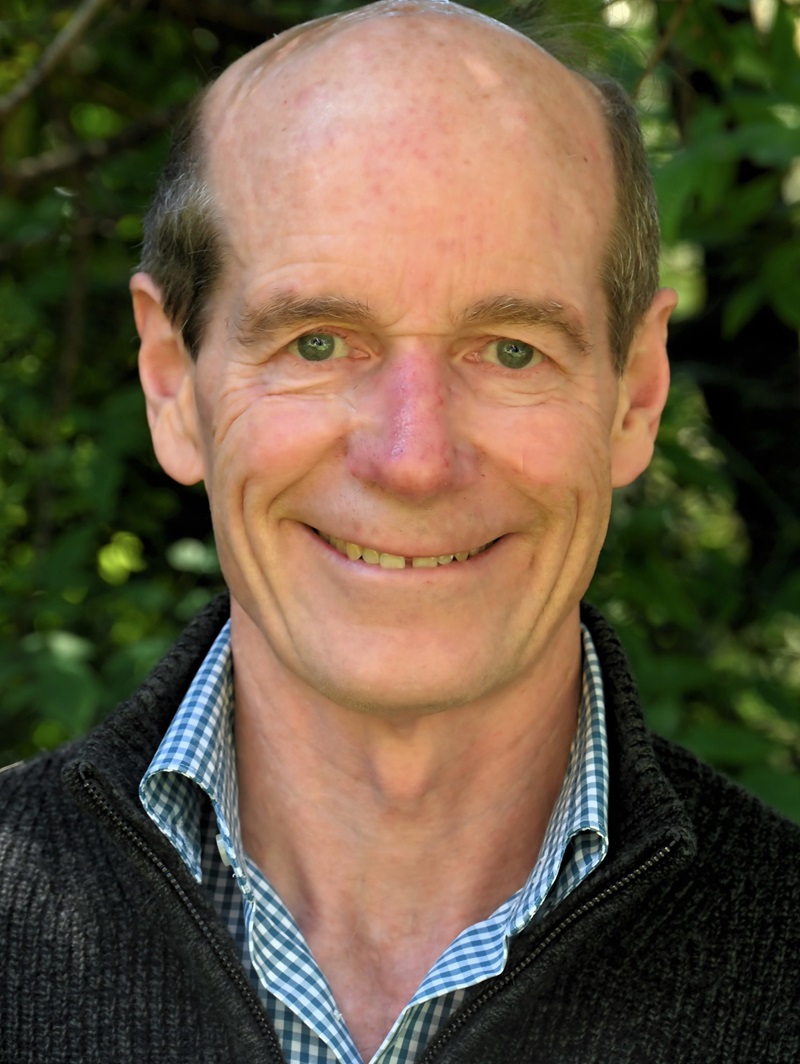
Tony has been researching thermal plasmas and their uses for more than 37 years. And he's the winner of the 2026 Australian Academy of Science's Ian Wark Medal.
What is a thermal plasma?
Plasma is one of the four fundamental states of matter. Solid, liquid and gas are well known – but the fourth state is plasma.
There are many types of plasma. More than 99.9 per cent of the Universe is plasma. The stars (including the Sun) and the interstellar medium are plasmas. Astronomers have even captured plasma spurting from a supermassive black hole.
Thermal plasmas are high-temperature ionised gases in which both the electrons and heavy species (molecules, atoms and ions) are at high temperature, typically 10,000 to 30,000 degrees Celsius.
Some examples of plasma in nature include lightning and polar aurorae (like the northern lights).
How can we use thermal plasma?
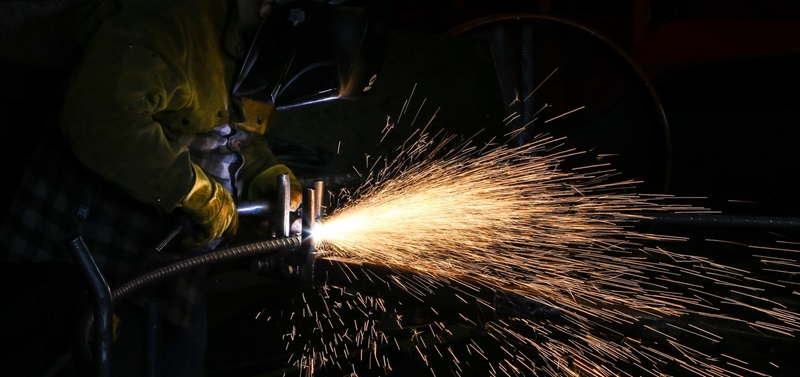
Another well-known example is in welding. Welders use an arc plasma, which appears as a very bright light, to melt pieces of metal to bond them together.
Thermal plasma can be used to destroy hazardous chemicals in waste treatment. This is where the high temperature of the plasma melts and vaporises waste materials. The hazardous substances convert to safe gases or a glassy material.
An example is the PLASCON process , now called PyroPlas®, which CSIRO helped develop in the 1990s. It's used to treat hazardous gases and liquids, including ozone-depleting substances such as chlorofluorocarbons (CFCs) and greenhouse gases.
Award-winning research
Prior to joining CSIRO, he was a postdoctoral researcher at the Max Planck Institute for Plasma Physics in Munich, Germany.
He began researching thermal plasmas for industrial applications. He wanted to understand their basic properties such as temperature and heat flux and to see how they could be used in new ways. In particular, he was researching the destruction of ozone-depleting substances such as CFCs.
In addition to thermal plasmas, Tony has used low-temperature plasmas for applications including ammonia production, ozone production and speeding up seed growth.
Companies and research groups all over the world use Tony's plasma data sets. They use them in computational models of plasma processes, including arc welding, plasma cutting, circuit breakers, arc lamps and plasma waste treatment. Without accurate data, it is not possible to model a plasma process. These computational models help researchers and companies understand, develop and optimise their processes.
Tony has published 300 papers in scientific journals and has received 10,000 citations.
He has been recognised in the 2026 Honorific Awards by the Australian Academy of Science with the Ian Wark Medal and Lecture.
He's also won the 2024 Plasma Physics Innovation Prize' of the European Physical Society , the 2021 Plasma Chemistry Award of the International Plasma Chemistry Society and the 2021 Plasma Innovation Prize from the Association of Asia-Pacific Physical Societies . A very deserving recipient!