
When conflict erupts, disasters strike or political crises unfold, courts are among the few institutions expected to keep functioning - ensuring the essential rule of law is maintained.
When conflict erupts, disasters strike or political crises unfold, courts are among the few institutions expected to keep functioning - ensuring the essential rule of law is maintained.
Judges continue hearing criminal cases, working to protect constitutional rights and ensure accountability for law breakers, often while working under the same daily pressures as the communities they serve.
Yet for decades, little attention has been paid to the well-being of those entrusted with delivering justice.
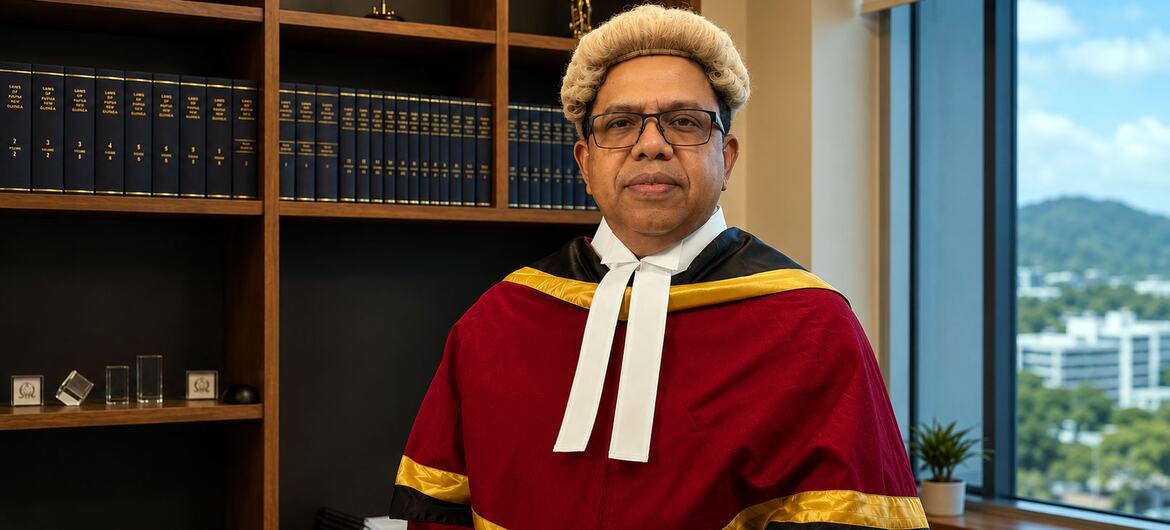
"The judge seems to float along the bench with effortless serenity, like a swan on the mirrored surface of the lake," said Hon. Rangajeeva Wimalasena, Judge of the National and Supreme Courts of Papua New Guinea, in an in-depth interview with UN News.
"But beneath that mirrored surface of the lake, there's a very big struggle."
Ahead of the international day designed to highlight the resilience and importance of judicial work, Judge Wimalasena described how supporting judges is not simply a workplace issue but a cornerstone of fair, impartial and effective justice.
The annual observance follows the adoption of the Nauru Declaration on Judicial Well-being , developed through the UN Office on Drugs and Crime (UNODC) in 2024, which encourages courts and governments to recognize the importance of judicial well-being worldwide.
Deeper and broader
Judge Wimalasena believes the well-being of his profession is misunderstood:
"When you say judicial well-being, a lot of people think it's about individual judges' well-being... making them live in a very comfortable and happy lifestyle" he said. "But what is meant by judicial well-being is far deeper and broader."
For generations, he explained, judges have been expected to shoulder the emotional weight of their work in silence.
"Judicial stress was considered a taboo because society always expected...judges should be superhuman."
That expectation, Judge Wimalasena argues, overlooks the reality that judges routinely handle evidence which is traumatising, along with overwhelming caseloads and decisions that can change the course of people's lives.
If those pressures go unaddressed, the consequences extend beyond the individual judge. "If the judges don't maintain judicial well-being, it can actually affect the quality of justice" he said.
Increased pressure
Those pressures can be even greater in countries affected by conflict, political violence and environmental disasters.
That reality is one reason the Nauru Declaration emphasizes that judicial well-being initiatives should reflect local circumstances.
"Some countries have conflict situations and political violence, wars, even natural disasters" Judge Wimalasena explained. "Judges face very unique context-specific challenges in those circumstances."
Supporting judges in these settings helps preserve the rule of law when it is under its greatest strain.
Rising concerns
Recent research is beginning to quantify the impact judicial work can have on judges' well-being.
Judge Wimalasena pointed to a 2026 study by the Canadian Judicial Council that found concerning levels of poor-quality sleep among judges, linking insufficient rest to higher levels of cognitive stress.
"Sleep is not a private luxury as far as judges are concerned" he said. "It supports concentration, memory, emotional regulation, and decision making."
Put simply, he argued, the quality of a judge's sleep can directly influence the quality of justice delivered.
At the same time, traditional pressures are being compounded by new challenges.
Judge Wimalasena highlighted findings from a pilot study conducted through the Global Judicial Well-being Research Hub, which identified compulsive social media use and online harassment as emerging concerns for judges.
Many respondents said their institutions lacked clear procedures to support judges facing online attacks.
"Social media is becoming an emerging challenge" he said, noting that online abuse and compulsive social media use were affecting judges' "sleep, concentration, and time management."
Public trust
For him, it should be all about the people judges serve. Courts determine whether victims receive justice, families resolve disputes fairly, constitutional rights are protected and governments are held accountable.
Their decisions shape economies, strengthen the rule of law and influence public trust in public institutions.
"Judicial work affects every element in our societies" he said.
Protecting the people who deliver justice is ultimately an investment in everyone who depends on it.


