
Across Latin America, stories of violence against women reveal how deeply gender, power en inequality are intertwined. Researcher Martín Hernán Di Marco tells how storytelling, activism and research together challenge the global cycle of violence against women and girls.
The Orange the World campaign uses the colour orange because it symbolises hope - a future free from violence against women and girls. On 9 December, the film screening of VIVAS by director Angélica Cruz Aguilar sheds light on this urgent issue through the distressing stories of two Mexican mothers, Lorena and Karen. Their daughters, Fátima (12) and Renata (13), were victims of femicide. Since their deaths, both women have become tireless activists, demanding truth and justice not only for their daughters, but for all women. Their courage embodies feminism, resistance and collective hope, inspiring future generations to stand up against gender-based violence.
Researcher Martín Hernán Di Marco reflects on how film and academic research can work together to raise awareness. According to him 'the stories we watch on television and carry within us, shape the way we understand relationships, masculinity and violence. They influence how people justify or normalise violent behaviour. The most important task is to reveal how deeply these stories shape us, often without us noticing.'
A book from the male perspective
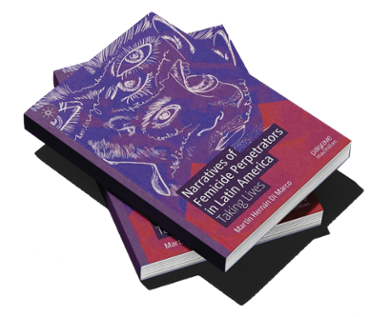
For eight years, Di Marco and his team studied these narratives from a male perspective, interviewing men convicted of intimate femicide across more than eight Latin American countries. His new book, Taking Lives: Narratives of Latin American Femicide Perpetrators, offers an unflinching look into what drives men to kill their partners exposing cultural, psychological, and social roots of gendered violence.
'We are still far from understanding what works best to breaking these cycles of impunity', tells Di Marco. 'In many countries, one of the biggest challenges is still gaining institutional recognition and response to basic issues, such as intimate partner violence. On a legal and institutional level, impunity appears in cases where femicides are recorded as suicides or "undetermined deaths", and justice is never pursued. But there is also a more everyday form of impunity: when friends, neighbours, colleagues - people who see, know, or suspect violence - remain silent. That silence protects violence. This social impunity is still very present.'
Working in both Latin America and the Netherlands, Di Marco draws comparisons and lessons between regions. 'Latin America is not The Netherlands, but both reveal how institutions, policing, social movements and histories shape violence differently. Across the world, women are disproportionately killed by intimate partners. The rate may differ from country to country, but the pattern is the same. That tells us something about deeper structures - about gender, power and inequality - that transcend national borders. So Latin America doesn't offer a single 'model', but it does offer experiences of struggle, resistance, legal reform and activism that others can learn from.'
Filmscreening VIVAS
On 9 December at 17:00 hrs., VIVAS by director Angélica Cruz Aguilar is shown at Schouwburgstraat in The Hague.
'Vivas' trailer
Due to the selected cookie settings, we cannot show this video here.
Watch the video on the original website or Accept cookies


