
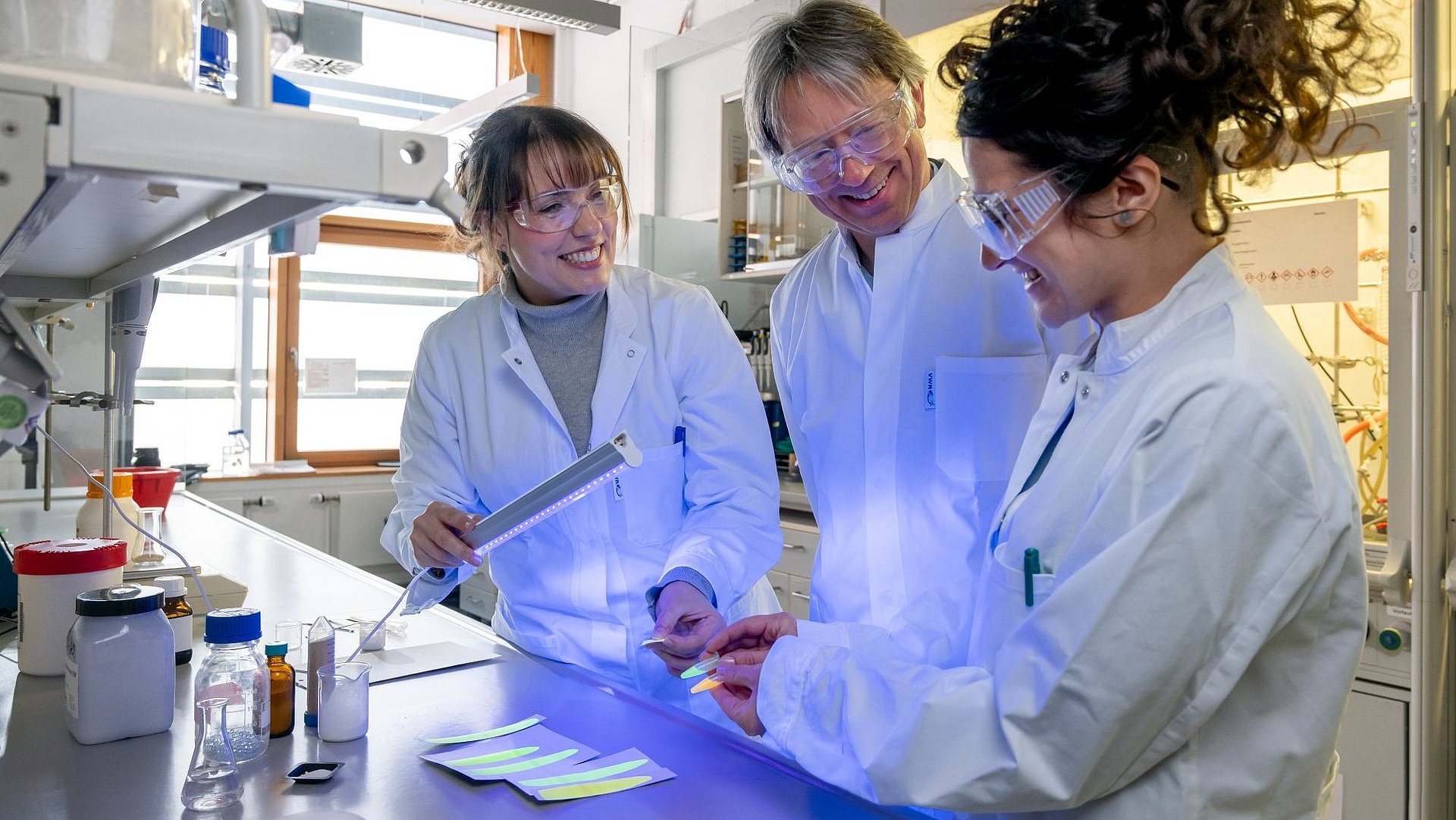
T-shirts that warn of excessive sun exposure or labels that reveal damage to light sensitive materials: researchers at the Technical University of Munich (TUM) have developed a coating that makes this possible-using proteins and bacteria. The coating reliably detects contact with UV-A radiation, is bio based, and could open the door to a wide range of new materials that draw on the biological functions of cells.
 Astrid Eckert / TUM
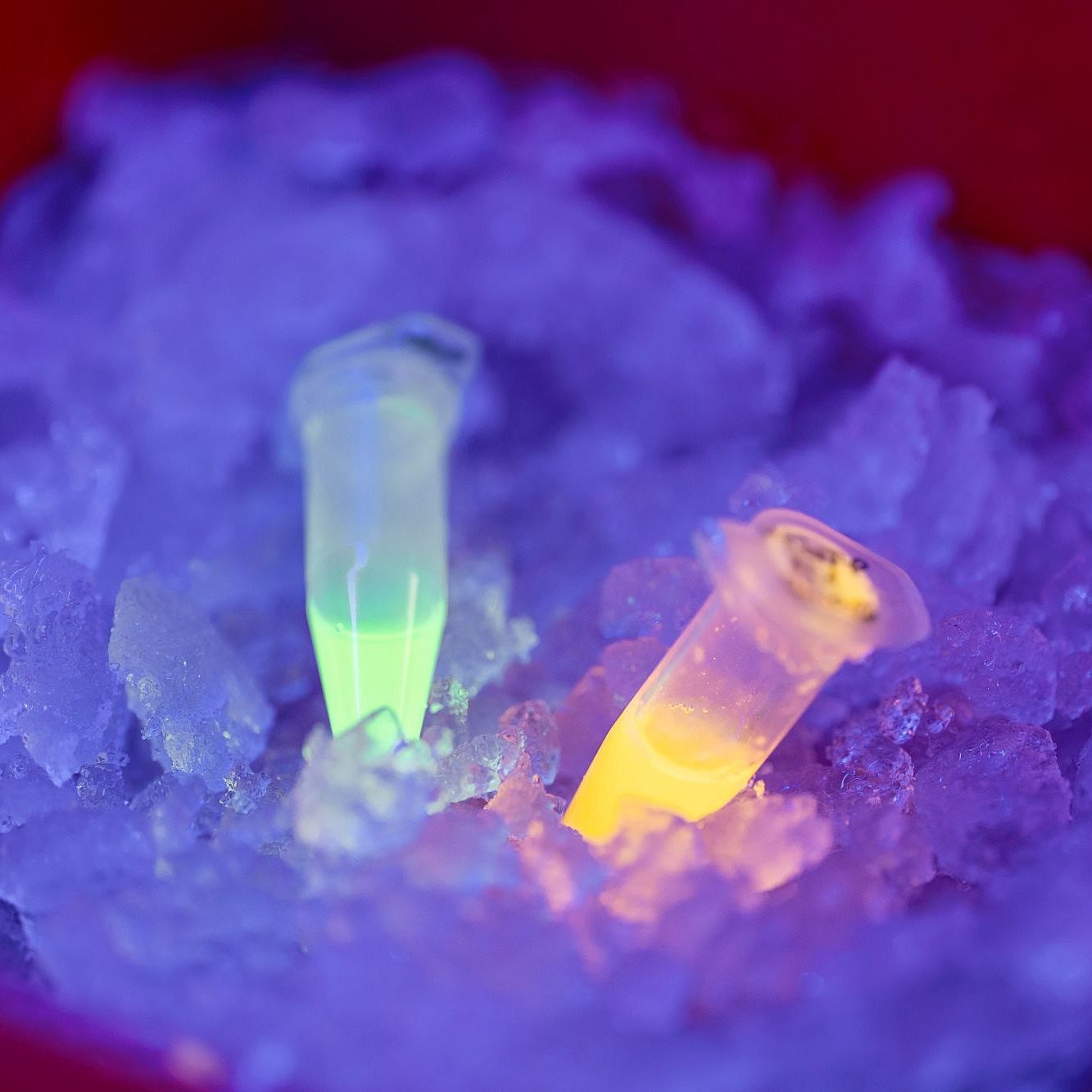
 The protein mEosFP can blush: when exposed to UV-A light, it shifts from a green shade called "Vegan Villain" to a red known as "End of Summer." Because of this pronounced color shift, the protein is a strong candidate for UV-A sensors that indicate when certain thresholds are reached. Until now, however, it remained unclear how to integrate such proteins into paints and coatings in a stable, functional way-without compromising material properties.
A team led by Volker Sieber , Professor of Chemistry of Biogenic Resources and Rector of the TUM Campus Straubing, has now engineered a solution to this problem. The result is a sustainable, bio-based alternative to conventional UV-A-sensors, which typically rely on fossil raw materials such as oil and coal. Their findings could serve as a blueprint for advances in the emerging field of so called living materials, which aim to combine the strengths of biology and technology. In these biohybrid materials, organisms such as fungi, algae, proteins, or bacteria are embedded in solid materials so that they can repair themselves, grow, or respond to environmental stimuli.
Bacteria shield the protein
For the study, the team cultivated E. coli bacteria engineered to produce the target protein. At first, they separated the protein from the bacterial cells and mixed the purified protein into paint formulations-without success. The coating showed only weak coloration and its material properties deteriorated: the surface became rough and leathery.
 Astrid Eckert / TUM
 The researchers achieved success once they stopped separating the proteins from the bacteria and incorporated the entire biomass into the formulation. "The bacteria seem to act as a kind of protective space for the proteins, shielding them from the chemical and physical influences within the coating," explains Amelie Skopp, the study's lead author.
The color change begins within minutes of exposure, becomes clearly visible after about 15 minutes, and is fully developed after roughly an hour. The more intense the UV-A radiation, the stronger the resulting color. Potential applications include outdoor apparel that warns of excessive UV exposure, storage and shipping of light sensitive pharmaceuticals, and monitoring of UV-based surface disinfection processes.
An opportunity in the anthropocene
"We've shown that coatings can be equipped with biological added functions without losing their inherent material properties," says Amelie Skopp. She and co-first author Matea Marošević were recently awarded the TUM IDEAward together with other team members for a start-up concept building on this technology. The team is currently working on a bio-based filtration technology designed to capture volatile organic compounds from industrial processes and convert them into harmless substances.
Volker Sieber is convinced: "Biological systems offer an enormous diversity of functions we can harness. The possibilities range from materials like ours that make environmental conditions visible to future solutions capable of capturing and breaking down hard-to-avoid greenhouse gases such as methane. The fact that we have now managed to stably integrate biological components into coatings is an important starting point for developments we urgently need in light of today's global challenges."
Skopp, A.; Marošević, M.; Rühmann, B.; Sieber, V.: The Vegan Villain Sets Out to The End of Summer: Functionalized Coatings as Biohybrid UV-Sensors. Adv. Mater. Interfaces (2025). https://doi.org/10.1002/admi.202500125
Volker Sieber is the Rector of the TUM Campus Straubing for Biotechnology and Sustainability (TUMCS) . TUMCS conducts interdisciplinary research and teaching aimed at developing sustainable technologies and implementing them economically while taking ecological and social factors into account.
The study was funded through the PERFECOAT project (European Union's Horizon 2020 program).


