
Big Red - a red-tailed hawk known to millions via the Cornell Lab of Ornithology's Bird Cams - has nested atop the lights of Robison Alumni Fields on central campus for more than a decade. Before construction on the new Meinig Fieldhouse began in 2024, Cornell staff feared the bird might not return.
"If at all possible, we wanted to see if we could maintain the site they were using and maintain the ability to stream from there," said Charles Eldermire, a Lab of Ornithology multimedia producer whose team runs Bird Cams. "That was an immediate concern."
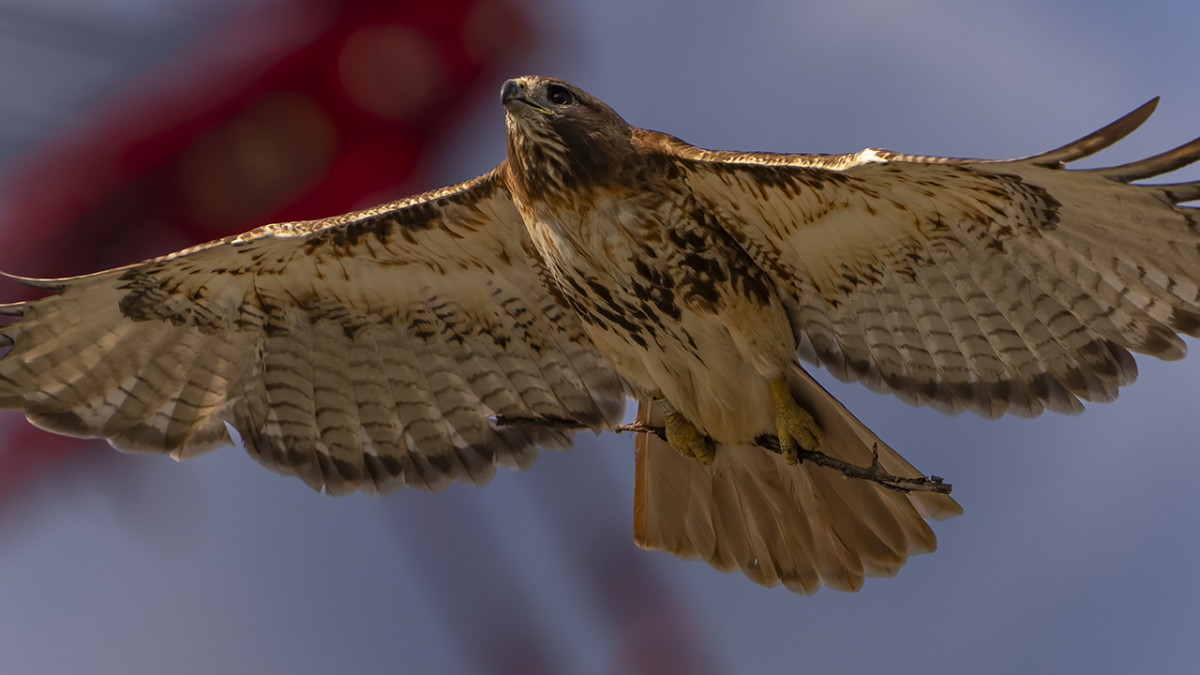
Big Red flies near Meinig Fieldhouse.
Over the next year, Cornell Facilities staff, construction workers and ornithologists collaborated closely to cause minimal disruption to Big Red and her fledglings, and to protect all birds from colliding with the building's windows.
Along the way, the birds fluttered between steel beams and perched on cranes, charming workers at the site - just as they have inspired birdwatchers around the world. The crew embraced the hawks as part of daily life, even sporting stickers of Big Red on their hard hats and creating and filling a makeshift birdbath to keep them cool.
"It's funny," said Jake Duell, Cornell Facilities construction manager, "because they are the most hardened guys that I've known forever, and they're so soft when it comes to these birds."
Initially, 12 aging light poles were slated to be destroyed as part of the project, which will provide indoor practice, competition and recreation space for students. But two of those poles had held Big Red's nest in the past, so Facilities worked with the Lab to give her a chance to stay.
"We demoed most of them all down, leaving these two last winter, in the hope that the hawks would come back and nest in them," Duell said. "It was really just a shot in the dark that they would come back."
'You can't take them for granted'
Big Red is now 22, so maintaining her nesting site is critically important, said Eldermire.
Wild Red-tailed Hawks typically live 10 to 15 years. "Each of these years that we have left, you can't them take for granted," he said.
For many viewers, watching Big Red's eggs hatch and her chicks grow has expanded their identity.
"They become birdwatchers through those cameras," Eldermire said, "and then share that with other people online and out in the world. That's the power of that site."


