
Children from less privileged families are less likely to attend grammar school after primary school, despite achieving the same results. Targeted mentoring can reduce this gap.
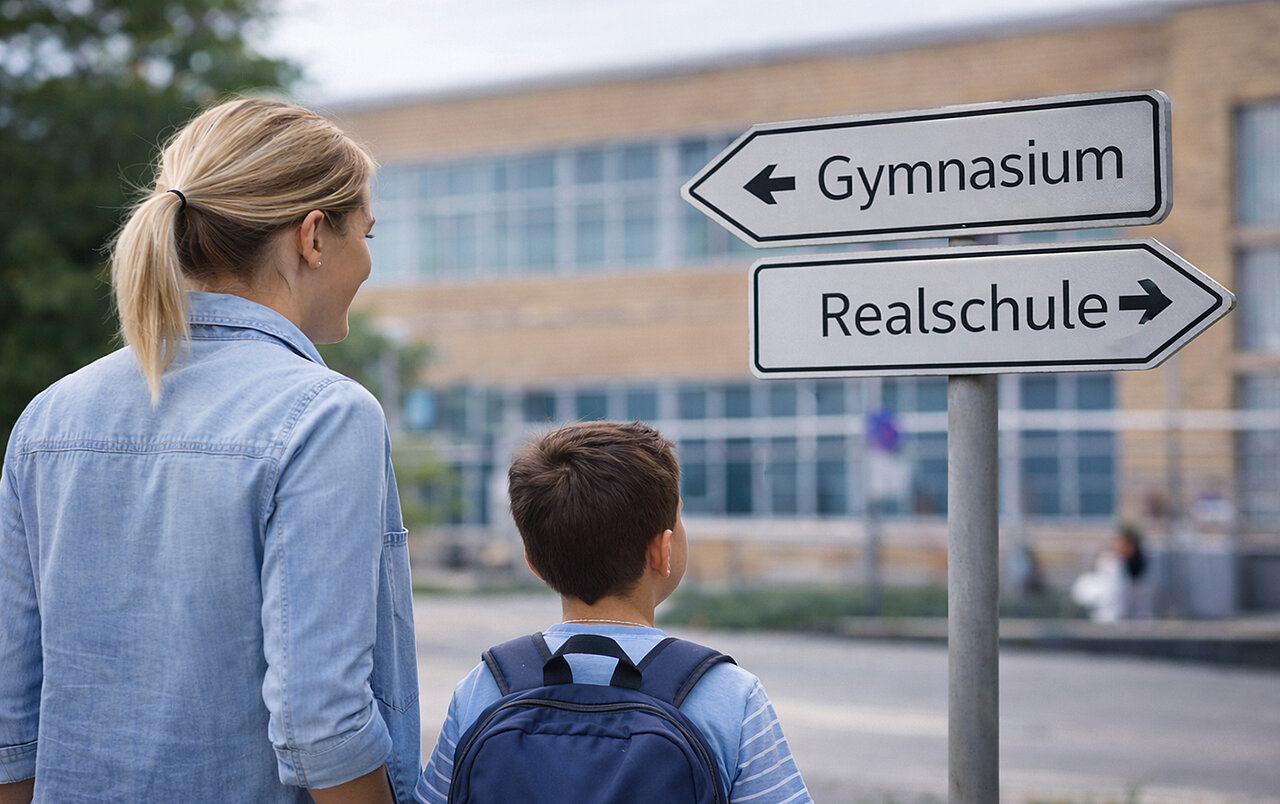
Social background continues to play a major role in determining the educational path of children in Germany. This is the conclusion of a recent study by the Cluster of Excellence ECONtribute at the Universities of Bonn and Cologne.
The research team led by Professor Pia Pinger (University of Cologne), Professor Armin Falk (University of Bonn) and Professor Fabian Kosse (University of Würzburg) found that the socio-economic status of parents plays a decisive role in the choice of secondary school. In most federal states, parents make this decision at the end of fourth grade, before which the primary school makes a recommendation.
Status of the parental home is decisive
The study shows: Primary school children from less privileged families are around a third less likely to go on to grammar school than their peers from better-off households. Even with equal performance, a gap of around 22 percentage points remains.
"Our results clearly show how strongly social background continues to determine educational pathways," explains Pia Pinger. "Equal opportunities still do not exist in the German education system."
The study is based on data from the Bonn Family Panel. This followed more than 700 families with children born between 2002 and 2004 for seven years. The data includes interviews with the children and their families, school-related information and data on the decision-making process when choosing a school.
One-year mentoring programme with clear results
Using this data, the research team not only analysed the gap in the transition to grammar school, but also the effectiveness of targeted support measures. The results showed: "Targeted mentoring programmes for socially disadvantaged children improve equal opportunities permanently and measurably," says Fabian Kosse, who heads the Chair of Data Science in Business and Economics at the University of Würzburg.
To this end, randomly selected primary school children from families with a low socio-economic status took part in the "Balu und Du" mentoring programme. Volunteer mentors, mostly students, met with the children for a year to promote their psychosocial development and broaden their personal horizons through joint activities.
The children who took part in the mentoring programme were eleven percentage points more likely to go on to secondary school. This effect persisted even after five years.
Role models are created for the children
"The transition from primary school to secondary school plays a key role in determining a child's future educational and professional career," explains Pia Pinger. "Mentoring ensures that children have appropriate role models and that their parents become more open to a secondary school education."
Publication
Mentoring and Schooling Decisions: Causal Evidence. Armin Falk, Fabian Kosse, Pia Pinger, Journal of Political Economy, 10 December 2025, DOI 10.1086/738484, https://www.journals.uchicago.edu/doi/full/10.1086/738484?journalCode=jpe


