
Previous studies may have underestimated how much Mercury has contracted as the planet cooled over billions of years because its rough surface hides some of the geological evidence.
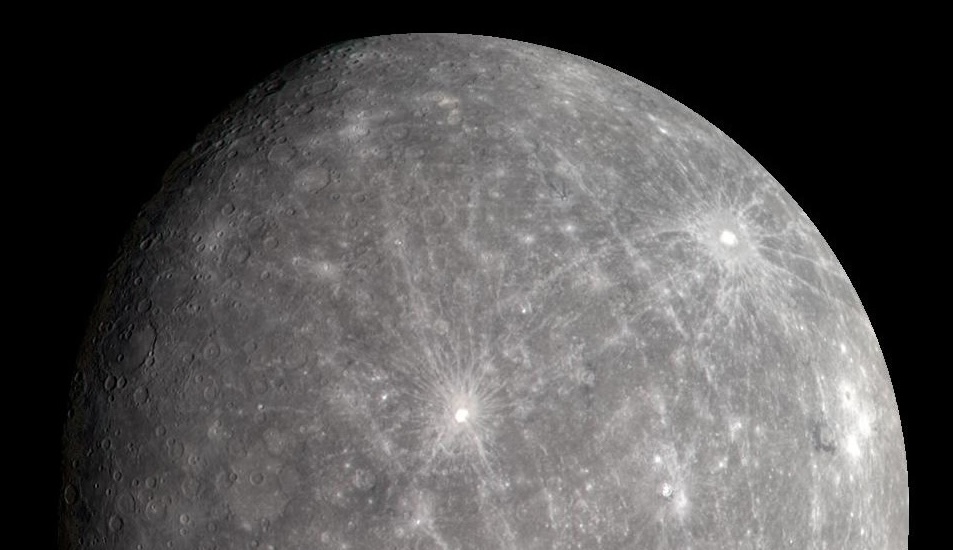
The surface of Mercury is filled with craters, ridges, and steep cliffs. Over billions of years, as the planet's interior cooled, the planet also shrank. And, just as the skin of a drying fruit wrinkles when what is inside it shrinks, Mercury's rocky surface crumpled into ridges and cliffs as its interior cooled and the planet contracted. Mercury has quite literally grown smaller with age.
These geological and topographical features found on the planet's surface have also preserved a record of how Mercury has evolved. Scientists have long used them to study the planet's geological history.
New research led by Hokkaido University, in collaboration with the German Aerospace Center (DLR) and The University of Tokyo, suggests that Mercury has contracted by about 10 to 30 percent more than the previous estimates suggested. The team found that the planet's rough surface may have obscured some of the tectonic structures used by scientists to calculate its shrinkage. The findings were published in Geophysical Research Letters.
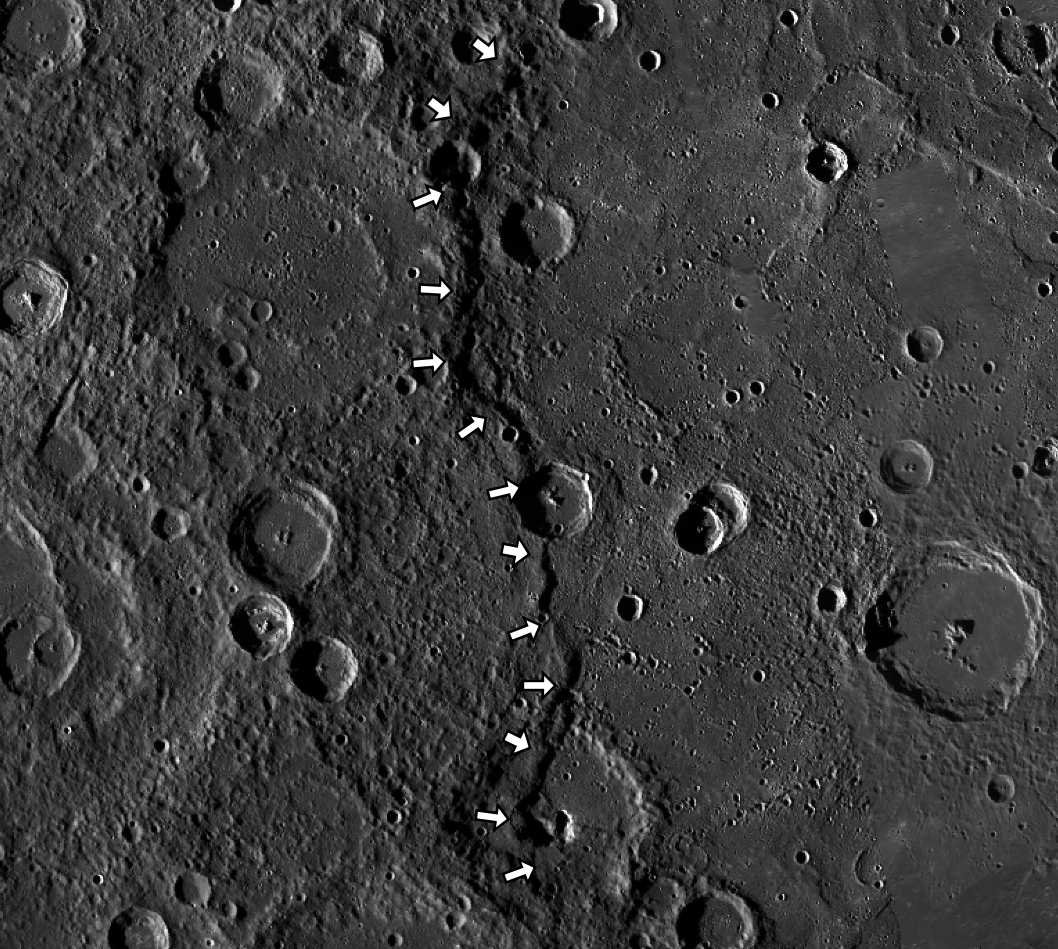
Among the geological features found on Mercury are something that scientists call shortening structures, these are the ridges and scarps created when the planet's crust was squeezed as its interior cooled and contracted.
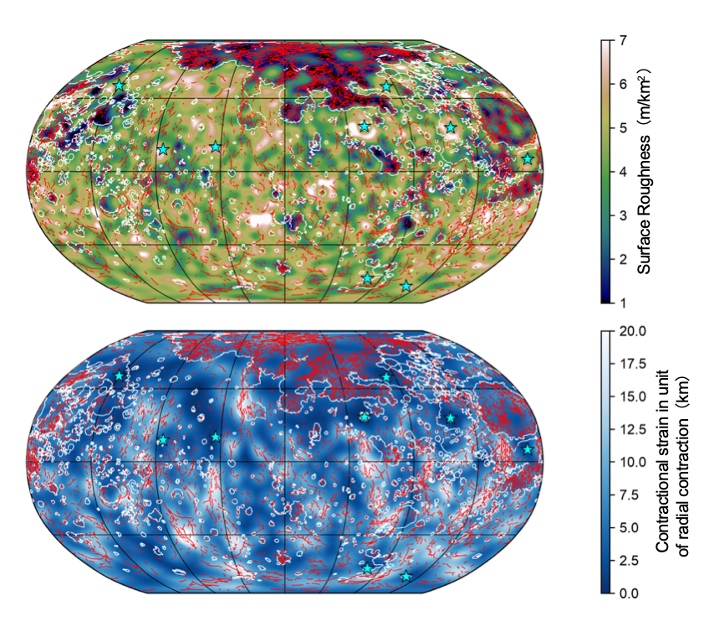
By mapping these structures, scientists can estimate how much Mercury's radius has decreased. However, the researchers found that shortening structures are much more commonly identified in smoother terrain than in rougher regions, suggesting that some of the planet's tectonic record might have been obscured.
"Mercury's surface preserves a record of how the planet has cooled and contracted, but we found that this record is incomplete," says Gaku Nishiyama, lead author of the study. "We compared a global map of Mercury's surface roughness with maps of shortening structures and contraction. Once we account for the effect of rough terrain, Mercury appears to have shrunk considerably more than what the visible tectonic record alone suggested."
A particularly clear pattern emerged when the researchers looked at relatively young impact craters. When a large impact occurs, surface material can get thrown across the surrounding area, forming rough deposits called ejecta. These deposits can cover older tectonic structures and make them harder to see. Around the Rachmaninoff crater, for example, shortening structures are less common in areas covered by rough ejecta. Some also become less visible closer to the crater, suggesting that they may be partly buried by impact material.
After accounting for the relationship between surface roughness and visible tectonic structures, the estimated radial contraction of Mercury increased from 8.3 kilometers to 11.6 kilometers. The researchers suggest that this figure may still be an underestimate and that the actual contraction could be greater.
The findings provide new insights into Mercury's geological evolution.
Future observations from BepiColombo, the joint Japan-Europe mission to Mercury, may help refine the picture further. The BepiColombo Laser Altimeter, or BELA, will measure surface roughness at much finer scales and could reveal relationships between much younger geological events and tectonic structures that have so far been difficult to detect completely.
The same effect could also be relevant on other rocky worlds, particularly the Moon, whose surface is even rougher than Mercury's.
Original article:
Nishiyama et al., "Underestimation of Planetary Contraction due to Obscuration by Surface Roughness: The Case of Mercury." Geophysical Research Letters. 10 September 2026.
DOI: 10.1029/2026GL124067
Funding:
This work was supported by the Japan Society for the Promotion of Science (JSPS) KAKENHI (grant numbers JP22K21344 and JP26KJ0001) and the JSPS Overseas Research Fellowship. A. Broquet was supported by the Alexander von Humboldt Foundation and a DFG Emmy Noether grant. Open Access funding was enabled and organized by Projekt DEAL.


