

Dr Mitra Safavi Naeini (left) continues her commentary of the radiation studies being undertaken in the Artemis II mission.
A 10-day lunar flyby will not settle late cancer risk, cardiovascular risk, central nervous system risk, reproductive risk, or the consequences of spending months in transit to Mars.
One reason is that some of the biggest uncertainties lie precisely in chronic, low-dose-rate exposure to mixed fields of heavy ions: the hardest thing to mimic perfectly on Earth and far too slow to resolve on a single short mission.
It will not answer the very different problem of radiation exposure during repeated moonwalks on the lunar surface, where the Moon blocks roughly half the sky but also becomes part of the radiation source, as galactic cosmic rays striking the regolith generate secondary or "albedo" neutrons.
It will not produce a final 'safe dose' for exploration. What Artemis II can do is reduce uncertainty: validate models against measurements in a real deep-space mission, show how well the monitoring hardware works with a crew aboard, and begin tying physical dosimetry to biological and operational data.
This is also why flight data and accelerator data solve opposite halves of the problem. Orion gives researchers the real mixed field, the real low dose rate in the real spacecraft geometry.
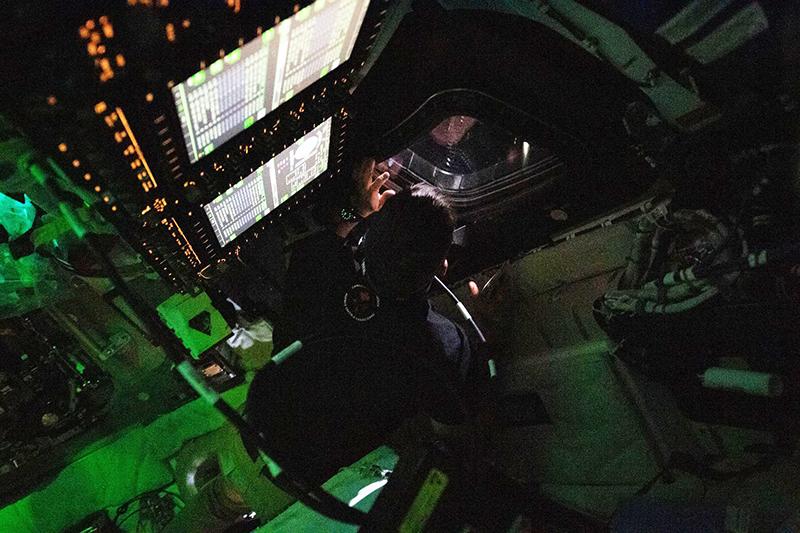
Ground facilities such as NASA's Space Radiation Laboratory, ANSTO's Centre for Accelerator Science, Australian Centre for Neutron Scattering and the Australian Synchrotron give them something flight never can: control.
They can isolate radiation species, energies, materials and electronics, and ask mechanistic questions one beam at a time. At the same time, this work approximates deep space, not a perfect copy. Future protection strategies depend on both.
Radiation matters just as much for hardware. Energetic particles can flip memory bits, trigger latch-up and other single-event effects, build up total ionising dose over time, and displace atoms in semiconductor lattices.
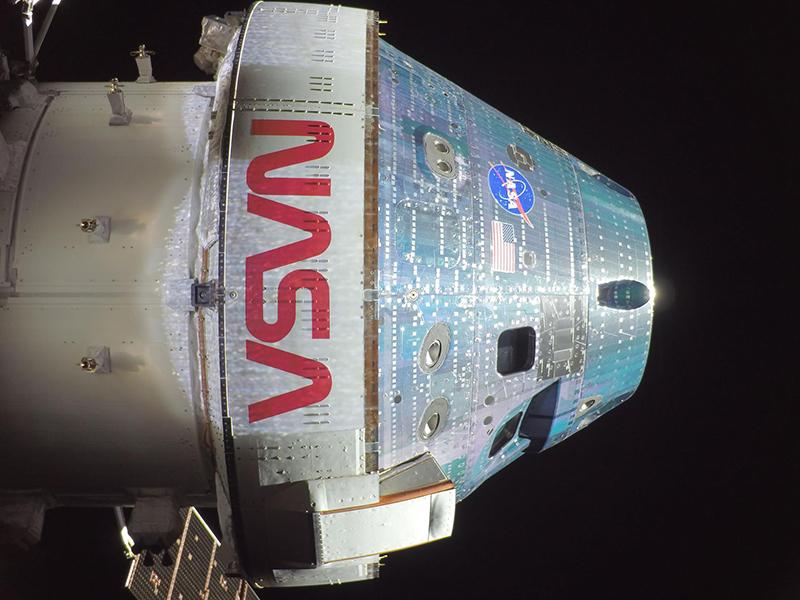
The same environment that threatens cells can corrupt a sensor, a processor or a power system. Optics and solar materials darken or degrade. Artemis II even carries a CubeSat, TACHELES, to measure effects of the space environment on electrical components and systems.
A spacecraft that protects its crew for ten days will not automatically keep its avionics, solar arrays or surface hardware functioning for years.
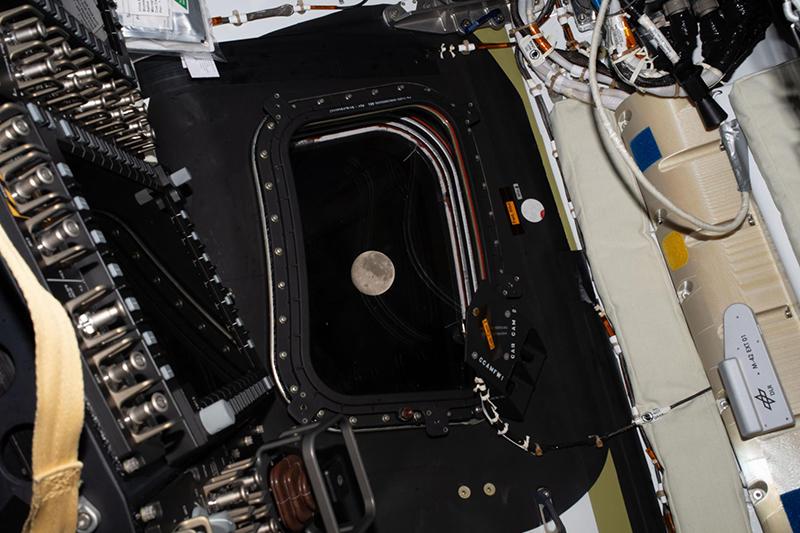
Under NASA's updated architecture, Artemis III is now planned as an Earth-orbit systems demonstration, with Artemis IV targeted as the first Artemis lunar landing. The radiation data gathered now feed directly into what comes next: how landers and habitats are configured, where future crews shelter during solar events, how much margin surface systems need, how electronics are qualified, and which parts of the problem must still be solved on the ground using irradiation facilities, materials testing and radiobiology.
Artemis is often described as a return to the Moon. In reality, it is a transition from short sorties to operations that must eventually become routine. Radiation is one of the hard constraints on that transition because it is not a single hazard but a moving target: physics, environment, material, geometry, biology and operations are all tangled.
The photographs from Artemis II will be remembered. But for the engineers, physicians, biologists and radiation scientists planning what comes after this flyby, the data that matters most will be the radiation data map inside Orion, built particle by particle while four astronauts travel beyond Earth's magnetic shelter.
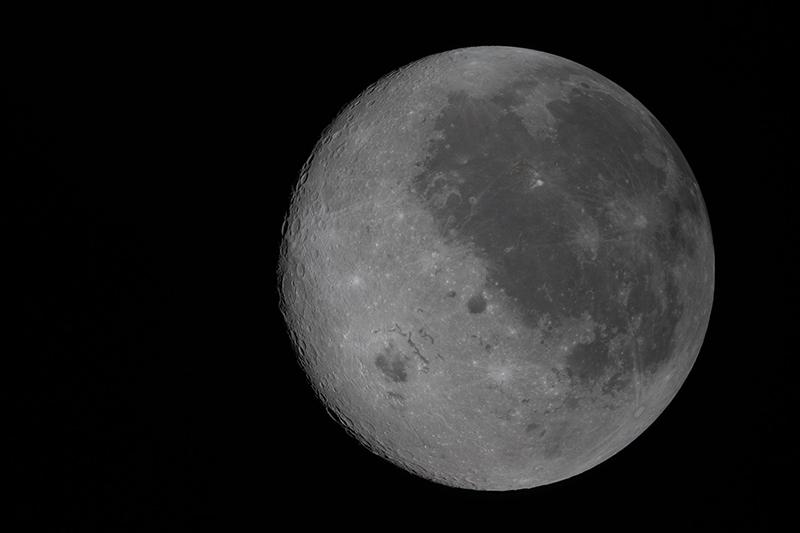
Meanwhile, those four astronauts will see and document the Orientale basin- the Grand Canyon of the Moon-a 930-kilometre-wide impact scar (pictured above) formed when an object roughly 60 kilometres across struck the surface 3.8 billion years ago. They will see the Ohm crater, with its bright rays of ejected material and the Pierazzo crater, streaked with rock that melted, flowed, and froze.
Before launch, they memorised fifteen lunar features to stay oriented. Crew member Koch has already described an uncanny sensation as the far side came into view. She said, "The darker parts just aren't quite in the right place. Something about you senses that is not the moon that I'm used to seeing."
There is no dark side of the Moon, really. Matter of fact, there never was. We just had to go around to find the light.
Read Part 1: Artemis II and the invisible hazard on the way to the Moon


