
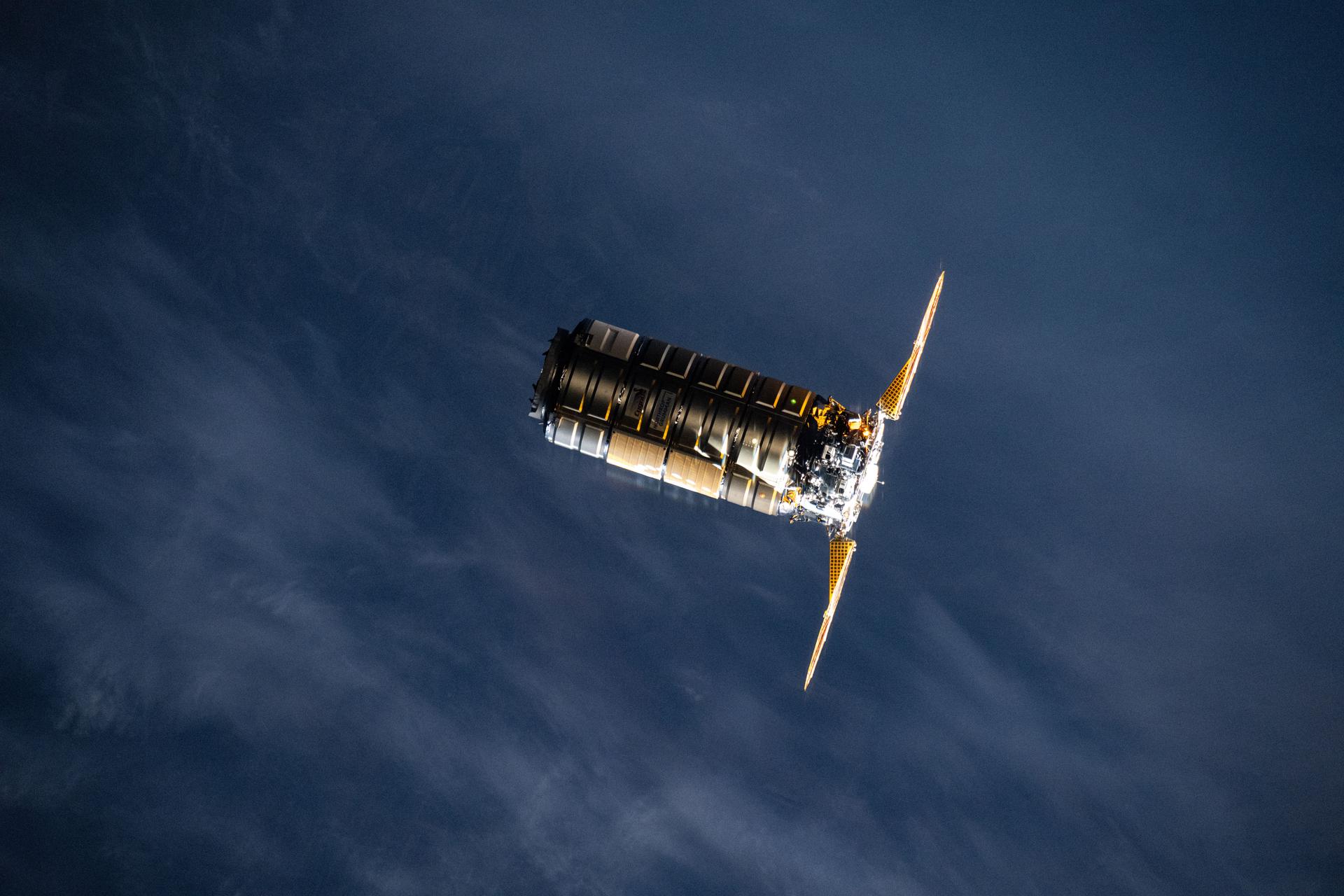
NASA, Northrop Grumman, and SpaceX are targeting no earlier than 8:49 a.m. EDT on Wednesday, April 8, for the next launch delivering science investigations, supplies, and equipment to the International Space Station.
Filled with approximately 11,000 pounds of cargo, the Northrop Grumman Cygnus XL spacecraft, aboard a SpaceX Falcon 9 rocket, will launch from Space Launch Complex 40 at Cape Canaveral Space Force Station in Florida. The mission is known as NASA's Northrop Grumman Commercial Resupply Services 24, or Northrop Grumman CRS-24.
Watch the agency's launch and arrival coverage on NASA+, Amazon Prime, and the agency's YouTube channel. Learn how to watch NASA content through a variety of online platforms, including social media.
Following launch, astronauts aboard the space station will use the Canadarm2 robotic arm to capture the Cygnus XL on Friday, April 10, before ground controllers install it to the Unity module's Earth-facing port for cargo unloading.
Highlights of space station research and technology demonstrations being delivered aboard this Cygnus XL spacecraft include:
- A new module for the Cold Atom Lab to advance quantum science that could improve computing technology and aid in the search for dark matter
- Hardware to produce a greater number of therapeutic stem cells for blood diseases and cancer
- Model organisms to study the gut microbiome
- A receiver that could enhance space weather models that protect critical space infrastructure such as GPS and radar


