
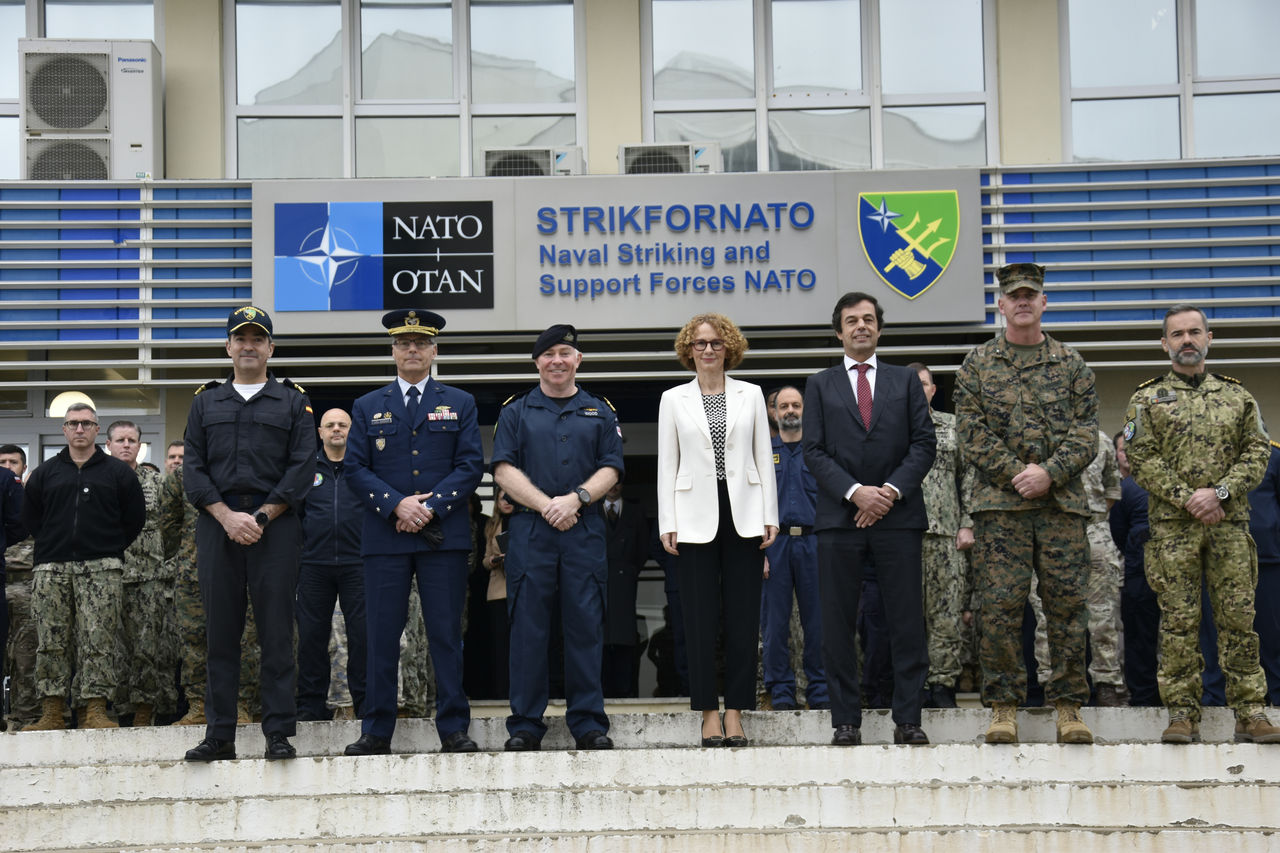
NATO Deputy Secretary General Radmila Shekerinska conducted a two-day visit to Portugal (7-8 January 2026), recognising Portugal's strategic role, and reiterating Alliance priorities.
Ms. Shekerinska praised Portugal's contributions to NATO missions, its support for Ukraine, and its commitment to increasing defence spending toward the 5% GDP target agreed at the NATO Summit in The Hague. Arguing that "Dangerous times call for decisive action," she urged Allies to prioritise defence investment and accelerate production, to counter threats from Russia and its partners.
In Porto, the Deputy Secretary General participated in the Diplomatic Seminar on "New Security and Defence Paradigms," alongside Portuguese Minister of National Defence Nuno Melo, and European Commissioner for Defence and Space, Andrius Kubilius. She underscored the importance of the NATO-EU partnership for innovation and production.
Ms. Shekerinska visited STRIKFORNATO and the NATO Communications and Information Academy and the NATO Joint Analysis and Lessons Learned Centre (JALLC). The Deputy Secretary General also spoke at the Catholic University of Portugal's Institute of Political Studies, where she discussed NATO's challenges in 2026 with students and professors, emphasising NATO's strength in unity, stressing "We are stronger together … That's an incredible advantage. We must leverage it."
During her visit, the Deputy Secretary General met and exchanged views with Minister of State and Foreign Affairs Paulo Rangel, Minister of National Defence Nuno Melo, President of the Assembly of the Republic José Pedro Aguiar-Branco, and the President of the NATO Parliamentary Assembly Marcos Perestrello, as well as other members of the Assembly of the Republic.


