
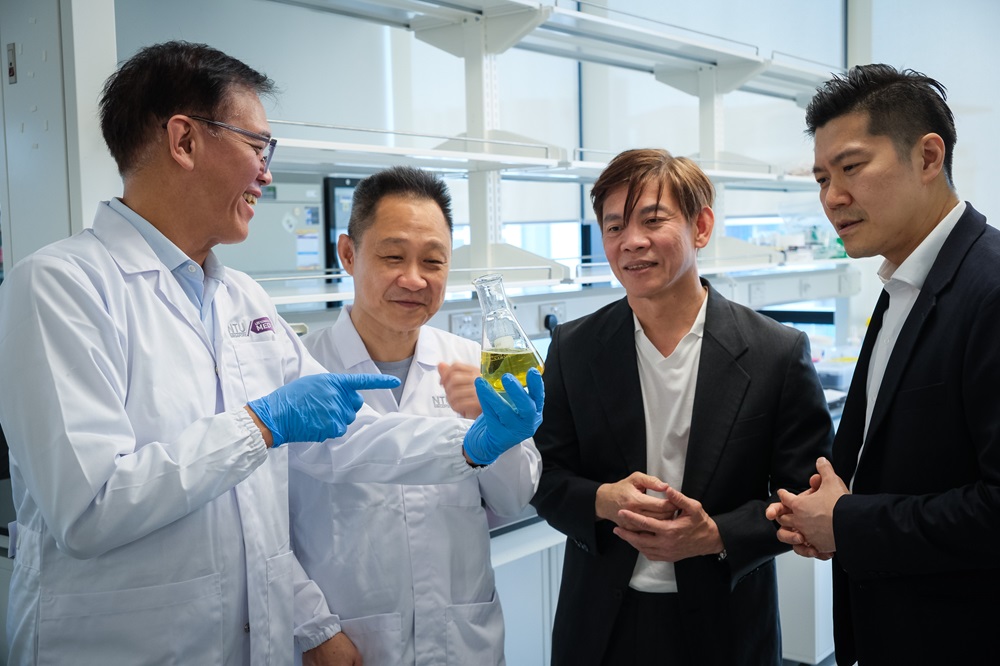
A new orally taken, gut-based compound developed by scientists from NTU Singapore, reduces the amount of dietary fat absorbed in the intestines.
This differs from most existing weight-loss drugs, which act mainly by suppressing appetite or altering glucose regulation, as well as supplements that claim to boost metabolism to burn more calories.
The new technology was developed by a multidisciplinary NTU research team led by Provost's Chair in Metabolic Disorders Associate Professor Andrew Tan, Vice Dean (Innovation and Enterprise), Lee Kong Chian School of Medicine and Professor Tan Choon Hong from the School of Chemistry, Chemical Engineering and Biotechnology, who led the development of the chemistry and synthesis platform underpinning the work.
The research is being advanced in collaboration with longevity biomedical biotech firm Aria Bioscience Pte Ltd, to support further development and translation into consumer healthcare products and future therapeutic applications.
Obesity has become one of the most pressing global health challenges, affecting more than one billion people worldwide and driving a rise in chronic conditions such as type 2 diabetes, cardiovascular disease and liver disorders.
Despite public health efforts, many people continue to struggle with maintaining a healthy weight while consuming a modern diet that is high in fat and sugar.
Singapore's National Nutrition Survey 2022 found that average daily fat intake among residents rose from 94g in 2019 to about 100g in 2022, highlighting the growing contribution of dietary fats to total calorie intake.[1]
Obesity is strongly linked to fatty liver disease
Obesity is closely linked to fatty liver disease, which affects about one in three adults worldwide, with up to 80 per cent of patients also obese[2].
Often silent at first, the condition can progress to cirrhosis and liver cancer and is a major contributor to the roughly two million liver-related deaths each year.
In Singapore, it is projected to affect up to 40 per cent of adults, or about 1.8 million people, by 2030.
"Our findings suggest that applying a controlled brake on fat absorption in the gut can help reduce the amount of fat reaching the liver, particularly during periods of high-fat intake or for people who are unable to exercise," said Assoc Prof Andrew Tan.
"Diet control and exercise remain the foundation of metabolic health. The aim is to support healthier handling of dietary fats while enabling proper nutrition."
From lab to market
Executive Director of Aria Bioscience, Mr Timothy Chen, said the company is working closely with NTU researchers to advance the technology through human safety and efficacy studies.
Their short-term goal is to bring it to consumers first as an oral supplement under its medical-grade brand of nutraceuticals, Arialab RX.
"Our focus is on advancing additional studies and clinical trials with NTU, coupled with our expertise in downstream development and commercial translation," he said. "This will be critical in determining their potential role as future therapeutic options for metabolic disorders."
Safe approach to reduce fat build-up in the liver
In a peer-reviewed study published recently in Pharmacological Research, the NTU-led team validated the compounds in animal models, where they reduced intestinal fat uptake without affecting the absorption of glucose or sugars.
Mice fed a high-fat diet and given the compounds orally gained less weight and accumulated less fat in the liver, with no toxic side effects observed under laboratory conditions.
The compounds act locally in the gut through two main pathways. They block a receptor on intestinal cells that helps fats enter the body, directly reducing fat absorption and the amount of fat passed from the gut to the liver.
At the same time, they promote beneficial gut bacteria that produce short-chain fatty acids, which have been linked to improved metabolic health, reduced inflammation and a stronger gut barrier.
By remaining largely within the gut, with minimal entry into the bloodstream, the compounds are expected to limit effects on other organs while reducing stress on the liver when dietary fat intake is high.
Giving an independent expert comment, Dr Yew Kuo Chao, Senior Consultant in Gastroenterology and Hepatology at Tan Tock Seng Hospital, said that obesity and fatty liver disease are chronic conditions that require safe approaches offering metabolic benefits without adversely affecting glucose regulation or causing toxicity, particularly for long-term management.
"Obesity and fatty liver disease often develop together over many years. Slowing fat absorption in the gut can reduce the amount of fat reaching the liver, especially during high-fat intake or for those who are unable to exercise. The NTU gut-localised mechanism aligns with a safety-focused strategy and supports natural metabolic pathways, which are crucial for long-term metabolic disease therapy."
Nature-inspired design, unlike other compounds in the market
The compounds are inspired by fatty acid esters of hydroxy fatty acids, known as FAHFAs, which are naturally occurring lipids found in small amounts in the human body and in foods.
While naturally occurring FAHFAs are known to have beneficial metabolic effects, they are present at very low levels and break down easily in the digestive system, limiting their practical use.
The NTU team addressed this by developing gut-stable, nature-inspired FAHFAs that preserve these beneficial properties while making them suitable for reliable oral use.
Unlike some existing fat-blocking products that prevent fat digestion entirely and can lead to side effects such as oily stools and digestive discomfort, the NTU-developed compounds gently slow dietary fat uptake at the gut lining while supporting a healthier gut microbial balance.
When used alongside diet control and physical activity, this gut-based approach could offer additional support for managing excess weight and reducing fat-related stress on the liver, particularly for individuals at higher metabolic risk, such as those with diabetes.
This work is supported by NTU's Innovation and Entrepreneurship initiative, reflecting the University's strengths in translating fundamental science into practical innovations that can address major public health challenges.
NTU Vice President (Innovation and Entrepreneurship), Professor Louis Phee, said the collaboration reflects NTU's role as one of the leading global hubs for biomedical research and innovation.
"To address major global health challenges, we work closely with experienced industry partners to translate NTU's research into solutions that meet real needs," he said. "This collaboration shows how academia and industry can work together to advance Singapore's position at the forefront of biomedical research, for the public good."
[1] Ministry of Health, Singapore. (2023). National Nutrition Survey 2022. Ministry of Health.
https://www.moh.gov.sg/resources-statistics/reports/national-nutrition-survey-2022
[2] HealthXchange. (n.d.). Fatty liver disease on the rise among Singaporeans. https://www.healthxchange.sg/how-to-prevent/fatty-liver/fatty-liver-disease-rise-singaporeans


