
Key points
- CSIRO research vessel (RV) Investigator provides Australia's scientists with the capability to conduct vital biodiversity surveys of the life in Australia's oceans, especially in the deep-sea.
- In its first 12 years, RV Investigator helped teams of researchers describe 179 species that are new to science, ranging from deep-sea sharks and octopuses to tropical fish and microscopic algae.
- It's estimated that, excluding microscopic plant and animal life, up to 95 per cent of Australia's marine life is yet to be recorded.
With all the new species discoveries recently , it raises the question: just how much of Australia's marine life is yet to be discovered, and what does it take to uncover it?
To explore the science behind the discoveries, Dr Ben Arthur, marine ecologist and Voyage Manager with the CSIRO Marine National Facility , reflected on some of the memorable new species discovered with the help of CSIRO research vessel (RV) Investigator , and what happens from the moment a specimen is identified as a new species to when it's officially recognised by science.
From microscopic algae to deep-sea sharks, these discoveries offer a window into the immense hidden biodiversity of Australia's oceans.
Let's dive in.
Seven wonders of the underwater world
Latest (and a deepest) new species
Game of Thrones Shrimp (Greyjoyella mundugala)
GOT shrimp? Announced at the end of 2025 and discovered four kilometres beneath the ocean surface, this tiny shrimp-like crustacean is one of the deepest new species collected by RV Investigator. Measuring only 2.5 millimetres long, it belongs to a group of animals that are abundant in deep-sea sediments.
The genus name for the new species references the Greyjoy family from Game of Thrones, while the species name honours Mundugala, a spirit from Australian Indigenous mythology.

Biggest new species
Painted Hornshark (Heterodontus marshallae)
At the opposite end of the size scale is the Painted Hornshark , the largest new species so far described from RV Investigator voyages. This beautifully coloured species of deep-sea shark reaches a length of 600 millimetres and is related to the Port Jackson Shark.
The species was mistaken for a related species until researchers from the Australian National Fish Collection helped identify, describe and reclassify it.

One of the cutest new species
O'Loughlin's Sea Cucumber (Deima oloughlini)
Deep-sea life is often imagined as strange or scary, but some species are undeniably endearing. O'Loughlin's Sea Cucumber is oval-shaped, soft-bodied and has an abundance of appendages, with 10 pairs of legs and 20 tentacles spread across the length of its 110-millimetre body.
This squishy little critter filters deep-sea sediments for food and performs a vital role in recycling nutrients that help keep the seafloor healthy.

First (and smallest) new species
Hallegraeff Diatom (Pseudo-nitzschia hallegraeffii)
Not all discoveries come from the deep sea, and not all are visible to the naked eye. This species of diatom, a type of single-celled algae, grows to around 55 micrometres (a unit of length equal to one-millionth of a metre). It was named in honour of the University of Tasmania's Professor Gustaaf Hallegraeff to recognise his important research into harmful algal blooms.
The Hallegraeff Diatom was described in 2018 and collected from the ocean surface during a voyage in the East Australian Current in 2016.

Most fabulous new species
Orange-tailed Coralfish (Coradion calendula)
Staying near the ocean surface, many vibrant new species continue to be discovered on Australia's remarkable reefs and offshore seamounts. This beautiful butterflyfish, which reaches 158 millimetres in length, got its species name calendula for its resemblance to a marigold flower (which belongs to the genus Calendula).
This fabulous fish can be found in coastal waters around northern Australia.

Most famous new species
Carnarvon Flapjack Octopus (Opisthoteuthis carnarvonensis)
Few new species announcements capture public imagination like the dumbo octopus and this one went global. Announced in 2024, the Carnarvon Flapjack Octopus can fit in the palm of your hand and swims with the help of small flapping fins on its body, which give the group its common name for resembling Dumbo the Elephant.
The new species can also flatten like a pancake to hide on the seafloor, giving rise to its common name of 'flapjack' octopus.

Weirdest new species
Whalefall Zombie Worm (Osedax waadjum)
Some of the most remarkable discoveries can be a complete surprise.
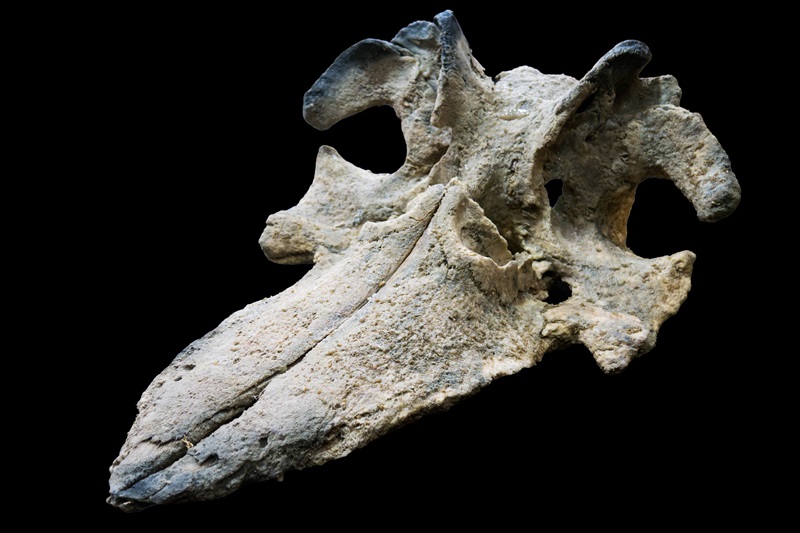
During the 2017 Sampling the Abyss voyage led by Museums Victoria , researchers made an unexpected find when they pulled a whale skull and bones from a trawl net! Found living in the bones was a new species of bone-eating worm, commonly known as a 'zombie worm'. The new species grows to about 7 millimetres and was described along with 8 other new worm species collected from the bones.
Significantly, this was the first discovery of a natural whale fall (whale carcass on the seafloor) in the deep-sea around Australia.

A ship with deep-sea survey-powers
Discovering these new species hasn't happened by accident. Behind these discoveries has been collaboration between countless organisations and institutes, many days at sea, and the specialised scientific capabilities of RV Investigator.
"RV Investigator made a big splash when it arrived in 2014 to deliver Australia some serious deep-sea survey-powers," Dr Arthur said.
"The ship can map the seafloor to any ocean depth and, most importantly for biodiversity research, can send sampling equipment down to depths of 5,000 metres or more."
Researchers use a range of nets and sleds to collect specimens from the water column and seafloor. Before sampling the seafloor, the vessel's Deep Towed Camera (DTC) is often deployed to identify suitable sampling sites.
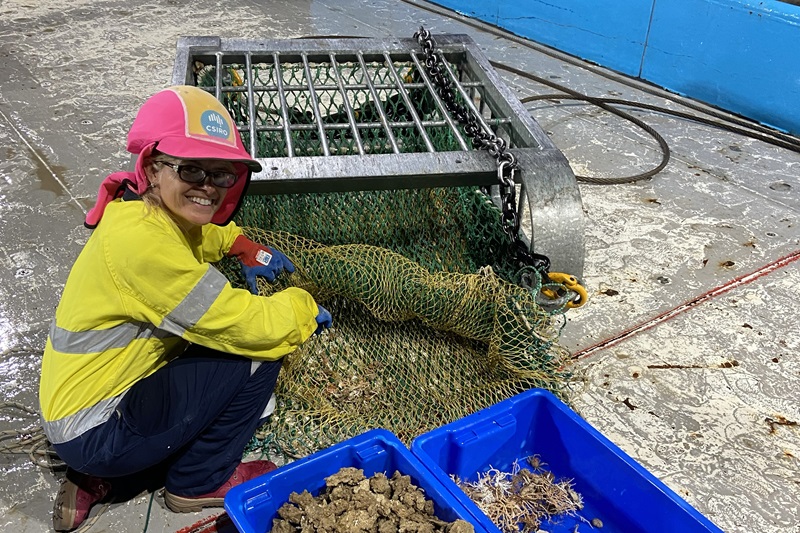
Dr Arthur said the DTC does more than just take pictures.
"The camera can also carry an environmental DNA , or eDNA, sampler that's been specially designed by the team here at CSIRO," Dr Arthur explained.
"The sampler collects the traces of DNA that animals shed into the water, helping us detect what lives in the deep-sea, even if we don't actually see or collect it."
CSIRO is working with the Minderoo Foundation to embed autonomous eDNA sampling into RV Investigator's seawater systems, allowing ocean biodiversity to be continuously mapped wherever the vessel travels.
However, physical specimens remain essential to science.
"We still need to collect physical specimens of animals to formally describe and name a new species, and to create reference DNA profiles," Dr Arthur said.
Identifying vs describing a new species
Scientists might talk about identifying a new species or describing a new species. So, what's the difference?
"If something is identified as a new species, it means that scientists recognise that it doesn't appear in the existing scientific record. Put simply, it's a species that hasn't yet been described or given a species name," Dr Arthur said.
For example, following a 2025 voyage to the Coral Sea Marine Park , scientists conducted a series of workshops and identified more than 110 species that were new to science . Describing those species will now require detailed measurement, comparison and finally publication into the scientific record.
Dr Arthur said this meticulous process can take many years.
"In our first 12 years, 179 new species were described from RV Investigator voyages , but scientists estimate that more than 1,500 new species are still waiting to be described from the specimens collected on those voyages," Dr Arthur said.
One study found that new species of marine life will sit in collections and museums for an average of 13.5 years before being formally described and named, highlighting a worldwide need for more taxonomists .

Where do all the specimens and data go?
Discovery does not end when a voyage does.
"Science is a team sport. Everything collected by RV Investigator, whether specimens or data, is shared and made available for everyone – nationally and globally – to use in their research," Dr Arthur explained.
Biological specimens are deposited in museums and collections across Australia, including the CSIRO Australian National Fish Collection . These collections function as long-term 'biological libraries' of reference material for future research and study. Biological data from voyages is published to the Atlas of Living Australia and other global biological data repositories including the Global Biodiversity Information Facility and Ocean Biodiversity Information System .
"In fact, anyone can access all voyage data from RV Investigator, and the Marine National Facility's previous research vessels, via the MNF Data Portal ," Dr Arthur said.

Why it matters
It's estimated that up to 95 per cent of Australia's marine life is yet to be recorded and many thousands of new species await discovery. Collecting, cataloguing and describing marine life underpins Australia's ocean conservation and management.
"It informs decision-making for managing marine parks and fisheries, supports environmental assessments for industry and, importantly, provides vital insights to help sustain long‑term ecosystem resilience," Dr Arthur said.
"After all, you can't protect what you don't know exists."


