
3 min read
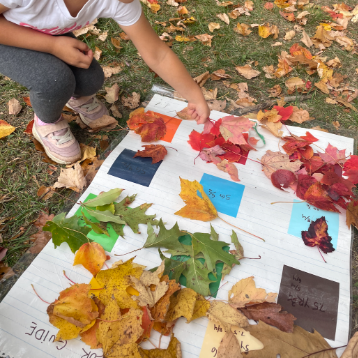
In fall 2025, more than 50 educators and over 1,500 young people across Maine and New Hampshire participated in NASA's Global Learning and Observation to Benefit the Environment (GLOBE) Green Down, a citizen science (also known as participatory science or community science) initiative that engages students and volunteers in tracking seasonal changes in plant life. By observing and documenting leaf color change and leaf drop, participants contributed valuable data used by scientists studying how ecosystems respond to a changing climate.
GLOBE Green Down is part of NASA's Global Learning and Observation to Benefit the Environment (GLOBE) Program, which connects students, educators, and the public with authentic scientific research. Using a standardized color guide and observation protocols, participants measured changes in plant health as autumn progressed, generating consistent, high-quality data that can be analyzed alongside observations collected worldwide.
The 2025 field season was led by the Gulf of Maine Research Institute and focused on supporting educators in taking learning outdoors while strengthening students' scientific observation and data literacy skills. Students from pre-kindergarten through high school studied a wide range of tree species-including maple, oak, birch, ash, beech, poplar, and apple-by making repeated observations in their local environments.
In Portland, Maine, students from five elementary schools conducted observations in their own schoolyards as part of environmental literacy and science education programs. Beyond New England, learners from Machias, Maine to British Columbia, and many locations in between, contributed observations, creating a geographically diverse dataset that reflects regional and continental patterns of seasonal change.
As they collected data, students also began asking their own research questions-mirroring the inquiry process used by scientists. Their questions explored differences in species behavior, the influence of sunlight, drought, wildfire smoke, and the built environment, and how these factors might affect the timing and progression of leaf color change.
Educators reported that participation in GLOBE Green Down helped students develop a stronger connection to their local ecosystems while gaining experience working with real-world scientific data. Many noted that learners were able to use their observations to discuss environmental change at both local and global scales, including potential climate change impacts on seasonal patterns.
This field season was hosted through NASA's Science Activation program as part of the Learning Ecosystems Northeast (https://science.nasa.gov/sciact-team/gmri/) (LENE) project. LENE brings together educator learning communities across Maine, New Hampshire, Vermont, New York, and Massachusetts, fostering collaboration between school-based and out-of-school educators. Through this network, educators support STEM learning, data literacy, and local ecosystem stewardship-empowering young people to contribute meaningfully to NASA-supported scientific research.


