When the US Department of Health and Human Services announced a new set of dietary guidelines in January, they flipped the old guidelines upside down, literally. The new food pyramid is inverted, making red meat and dairy the primary food groups instead of whole grains. After more than 100 years of United States Department of Agriculture (USDA) issuing dietary guidelines, this latest version has some nutrition experts scratching their heads.
One such expert is Hannah Cutting-Jones, College of Arts and Sciences assistant professor in the Department of Global Studies. Her expertise and research focus on food and colonialism, food history and nutritional science, including the history of government-issued dietary guidelines. She couldn't help noticing how the new guidelines seem to disregard a lot of the science that has validated them in the past, and she fears they will not "make America healthy again."
"While many of us may not follow USDA advice closely," she added, "these documents shape public policy and impact funding for school lunches, military bases, hospitals and SNAP benefits across the country."
Q&A
Cutting-Jones took some time to answer questions about the new guidelines, their accuracy and effectiveness, and offered suggestions for where to look for neutral nutritional guidance.
Image captions
 Image 1
Hannah Cutting-Jones is an assistant professor in the Department of Global Studies. Her primary areas of interest are food and colonialism, history of Christian missions in the Pacific, Pacific Islands food culture, food history and nutritional science.

Hannah Cutting-Jones is an assistant professor in the Department of Global Studies. Her primary areas of interest are food and colonialism, history of Christian missions in the Pacific, Pacific Islands food culture, food history and nutritional science.
Hannah Cutting-Jones is an assistant professor in the Department of Global Studies. Her primary areas of interest are food and colonialism, history of Christian missions in the Pacific, Pacific Islands food culture, food history and nutritional science.
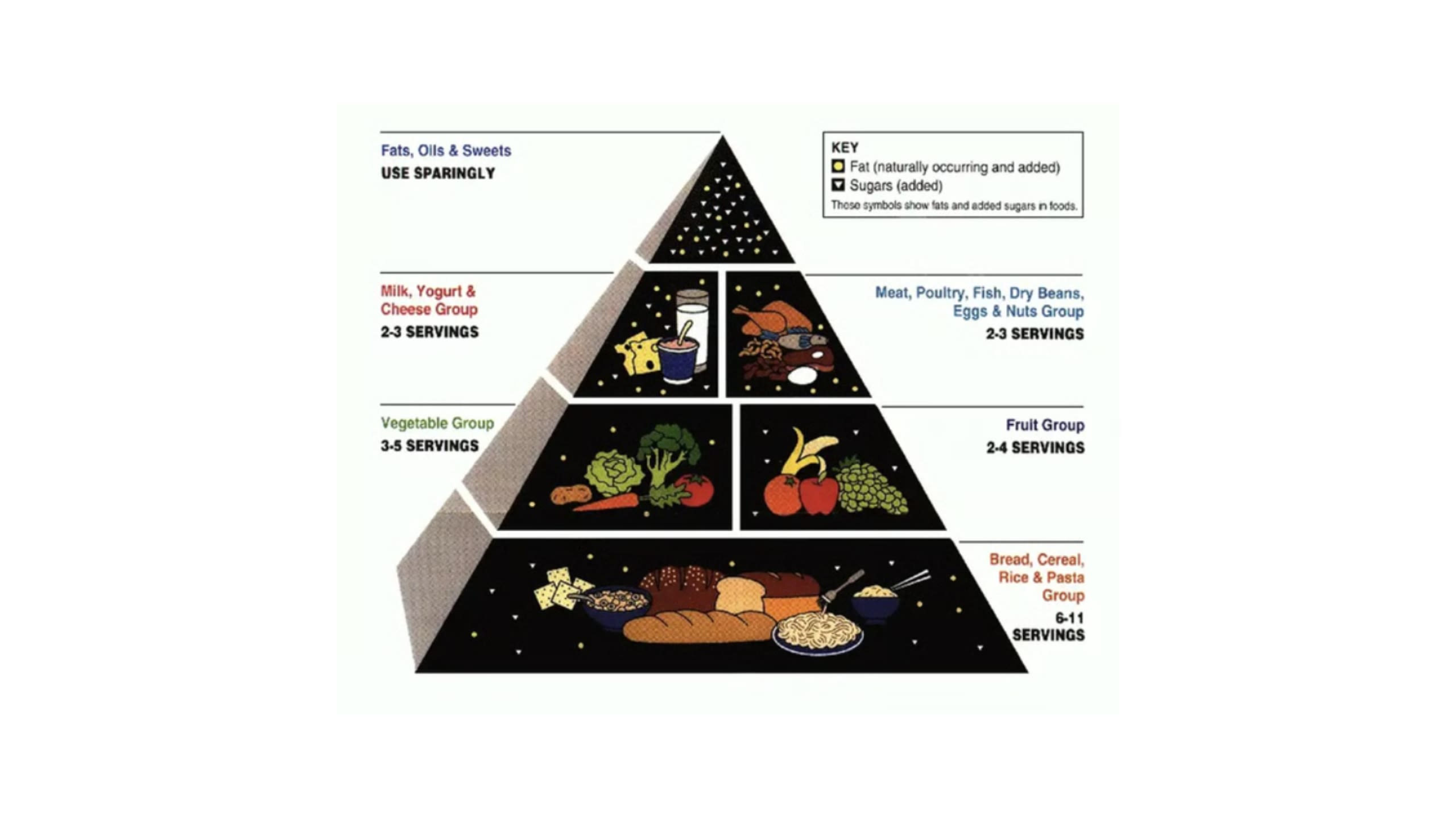
1992 Food Pyramid
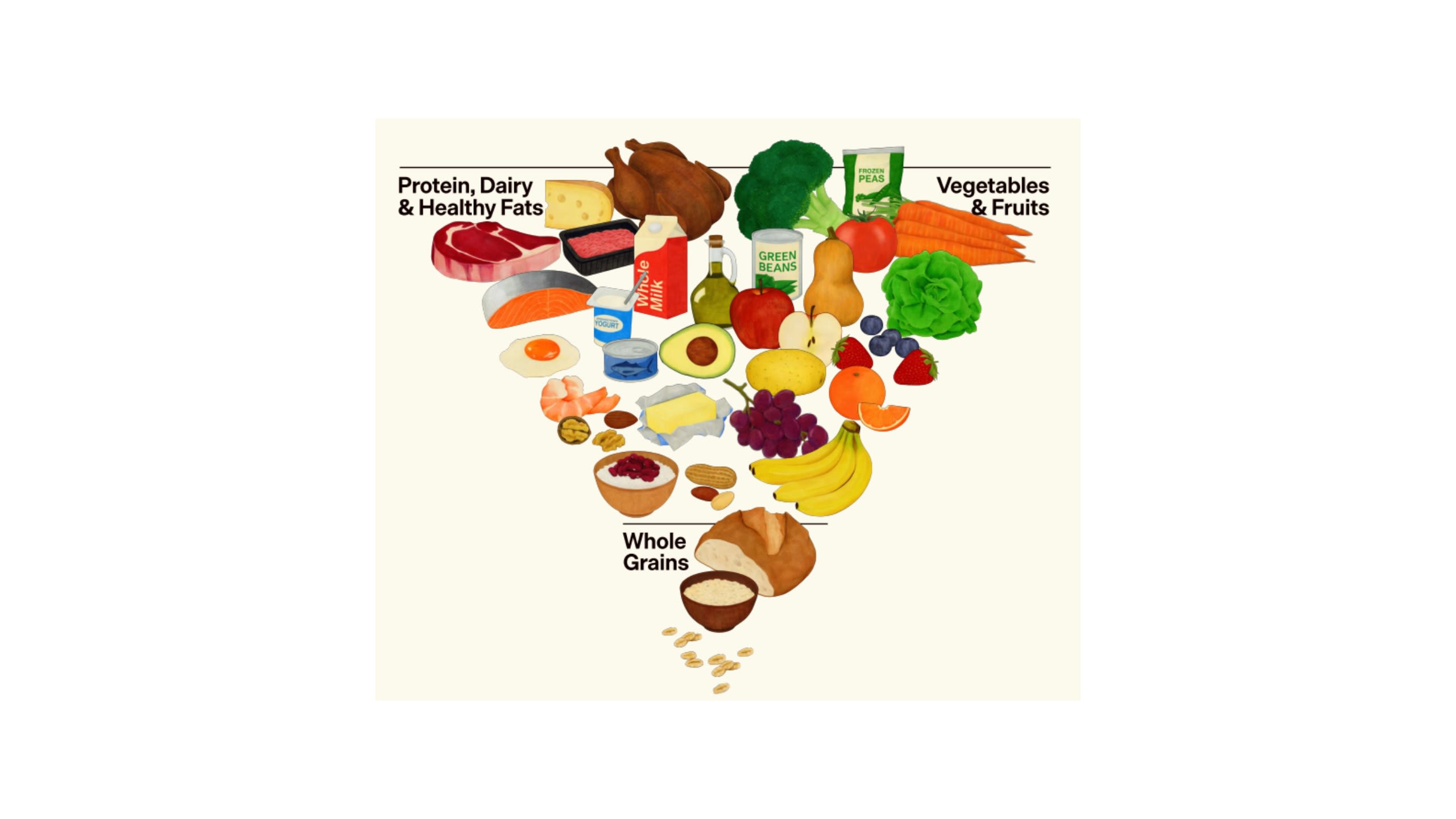
2025 Food Pyramid
CAS COMMUNICATIONS: In summary, what is the history and purpose of dietary guidelines provided by the USDA?
HANNAH CUTTING-JONES: The USDA was established in 1862 with a dual mandate of supporting America's agricultural sector and providing the public with nutritional guidance. The first nutritional guidelines came out in 1894 and since then, the USDA has published new guidelines every few years.
In 1992, after much behind-the-scenes drama, the USDA unveiled the first Food Guide Pyramid. Based on an acceptance of the diet-heart hypothesis linking saturated fat intake and heart disease, the pyramid oversimplified advice and, according to the graphic, recommended Americans consume 6-11 servings of breads and cereals per day and reduce fat intake. This ushered in a low-fat, processed foods hey-day, and rates of NCDs (non-communicable diseases like diabetes and diet-related cancers) continued to rise.
Despite the different graphics since 1992, including the "My Plate" version in 2011, official dietary advice has remained fairly consistent over the decades - eat vegetables, fruits, whole grains and protein every day, limit alcohol consumption and sugar, and keep saturated fat intake below 10% of your daily calories.
The 2026 guidelines, under a bold heading, "Eat Real Food," still recommend several servings of vegetables per day and limiting saturated fat to 10% of the diet. This recommendation in particular is contradictory, because if you're eating the recommended servings of red meat and whole-fat dairy, it's impossible to stay below 10% in saturated fats. Not to mention many nutritionists feel Americans are eating too much protein already and not nearly enough fiber.
CASCOMMS: There is clashing information about how much protein a person should consume. What is a reasonable amount of protein and what are the best sources of protein?
HCJ: The new guidelines almost double the recommended daily amount of protein, from .8 grams per kilogram of body weight to 1.6, but Americans already consume plenty of protein. A reasonable amount of protein to aim for as a person of average activity level and body size is a minimum of about 60-70 grams per day. Athletes or growing children may need to eat more protein to feel full and have adequate energy, and individual needs can vary, but this is a baseline. Animal products (meat, eggs, yogurt, cheese) of course contain protein, but other foods like beans and legumes, tofu and nuts provide protein as well. Brussel sprouts, broccoli, potatoes and oatmeal are other options to up your daily protein intake.
CASCOMMS: How do the 2026 dietary guidelines reflect today's American society?
HCJ: Dietary guidelines have always reflected the social and political dynamics of the age. During World War II and rationing, for example, the guidelines simply directed Americans to choose from seven food groups each day, while the 1992 Food Guide Pyramid distilled the contemporary medical consensus that people should eat less saturated fat and more carbohydrates. This most recent inverted food guide pyramid, by contrast, prioritizes the consumption of red meat and full-fat dairy.
CASCOMMS: What parts of the guidelines should people be the wariest of? What parts should people embrace? What should people be supplementing?
HCJ: At a time when we understand the impact of the meat industry on climate change, Americans should be wary about adding more meat to their diets; we know from decades of studies that consumption of processed and red meat increases the risk of developing heart disease and diet-related cancers. Meat contains no fiber, and while Americans are not deficient in protein, they are deficient in fiber. Plant-based diets provide adequate fiber, protein, and other vitamins and nutrients important for optimal health. Further, these guidelines contain no advice regarding alcohol consumption, which is something Americans should continue to monitor.
CASCOMMS: What are some reliable, non-biased, science-based sources for nutritional guidance?
HCJ: Major health organizations like Harvard's Nutrition Source, the Academy of Nutrition and Dietetics and non-profits like NutritionFacts.org or Examine.com are helpful places to find solid nutritional guidance. Look for organizations and studies that are not sponsored by food industries or have a particular bias but feature scholars, scientists and health professionals. I usually avoid social media influencers, as well, because sometimes they are trying to sell a product or aspirational outcome that is overly simplistic or too good to be true.