
The RMIT Food Innovation Hub is a nexus for researchers and industry to collaborate and build more resilient, regenerative and health-focused food systems.
The new Hub, launched on Thursday 18 June at the RMIT Bundoora campus, is a milestone in the University's growing investment in health and wellbeing to support Melbourne's northern growth corridor.
Drawing upon RMIT's capabilities in food technology and nutrition, which is currently ranked 1st in Australia and 26th globally, the Hub will lead the translation of food science, technology and nutrition to advance food systems across Asia-Pacific.
The Hub will bring together industry, researchers and community to progress research and development in specialist areas, with a focus on generating high-value and sustainable products, processes and services that support long-term health and wellbeing of people and communities.
In attendance at the launch event were special guests, including the Hon. Andrew Giles MP, Minister for Skills and Training and Member for Scullin, who spoke about the value that the Hub can bring to the area.
Celebrity chef and pâtissier Adriano Zumbo delighted guests by serving up healthier desserts made with a fibre researched by RMIT's food research team in partnership with Edlyn Foods.
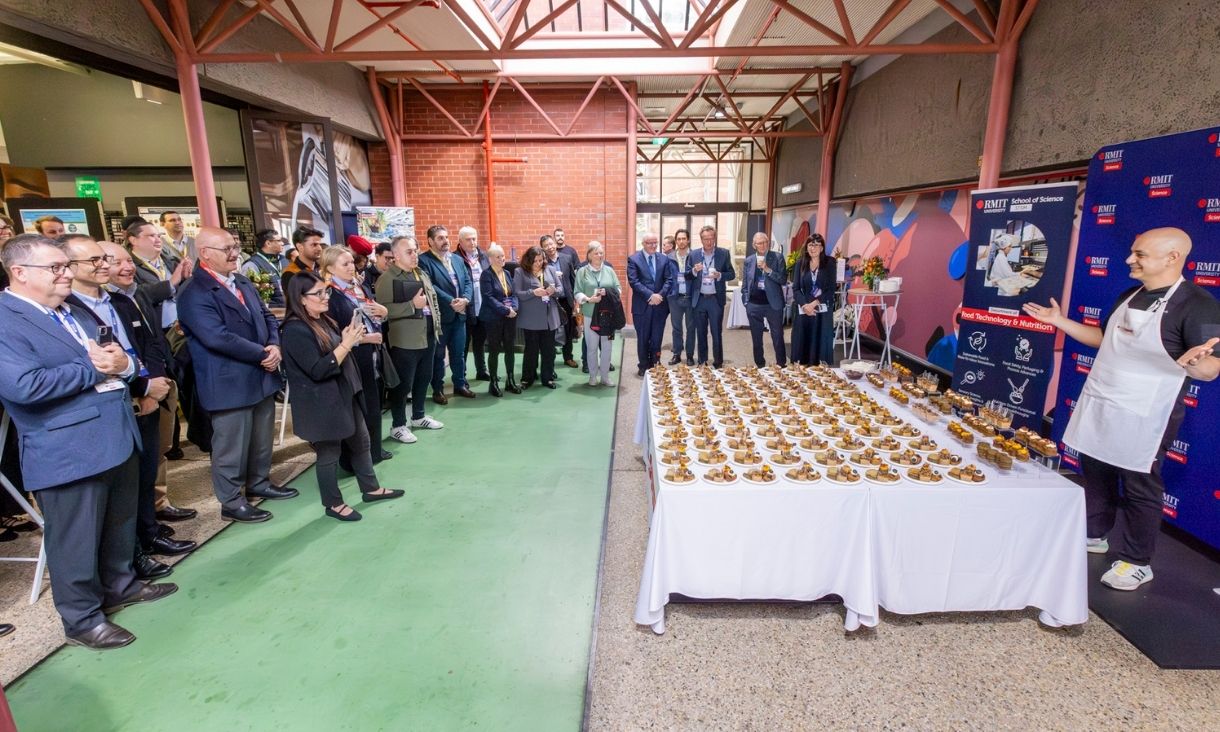 Adriano Zumbo presents his healthy creations. Credit: Ellen Duffy Photography.
 Speaking to attendees, STEM College's Associate Deputy Vice-Chancellor, Research and Innovation, Distinguished Professor Sujeeva Setunge said this latest STEM Research Hub will harness RMIT's strategy to deliver impact.
"Our STEM-focused innovation hubs are designed around big questions and areas of significant challenge, rather than individual disciplines, enabling interdisciplinary research, education and skills development that is co-designed and co-delivered in deep partnership with industry, government and community partners," Setunge said.
"The Food Innovation Hub is a shining example of collaboration, which will help researchers and students alike bridge the gap between scientific discovery and product development, translating research from the lab to the real world to benefit industry, people and communities."
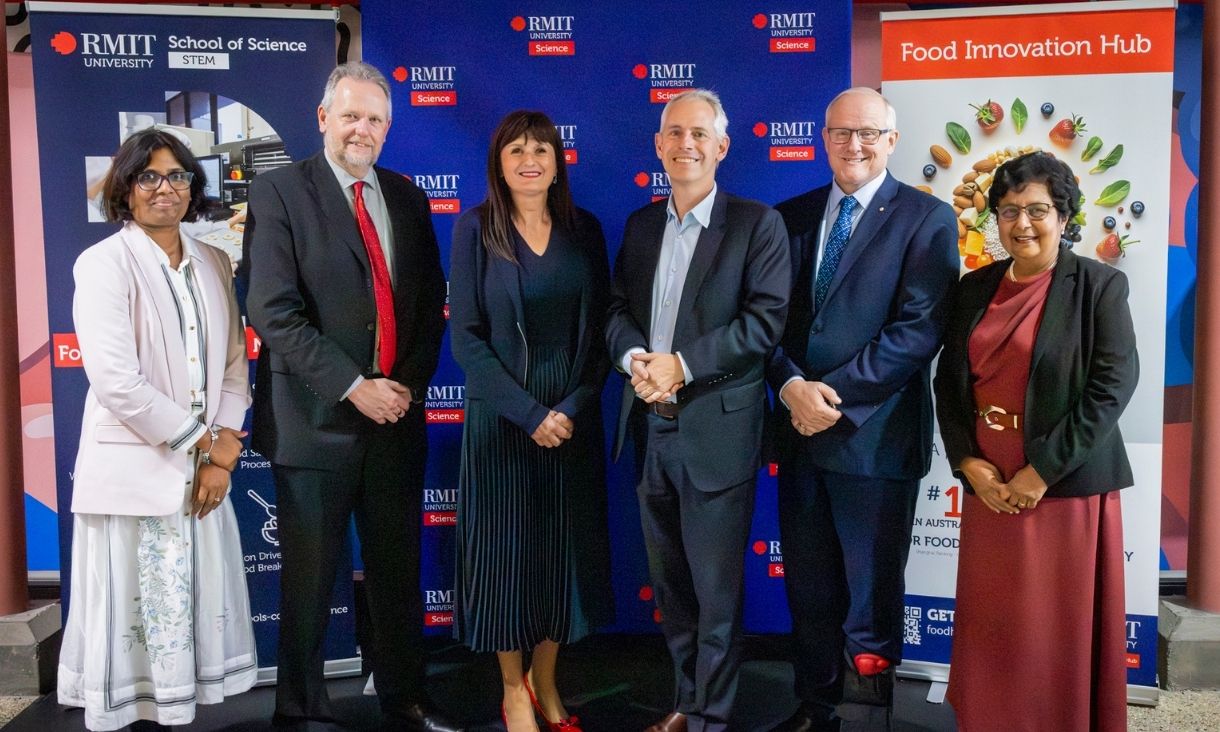 From left: Professor Jayani Chandrapala, Head of Department & Associate Dean Food Technology & Nutrition; Professor Mark Osborn, Dean, School of Science; Professor Mirjana Prica, Director Food Innovation Hub & Industry Professor; Hon Andrew Giles MP, Minister for Skills and Training; Distinguished Professor Calum Drummond AO, Deputy Vice-Chancellor R&I; and Distinguished Professor Sujeeva Setunge, Associate Deputy Vice-Chancellor R&I. Credit: Ellen Duffy Photography.
 Front door to industry collaboration
The Hub will serve as the door for industry to engage directly with RMIT on all topics relating to food, technology and nutrition.
Professor Mirjana Prica, Director of the Food Innovation Hub, said close industry involvement will allow the Hub to create knowledge, build the skills of the future workforce and translate research and technology for maximum impact.
"Translation is a real gap in Australian food research, which we plan to address by partnering directly with industry to identify opportunities, co-create solutions and deliver research that has practical applications across the full food value chain, from ingredient development and food processing to understanding the nutrition, sensory perception, and consumer response," Prica said.
"One research area we seek to work with industry on is value-addition production - transforming raw materials and commodities into high-value functional ingredients and foods using advanced engineering and processing and packaging technologies."
A throughline of the Hub's industry engagement will be prioritising sustainability, resilience and health. This includes minimising food loss and waste, maintaining strong quality control, and improving the efficiency of production and supply chains, while also supporting community overall wellbeing.
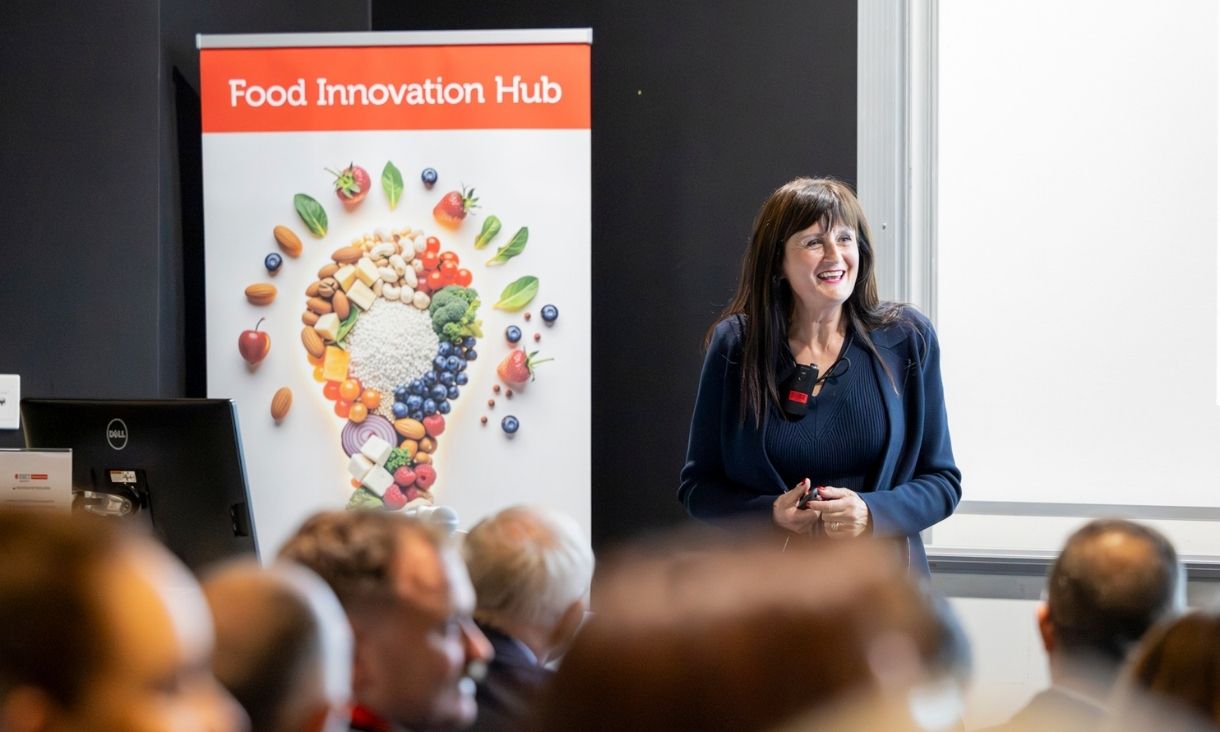 Professor Mirjana Prica, Director of the Food Innovation Hub, speaking to attendees. Credit: Ellen Duffy Photography.
 Building workforce capability
The Hub will also develop the current and future food and nutrition workforce, enabling students and early-career researchers to apply their expertise to new value-added products, processes, and services.
Prica said the Hub's focus on future-ready skills and workforce development will reinforce Australia's capability in food innovation and strengthen our manufacturing base.
"There are skills gaps in parts of the Australia's food industry right now, and one of the ways to address this is by targeting investment in building our future food technologists and researchers in consultation with industry to ensure our graduates are industry relevant," Prica said.
"Our consultative approach will empower students to study food science and contribute to leading research projects, building their future-fit skills that will set them up for success in an industry where rapidly advancing technologies such as AI are reshaping the way the industry operates.
"Involving students in research will also provide fresh perspectives, unlocking different solutions that will ultimately benefit our industry partners and more broadly people and communities.
"We're very excited to progress critical industry-relevant research through this Hub and invite industry to partner with us on this journey."


