
'Provocations' - RMIT College of Design and Social Context's new flagship public talks and ideas series posed a deliberately uncomfortable question for its first event: why are we still talking about gender equality?
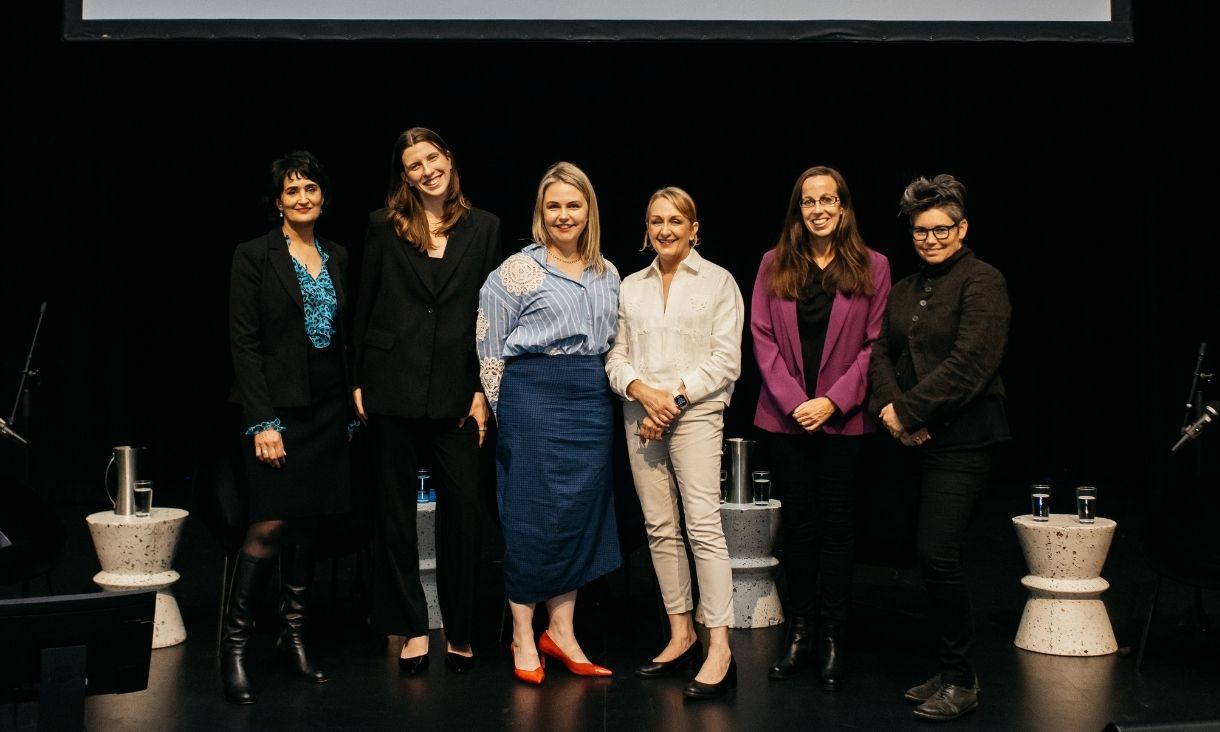
L-R: Sushi Das, Hannah Ferguson, Kathryn Daley, Niki Vincent, Leonora Risse, and Naomi Stead. Taken by Marie-Luise Skibbe
Timed to commemorate International Women's Day, the event was introduced by Associate Deputy Vice Chancellor, Engagement, Professor Naomi Stead, and hosted by award-winning journalist and RMIT School of Media and Communications Lecturer, Sushi Das, the panel brought together leading voices in economics, policy, media and social research. Das was joined by panellists, Dr Niki Vincent, Victoria's Public Sector Gender Equality Commissioner; Hannah Ferguson, author, journalist and CEO of Cheek Media; Dr Kathryn Daley, Assistant Associate Dean of Social Science, Research and Policy Studies at RMIT; and Leonora Risse, Associate Professor in Economics at Queensland University of Technology.
Taking this year's International Women's Day theme, 'Balancing the Scales', as its starting point, the panel moved quickly beyond familiar statistics to interrogate why progress remains so uneven, and what still needs to change.
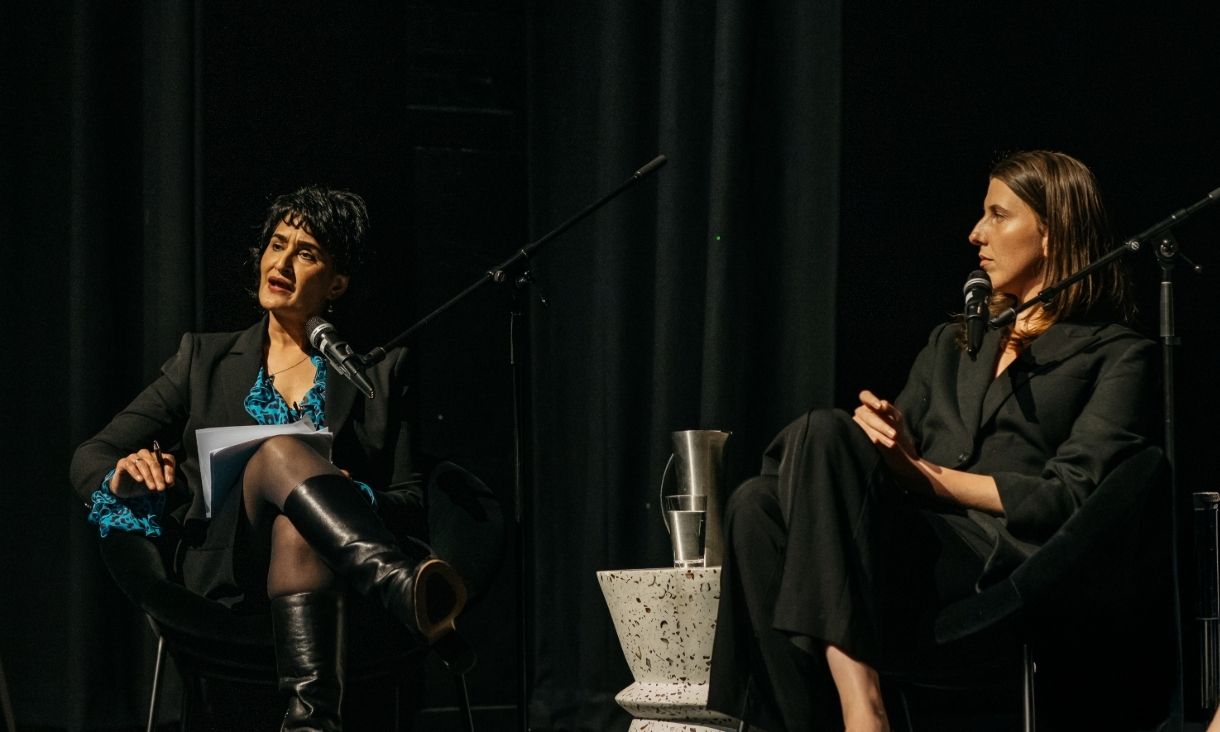
Sushi Das and Hannah Ferguson. Taken by Marie-Luise Skibbe
The accountability gap
A recurring thread throughout the panel, was the gap between policy, power and action. Dr Vincent argued that accountability, not goodwill, is the real driver of change, saying "Gender equality moves at the speed of accountability, voluntary action is not going to deliver gender equality anytime soon."
"We are starting to see the policy shifts needed to enact change where we do have that accountability - but we have to see and do more," she continued.
Dr Leonora Risse challenged the way gender equality is measured and discussed, arguing that dominant metrics like the gender pay gap and labour force participation rates don't account for unpaid work and care. She estimated that roughly a third of the economy is unaccounted for by only measuring these statistics.
"The labour force participation rate has been increasing for women - but what it's actually measuring is how well women are moving into the paid economy, without recognising that they were never just sitting around doing nothing. They were heavily spending their time in the unpaid economy. We don't even measure that."
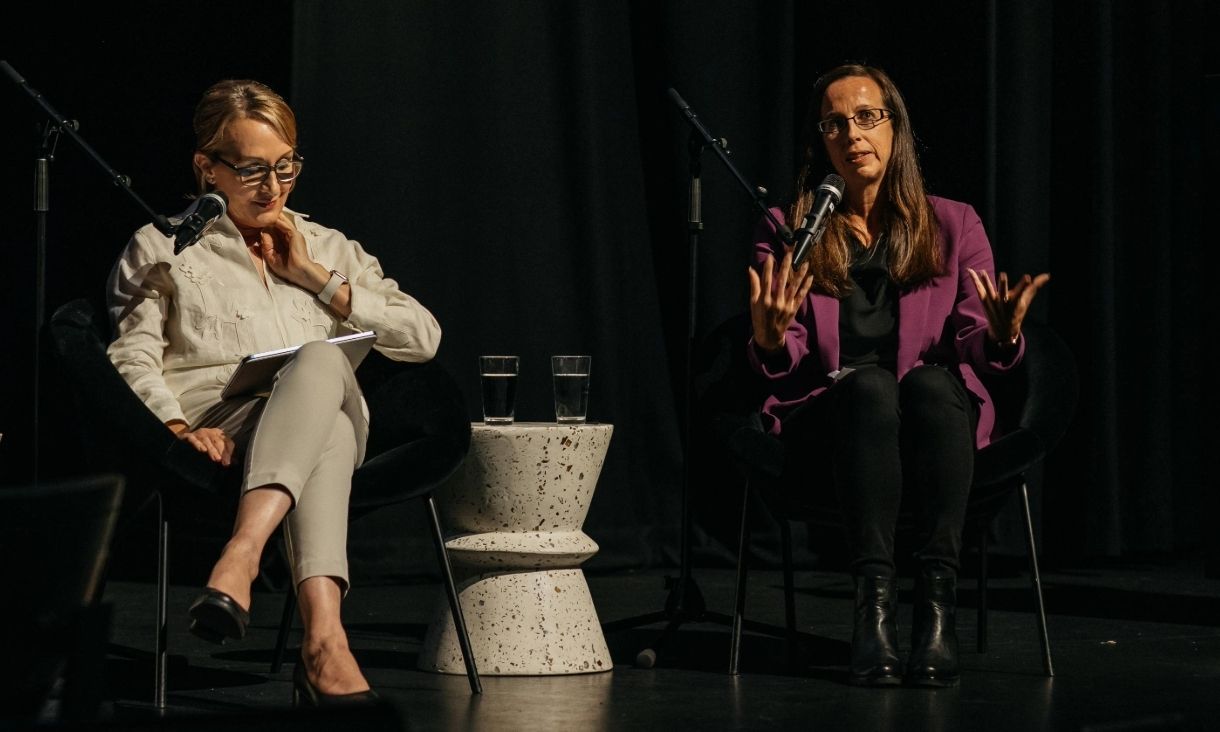
Niki Vincent and Leonora Risse. Taken by Marie-Luise Skibbe
Drawing on her research, Dr Daley explored how school-based programs aimed at breaking down gender roles intervene too late in the social and cultural learning of children, using the example of classroom dynamics as a small but permeating reinforcement of gender norms.
"It's been standard practice for a long time, that the 'naughty boy' is placed next to the 'good girl' at school. The 'good girl' is learning from an early age that it's her job to regulate a man's behaviour and the boys are learning that it's the girl's job to regulate their behaviour," said Dr Daley.
"Those experiences are starting when children are five and we're looking at gendered programs when they're 15 - we're 10 years too late," she continued.
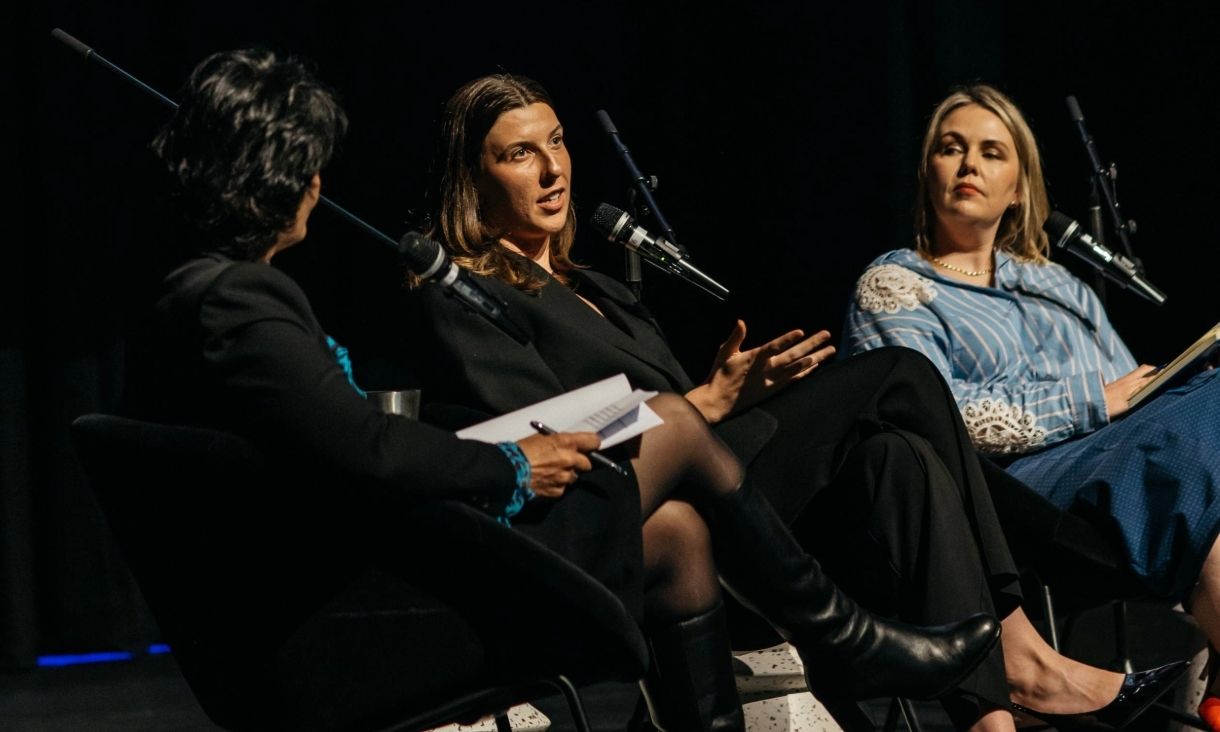
L-R: Sushi Das, Hannah Ferguson and Kathryn Daley. Taken by Marie-Luise Skibbe
The media problem
Hannah Ferguson reflected on the role both legacy and new media play in shaping, and narrowing, public understanding of gender - in particularly the rise in misogynistic media we've seen in recent years.
"We're at risk of repeating the same mistakes of legacy media - where our consumption of views remains tribal and narrow, and we subscribe to one view or one thought process," she said.
She argued that the narrowing and siloing of media has real political consequences, pointing to the erosion of trust in institutions and progressive groups and parties struggling to build public support, saying, "I don't think it's because the gender equality movement is failing. There are a lot of everyday people who want peace, a lower cost of living, and just to be able to get through the day. Instead, we're watching elites on both sides fail us."
When asked what Ferguson wants to see in the headlines over the next year, she said:
"I want to see fewer headlines that obscure the responsibility of men, and I want to see more headlines that actually platform the role and importance of women."
What's next in Provocations?
Provocations continues on Wednesday 1 April with 'What will we eat in the future?', discussing how the impacts of climate change, population growth and ecological collapse will reshape how we produce and consume food.
Speakers include:
- Bruce Pascoe, Aboriginal farmer and writer of literary fiction, non-fiction, poetry, essays and children's literature. His publications have won numerous awards including the groundbreaking, bestselling book Dark Emu
- Ben Shewry, internationally renowned chef, restaurateur, and creative obsessive. Owner of Attica in Melbourne and writer of the books Origin and Uses for Obsession
- Bhavna Middha, sustainable consumption scholar and Deputy Associate Director of the Regenerative Environments and Climate Action Theme at RMIT's School of Global, Urban and Social Studies
- Natalie Jovanovski, health sociologist and Vice Chancellor's Senior Research Fellow in RMIT's School of Health and Biomedical Sciences and Social Equity Research Centre (SERC)
On Wednesday 6 May, the third instalment of Provocations will take place with, 'Is It Too Late to Save the Internet?'
Bringing together journalists, academics, experts and comedians to debate what can be done to protect - and reclaim - the internet.
To stay up to date on upcoming DSC Engagement events, visit the RMIT Events page or sign up to the 'What's On' newsletter.
Banner image credit: L-R: Sushi Das, Hannah Ferguson, Kathryn Daley, Niki Vincent, and Leonora Risse. Taken by Marie-Luise Skibbe.


