
RICHLAND, Wash.-In a historic event decades in the making, the Hanford Site recently began immobilizing low-activity, radioactive waste by converting it into glass: a process known as vitrification. The event marked the successful start-up of Hanford's Waste Treatment and Immobilization Plant, or "Vit Plant," which will render millions of gallons of waste-generated by plutonium production during the Manhattan Project and Cold War-into glass for safe storage for thousands of years. The milestone also represents nearly 60 years of scientific contributions made by scientists and engineers at the Department of Energy's Pacific Northwest National Laboratory.
"PNNL is proud to have played a pivotal role in advancing modern vitrification technology," said Deb Gracio, PNNL director. "This milestone underscores the importance of innovation, collaboration, and scientific excellence in solving some of the world's most pressing problems. It wouldn't have been possible without a strong partnership among PNNL, DOE's Hanford Field Office, Bechtel National Inc., the Office of Environmental Management, Hanford Tank Waste Operations & Closure, and of course our local community and stakeholders."
Persistent and intense efforts by PNNL researchers-chemical engineers, computational scientists, materials scientists and chemists, among others-have advanced the science of vitrification since the 1960s, making this pursuit of materials science a defining element of PNNL's history and impact. Not only have their innovations and collaborations with staff at the Vit Plant led to this historic achievement-their work has also informed vitrification operations around the world.
Birthplace of the melter
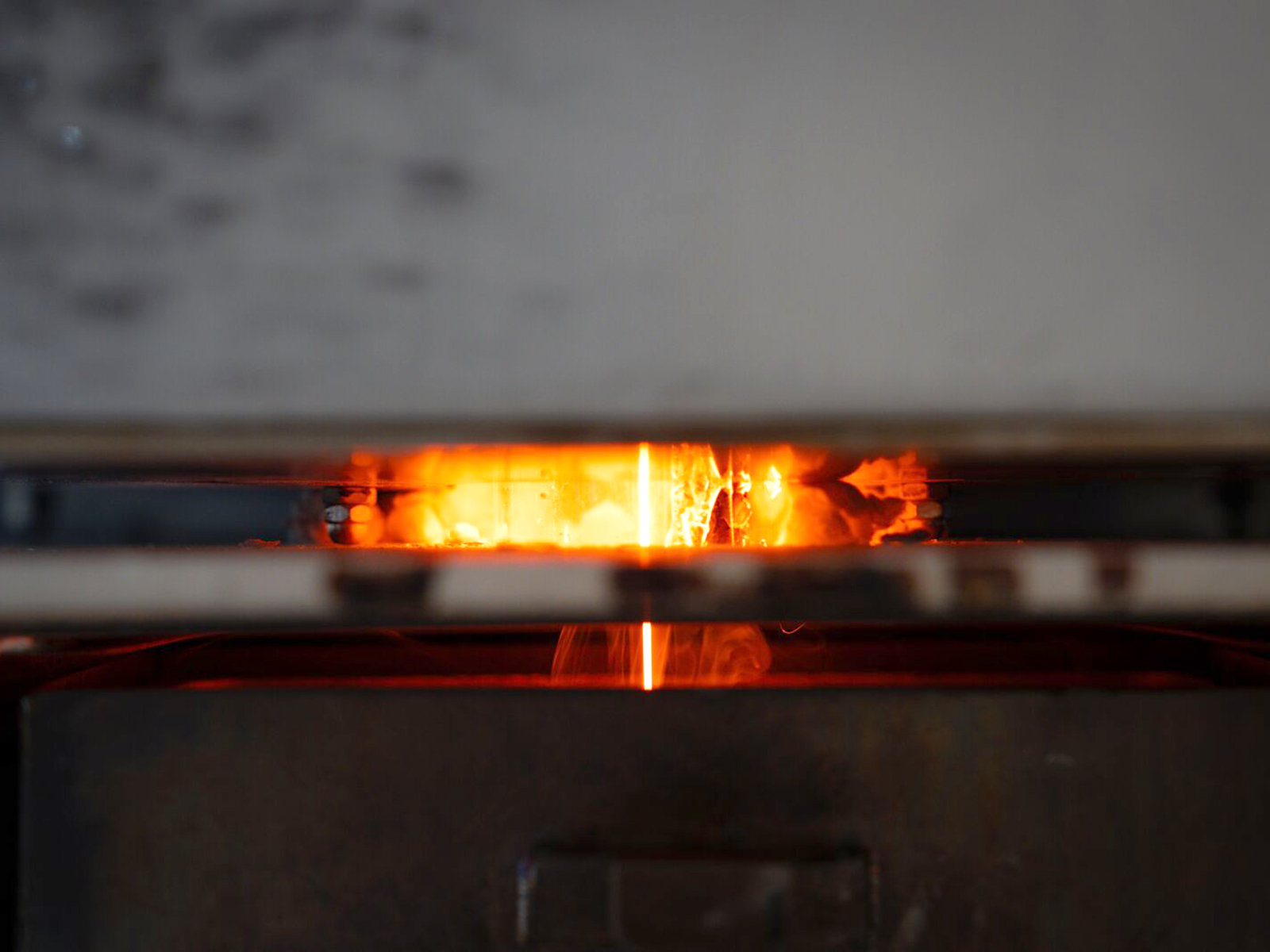
In the 1960s, researchers at PNNL engineered a technology that even today is among the most widely used tools for nuclear waste vitrification: the liquid-fed ceramic melter, which can be found amid vitrification operations on nearly every continent. Inside a melter, where temperatures can reach 2,100°F, low-activity waste is immobilized after being mixed with glass-forming chemicals-using formulas determined by a PNNL algorithm-then fed on top of a pool of molten glass. After the mixture is efficiently converted into glass, it is poured into containers and cooled to yield solid glass with radionuclides "locked" into the atomic structure of the glass. Simple at its core, carrying this process out in the real world can be anything but.
Each of the Hanford Site's 177 one-million-gallon-capacity tanks contained a chemically unique and nonuniform waste. The composition of these wastes dictates both the behavior of the waste and which glass-forming chemicals are needed to make an acceptable glass. The "right" glass must not only incorporate and immobilize as much waste as possible-it also needs to be durable and avoid pitfalls like being difficult to transport through the plant, producing gas products in quantities that are challenging to treat or damaging to the plant's infrastructure. Historically, designing a glass that strikes a balance among these goals meant spending a great deal of time fine-tuning the recipes.
For years, this process was carried out in a methodical, back-and-forth approach between glass design and performance testing. Scientists would consider the composition of a target waste, design a type of glass for the task, test its properties and adjust its composition until successful. In most facilities, this process can take months or even years.
"For the Vit Plant here in the Tri-Cities to operate successfully, we had to make it so that process happened on the order of minutes," said John Vienna, PNNL materials scientist and lab fellow.
The challenge of vitrifying Hanford Site waste is made profoundly more challenging by the waste's chemical complexity, according to Vienna, who has led a wide variety of research efforts in waste management, including the design of glasses used at the Hanford Site today. The Hanford Site's waste is not only the most complex waste in the world but also the largest quantity ever to be targeted for vitrification.
From conventional to computational
Vienna, alongside his fellow scientists and colleagues from the Waste Treatment and Immobilization Plant with support from DOE glass scientist Albert Kruger and the Hanford Field Office, helped to solve the timeline challenge by innovating an entirely new approach to glass design. Instead of relying on the conventional approach carried out in a laboratory, they created a computational approach that utilizes modeling. Computer models are trained on hundreds of historical testing results and then prompted to make predictions by taking in the chemical makeup of waste to generate corresponding "recipes" that yield processable, economic and incredibly long-lasting glass.
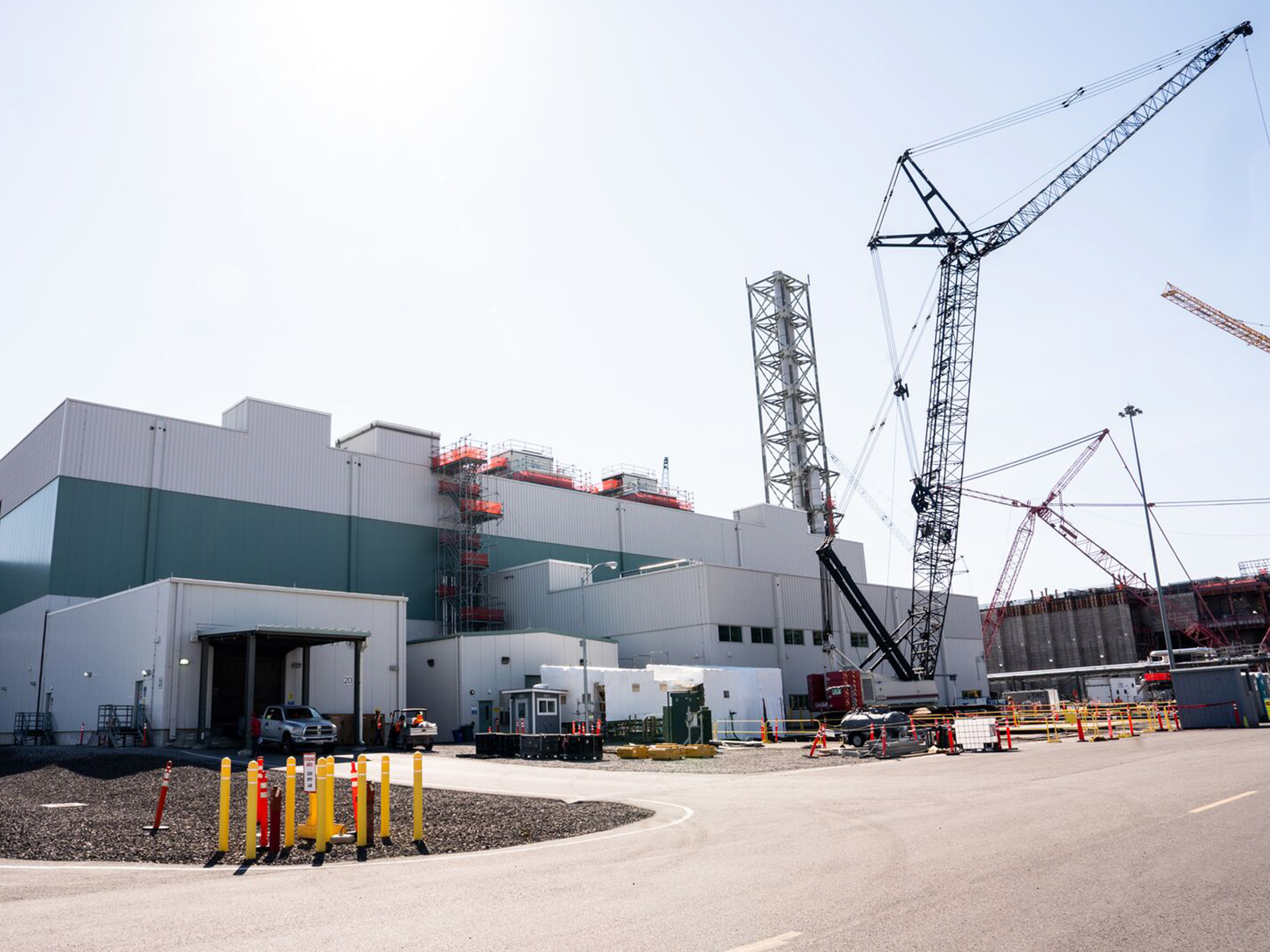
Incorporating a partially computational approach has saved many years of effort and many millions of dollars for vitrification operations like those underway at DOE's Savannah River Site in South Carolina. In the desert of southeastern Washington state, pretreated waste arrives at the beginning of the vitrification process in roughly 9,000-gallon batches. The waste is analyzed, and that information is fed into an algorithm that generates the corresponding glass design.
By comparison, a similar traditional approach was used at New York's West Valley Demonstration Project site in the late 1990s, where glass design took roughly a decade. At the Hanford Site, this process now takes less than 120 minutes, and PNNL's glass algorithm app is getting faster with each update.
Many current and former staff at PNNL have contributed to the design of the melters and other key equipment at the Vit Plant. The submerged bed scrubber, the air displacement slurry pump and melter technologies were all initiated and developed at PNNL. Will Eaton, a melter specialist, led portions of the Vit Plant melter designs and continues to lead research to improve melter materials and optimize melter processing. These innovations, along with PNNL contributions to designs led by other Vit Plant partners, make it possible for each melter to produce up to 15 metric tons of glass per day when operating at full capacity.
"PNNL has been an integral part of the Hanford Waste Treatment and Immobilization Plant. They have assisted in solving technical challenges and developed the vitrification glass recipes that are currently being processed in the Low-Activity Waste Facility," said Chris Musick, general manager of the Bechtel-led Waste Treatment Completion Company LLC. "We look forward to growing our partnership with PNNL in the future as we move forward with treating tank waste and completing the high-level waste scope."
The next generation
Today, PNNL scientists continue to support Hanford's Waste Treatment and Immobilization Plant by analyzing pretreated and vitrified waste, as well as providing fast answers during the facility's start-up. Seeing the first vitrified waste marked an especially satisfying career moment, said materials scientist José Marcial.
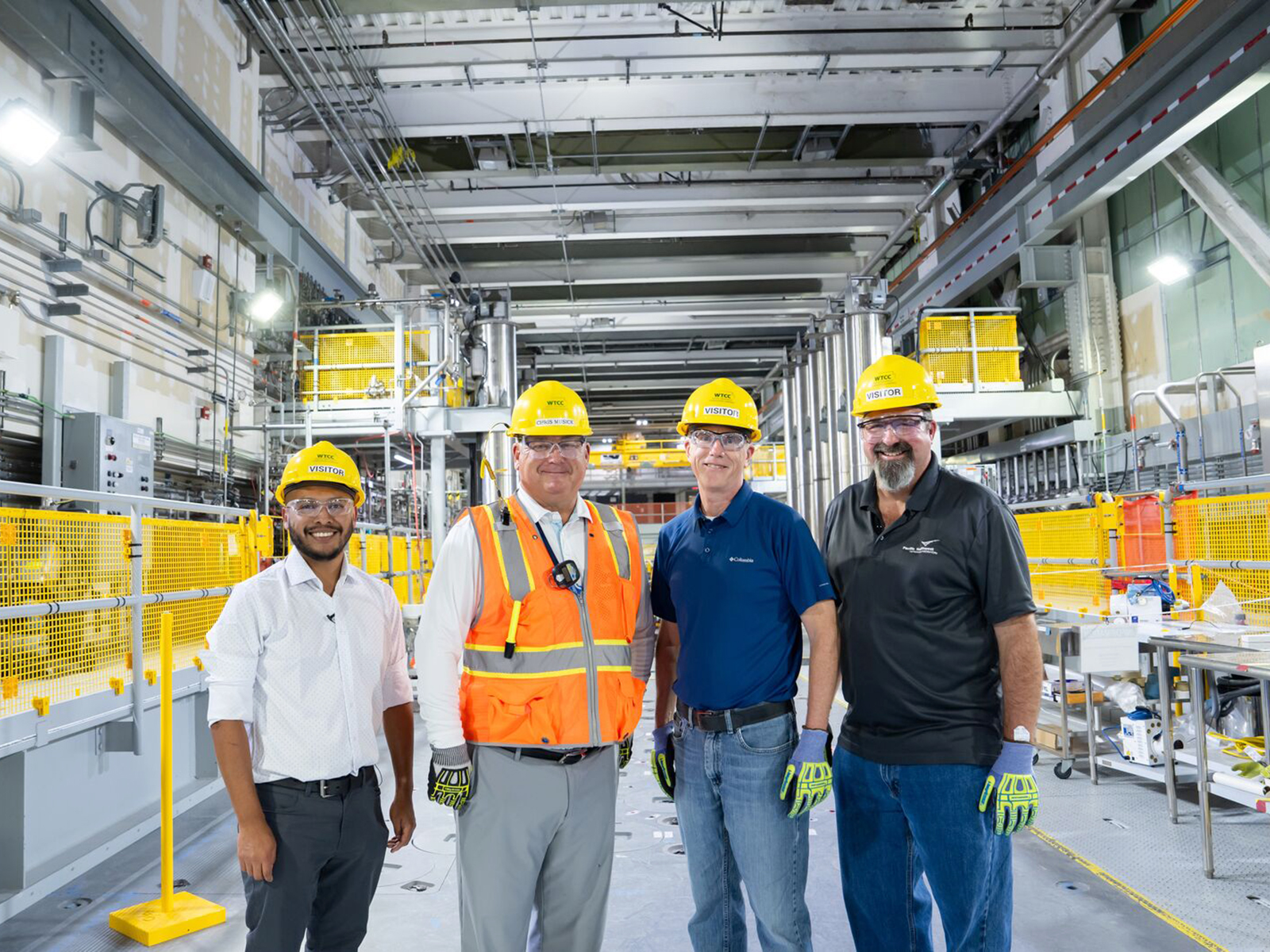
"It's extremely exciting," said Marcial, whose scientific career began with a vitrification-focused internship at PNNL as a high school student while studying at Kiona-Benton City High School then Columbia Basin College. "This shows that this isn't just an academic exercise. It's all of our effort being put to real use to benefit the country and our community. It's truly an amazing time to be a part of this work."
Similarly, Vienna, a mentor to Marcial, is enjoying the chance to witness the culmination of scientific effort spanning dozens of careers and thousands of scientific manuscripts and reports. "We've got three generations of researchers that have dedicated their careers to Hanford tank waste," said Vienna. "Since the 1960s, there has always been a vitrification presence here at PNNL."
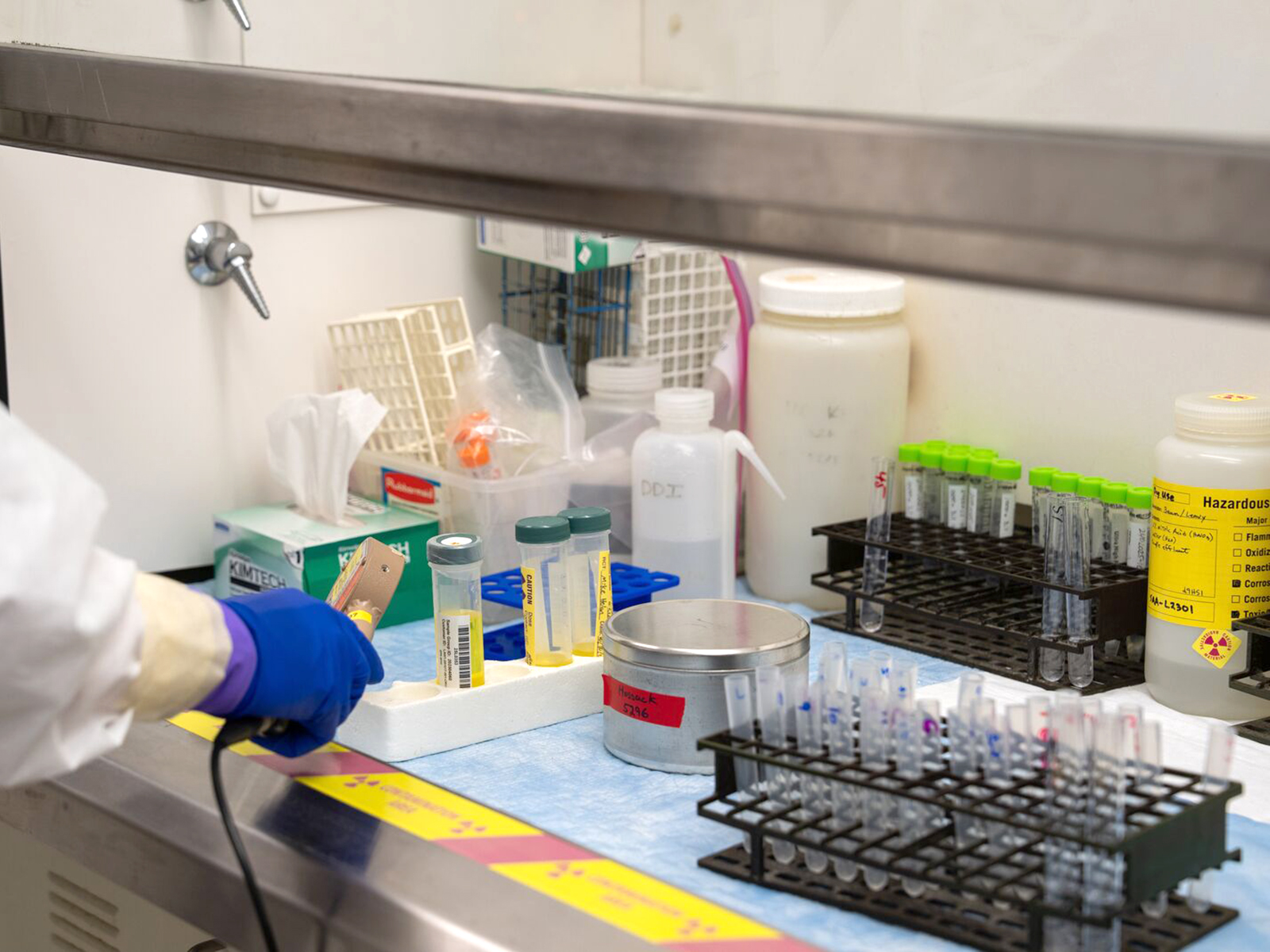
Though vitrification at Hanford has begun, the work is far from over. Marcial and others are now focused on continuing near- and long-term support for the Waste Treatment and Immobilization Plant by contributing to improvements in overall efficiency, fine-tuning the glass algorithm performance and being part of the team addressing any emerging operational challenges. Additional PNNL researchers are applying their expertise to the broader cleanup mission, including grout waste form development, tank waste treatment, tank waste solids, the high-level waste facility and environmental remediation of subsurface soil and groundwater. As they look toward the future, Marcial looks toward the next generation of scientists.
"For me, it was an internship that helped me discover my passion and pursue a career that's both rewarding and beneficial to my local community," said Marcial. "I grew up here in the Tri-Cities, and at first my parents didn't know anything about the work that PNNL does. They just knew I wanted to pursue a career in science, so they helped me accomplish that, and I want to do the same for others. I think it's important to always bring up the next generation of scientists so they, too, can help to solve challenges for the benefit of the country."


