
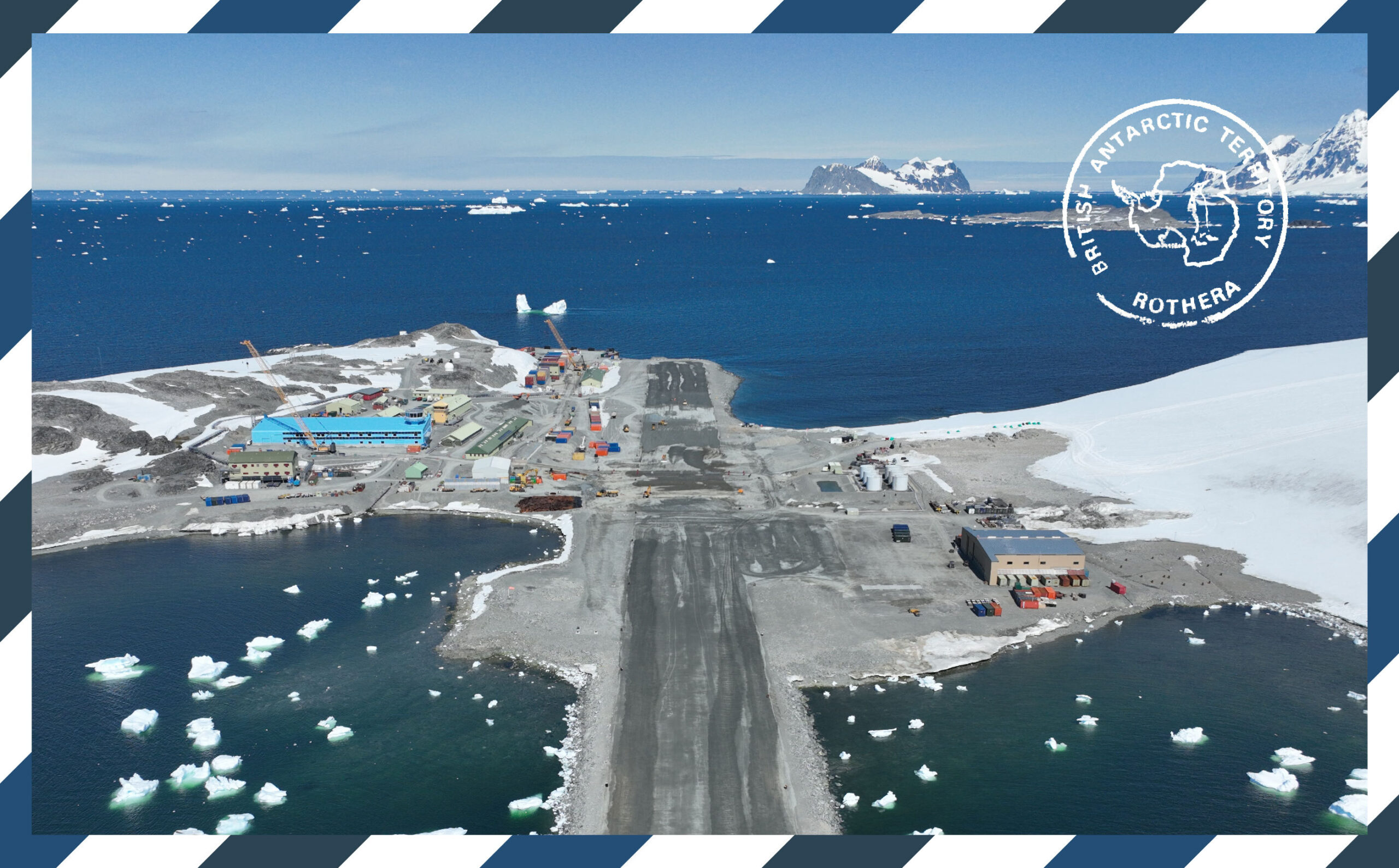
Welcome to a bumper edition of our postcard update!
Rothera Research Station has been a hive of activity since our last postcard with science and operations underway, VIP and media visits and the season of construction progressing well as we modernise our largest research station in Antarctica.
The construction team have been busy since we last reported their progress in November - they've been working throughout December and took a well-earned break on New Year's Day to celebrate with the rest of station. Now we're firmly into 2026, we're pleased to announce that the Discovery Building, our new scientific support and operations facility has come into operation…
- The Discovery Building was formally opened in a ceremonial ribbon-cutting ceremony by Professor Dame Jane Francis, Director of the British Antarctic Survey and Sir Ian Chapman, CEO UKRI. There's more to do to finish the building, work continues as we go through the season and we'll update you more in our next Postcard.
- We celebrated 50 years of science at Rothera, looking ahead to the next 50 years with modernised facilities.
- Sky News visited Rothera Research Station earlier this month as part of a planned media visit. They reported on some of the incredible science taking place in Antarctica with our scientists studying underwater tsunamis. Check out their reports: Could Antarctica's underwater tsunamis change our future? and Is America surrendering Antarctica to its rivals? | Science, Climate & Tech News | Sky News and Cold secrets of the weirdest animals in Antarctica.
Deconstruction progress
To make way for modernisation on station, some of the older buildings are no longer needed. An older building (Old Bransfield House, one of the station's original dining and accommodation buildings) is not yet fully removed but the entire structure including roof panels from both sides, wall cladding and timber frames has been taken down.
Scaffolding is being moved around the building, and internal strip-out work continues well. The team has been removing floors, ceilings and mechanical equipment, with heavier items lifted out as the roof comes off.
This follows the complete removal of another older building (Fuchs House) before Christmas, and the Chippy Shed, which means that three of the six legacy buildings have now been removed. Great progress by the teams on station!
Fuchs House was the original field equipment store at Rothera Research Station. It's named after Sir Vivian Fuchs, the polar explorer who led the first overland crossing of Antarctica.
Our construction partner BAM have worked very efficiently by removing walls during the internal deconstruction works so that materials can be loaded directly into containers. These are then all stored in the order they'll be loaded onto the ship. There are currently 78 containers ready to load and over 350 containers are now expected to leave in March. BAM have made space for all these containers ready to leave at the end of the season.
They have also been consolidating their containers by putting multiple shipments in smaller packages into a larger container, freeing up empties for deconstruction waste.
Antarctic logistics: getting ready
The logistics team has been busy preparing for the containership, MV Stevie's arrival at the station in March. When it departs from Rothera, it will be responsible for returning waste containers to the UK in line with our environmental commitments.
We have two large cranes at Rothera that have been kept busy so far this season, with deconstruction, unloading cargo and preparing containers for loading on the MV Stevie - these were serviced early on in anticipation for this work.
What's next?
The construction team will continue removing the remaining structure of the old accommodation block, complete filling in areas that have been excavated, and start deconstruction of the other redundant buildings. The weather continues to be sunny and it's shaping up to be another successful season.
Last but certainly not least… Rothera's history and heritage
Rothera is a special place to the many people who have worked at the station over the last fifty years to the present day. We have recognised the importance of the station's history and heritage whilst modernising for the future. Inside the Discovery Building, there is a fantastic heritage wall which contains various meaningful items which will stay in Antarctica, important for those who live and work in this extreme environment.


