
Eight-year-old Eduardo "Eddy" Zapata was anxious about returning to school.
Undergoing cancer treatment for B-cell acute lymphoblastic leukemia caused him to miss the last month of first grade and much of second and third grade. As he neared his last rounds of outpatient chemotherapy at UC Davis Comprehensive Cancer Center, his care team gave him the green light to return to school full time.
But going back to school felt daunting.
"He knew what he had been through, but his peers didn't," said Jessica Gutierrez, Eddy's mom. "Many kids didn't know why he had been absent for so long."
He wasn't the same child that he was before his cancer journey. He had a port now, a medical device implanted under the skin in his chest to help his care team provide chemotherapy treatment and complete blood draws. He was concerned that the port could be damaged if his classmates were too rough during PE.
He wanted to explain his illness to his classmates and teacher and tell them what he had experienced.
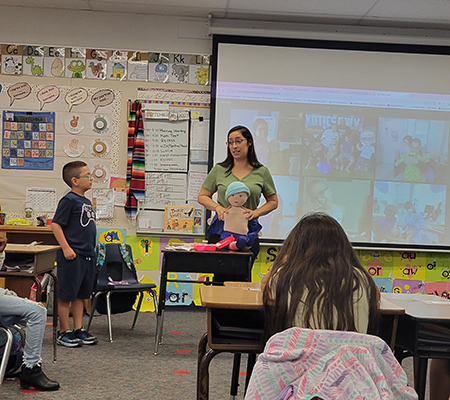
Fortunately, Eddy had some help that first day. Certified child life specialist Marisa Salazar with UC Davis Comprehensive Cancer Center came to school to educate his classmates and answer their questions. It was part of UC Davis Health's School Re-entry program, a three-year-old initiative offered by the child life and creative arts therapy department.
Salazar has presented at schools within the Sacramento region and as far away as the rural Northern California farming town of Corning. She personalizes each experience, depending on the needs and desires of each patient.
"When children get cleared to go back to school, it is so exciting but there can also be a level of fear and anxiety with going back to a place where you haven't been in a while. They may look different, or their mobility may be different," Salazar said. "Our School Re-entry program really helps kids so they can share their story in a way that is safe for them."
Some children just want guidance to help them navigate difficult conversations in class or on the playground. Salazar can help by speaking with students in child-friendly terms.
But for other children, they want to have Salazar present on their behalf. Her PowerPoint slides offer a behind-the-scenes look at the life of a kid with a serious illness. Her presentations often include:
- Photos during their treatments
- Calculations of the number of days they were hospitalized or how many times they had needle pokes
- Explanations of the side effects of treatment, why they may need to sit out of PE class, the reasons for absences or the importance of wearing a mask around other children.
- A chance for students to ask her questions
After each presentation, Salazar surveys the children to learn what they liked and what they didn't. This helps her prepare future presentations.
Each time Salazar goes into elementary or high school classrooms, the students have been very engaged in asking questions, sharing and learning more about their classmate's hospital experience, she said.
"It really creates a safe conversation within the classroom and a space to clarify misconceptions," Salazar added. "I'm glad we can help our patients in this way, as they transition back to school."
For Eddy's presentation, Salazar explained his illness using a blood soup demonstration: A jar of candies and marshmallows can show how leukemia affects healthy blood cells.
She also uses a doll to teach about ports. She shared why it was important for kids not to be rough when playing with Eddy.
"Marisa catered to what a third grader is able to understand and answered a lot of questions that his classmates had," said Jessica Gutierrez, who was there during the presentation. "It just gave everyone a better understanding of Eddy and he was feeling much better about going back to school after that. It's an amazing program."


