
Engineering researchers at Flinders University have won major federal funding to develop a quantum computing-based demonstrator for remote community energy systems.
A quantum computer can perform calculations in minutes that take a supercomputer days, consuming kilowatts instead of megawatts of power.
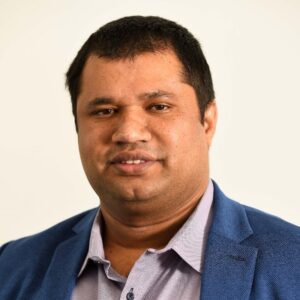
Led by Professor Apel Mahmud, Professor in Electronic and Electrical Engineering, the project will use advanced quantum optimisation and machine learning algorithms to design a quantum-based demonstrator for remote community energy systems.
"The demonstrator model will validate the real-world potential of quantum technologies for energy sustainability and reliability," says Flinders University Professor Mahmud, from the College of Science and Engineering.
The $1.45 million project, kickstarted by $1.15 million in the latest round of grants announced by the Australian Government's Critical Technologies Challenge Program on Friday, will work with industry partners EfficientSee and Zeco Australian Energy Solutions, as well as experts from two other Australian universities.
Professor Mahmud's latest research focuses on sustainable and reliable energy supply solutions for rural and remote communities, including First Nations communities.
"Building on our feasibility study in State 1, the new energy management system will address complex computational challenges associated with reliable electricity supply to remote areas," says Professor Mahmud, who is based at Flinders University's Tonsley campus.
"More intelligent control and forecasting of supply to these remote energy systems will support government efforts to reduce the financial burden of these high-cost systems.
"In particular, First Nations communities stand to benefit directly from improved energy autonomy, while addressing the potential for lower-emissions compared to diesel generators."
Key outcomes of the project will include creating a digital twin of remote energy systems and integrating these into a working prototype.
The Flinders University research team, also including Dr Amin Mahmoudi and Dr Naeem Janjua, aim to develop a scalable model applicable to remote communities globally.
The new technology could also assist to enhance agricultural energy supplies for off-grid farming operations, disaster resilience, urban microgrid management and defence and emergency operations.
Driven by the booming energy requirements of artificial intelligence (AI), the International Energy Agency expects global electricity consumption by data centres to roughly double by 2030.
Quantum computing is often cited as a partial answer, promising far greater computational power at a dramatically lower energy cost. But we rarely explain why, in which cases, or compare what quantum platforms deliver the most computation per kilowatt-hour, despite significant differences.
The World Economic Forum this year called for governments and industry to decide which architectures are not only scalable but energy-scalable: those that offer the highest computing power with the lowest energy consumption.
The Flinders University project will run along side a second program, led by La Trobe University and partners, to develop quantum-enhanced optimisation for energy efficient data centres. Both projects aim to optimise the performance, sustainability and security of energy networks in Australia.
"Quantum technologies have tremendous potential to boost local industries and lift productivity in Australia, for the benefit of all Australians," said Tim Ayres, Minister for Industry and Innovation and Minister for Science.
Stage 2 of the Critical Technologies Challenge Program has funded eight projects to develop their Stage 1 feasibility project to produce a prototype or a demonstration of their proposed solution.


