
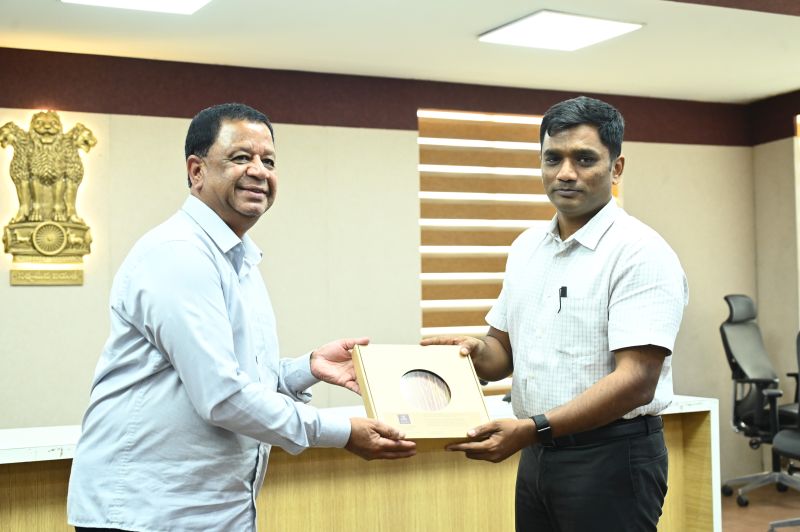
The University of Melbourne has signed a Memorandum of Understanding (MoU) with the Government of Andhra Pradesh in India to establish a strategic knowledge partnership focused on innovation in quantum computing and deep tech, pharmaceuticals and bio-manufacturing, dairy technology and food processing, and educational assessments and skilling.
The partnership represents a significant commitment to advancing research, technology transfer and capacity building across four core areas of mutual strategic importance.
Through joint research initiatives, curriculum development and knowledge exchange programmes, the University of Melbourne and the Andhra Pradesh Government will create pathways for translating academic expertise into industry-ready solutions and global-standard competencies.
The initiative will support Andhra Pradesh's vision to establish a 'Quantum Valley' and develop deep-tech capabilities including quantum sensing for agritech domain. Key initiatives will leverage the University of Melbourne's specialised centres and expertise, including the Centre for Quantum Computation and Communication Technology, the IBM Quantum Hub, and the Melbourne Assessment Centre.
Collaboration will extend to Andhra Pradesh's leading academic institutions, including IIT/IISER Tirupati, to co-develop curriculum, research initiatives and advanced manufacturing solutions in quantum computing, pharmaceuticals, dairy technology and educational assessment.
Professor Michael Wesley, Deputy Vice-Chancellor (Global, Culture and Engagement) at the University of Melbourne, said this collaboration demonstrates the University's commitment to partnerships which drive innovation and capability building.
"This partnership with Andhra Pradesh reflects our shared vision of leveraging research excellence to address real-world challenges," Professor Wesley said.
"We are creating tangible pathways for knowledge exchange that will benefit researchers, students, industry and society across both regions," Professor Wesley said.
"The establishment of a joint working group, led by our Melbourne Global Centre in Delhi, ensures sustained coordination and momentum. This partnership exemplifies how Australian research expertise can be mobilised to support India's innovation ambitions in deep tech, life sciences and human capital development.
"This MoU also reinforces the University of Melbourne's commitment to India as a strategic partner for research, innovation and education. It strengthens Australia's engagement with India's diverse innovation ecosystems and demonstrates the University's role as a catalyst for transformative collaboration."
Dr. Narayana Bharath Gupta, IAS, Commissioner, Higher Education, Government of Andhra Pradesh, said:
"This strategic collaboration marks a pivotal moment in Andhra Pradesh's journey to become a global innovation hub.
"We are working towards creating pathways for knowledge exchange that will drive economic growth, foster entrepreneurship and unlock meaningful opportunities for our people.
"We are committed to positioning Andhra Pradesh as a preferred destination for cutting-edge research and skilled workforce development in partnership with world-class institutions."
The MOU was signed earlier this month.


