
Young women in postrevolutionary Iran used audacious acts of public dance, particularly during the past decade, to resist unjust gender-based laws and cultural norms that disenfranchise women, a University of Illinois Urbana-Champaign sociology scholar says in a digital ethnographic study.
After all, every social movement begins in moving bodies; it is through the rhythm of bodies in motion that the movement itself is set in motion.
Mahbubeh Moqadam
Published in the journal Critical Sociology, the paper by Illinois doctoral candidate Mahbubeh Moqadam explores the importance of dance in the "Woman, Life, Freedom Movement," which emerged in Iran in 2022 and was amplified worldwide by videos posted to social media. The dancers "directly confronted the state's deeply entrenched system of biopolitical control on how individuals' bodies, particularly women's, must appear, behave and move in public," Moqadam wrote.
Public domain photo
"The focus of my broader research is on how ordinary people's everyday life and everyday resistance can lead to big social changes in today's deeply digitalized and interconnected world," said Moqadam, who based the study on media coverage and videos that were posted online.
Women's bodies became ideological battlegrounds in the Islamic Republic's efforts to eradicate "moral corruption" and "signs of Westernization," especially those associated with the Pahlavi dynasty that governed Iran from 1925 until the 1979 revolution, she said.
After the revolution, Moqadam said the new government deemed women's bodies to be potential sites of "moral disorder" that required constant regulation, inspection and surveillance. Beginning in the early 2000s, roving patrols of uniformed officers, gatekeepers at public checkpoints and designated staff members at building entrances were scrutinizing women's behavior and apparel, denying access to those whose apparel or comportment did not meet official standards.
The state's regulation of women's bodies intensified in 2005 with the creation of the guidance patrol - also called the "morality police" - an official unit that enforced compliance with Islamic behaviors and public dress codes such as the requirement that women wear hijab. Moqadam said these restrictions were a direct response to the perceived threat of the younger generation of women who were more educated, professionally active and socially assertive than those who came before them.
"These younger women embodied a discursive shift that unsettled dominant moral narratives and ideological claims," Moqadam said. "In their style and public presence, they challenged the behavioral expectations set by the postrevolutionary order and patriarchal norms."
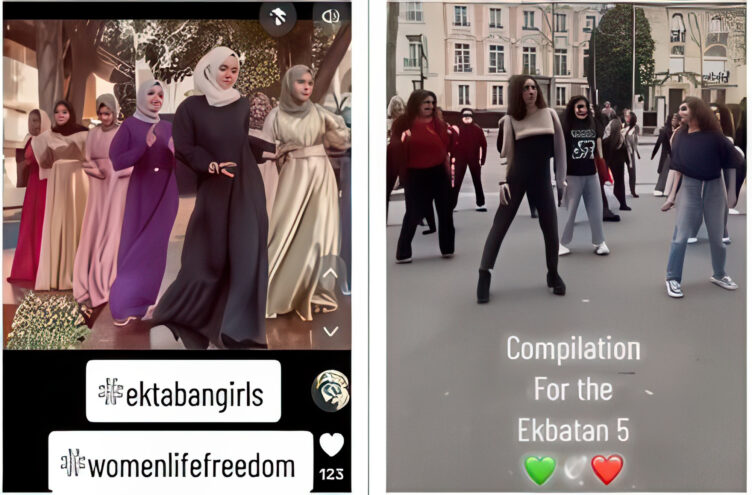
In addition, the availability of high-speed internet, websites and social media platforms enabled young women to openly challenge the state's restrictions and cultural norms by posting photos and videos of themselves not wearing hijab and dancing. Moqadam said these women faced considerable risks, including possible arrest, corporal punishment, forced confessions and public shaming.
Public domain photos
In 2022, Mahsa (Jina) Amini, a young Kurdish-Iranian woman who was arrested by the morality police for allegedly wearing her hijab loosely, died from the injuries she sustained while in their custody, Moqadam said. Outraged women protested by setting fire to their scarves, cutting their hair and dancing in the streets, metro stations and other heavily surveilled public spaces, according to the study.
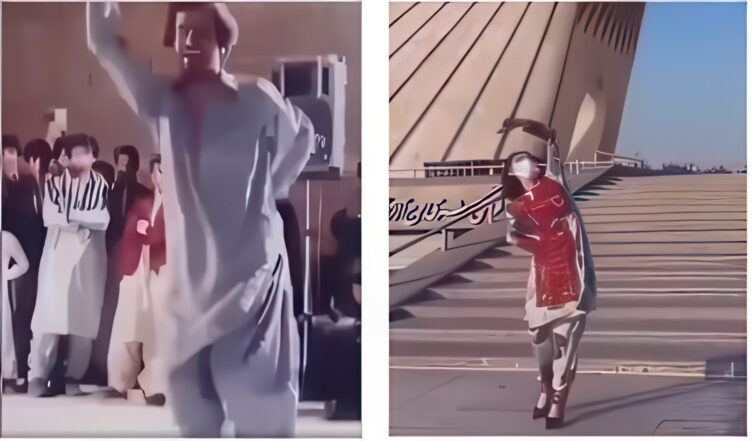
In the paper, Moqadam highlighted two significant cases of dance as an innovative form of resistance - those of Khodanur Lojei and the Ekbatan girls - that occurred during and after the movement. Lojei was a young Baloch Sunni man whose joyful Instagram videos became emblematic of collective mourning after he was killed during protests in 2022. His movements were imitated by young women in videos that they published on social media, Moqadam said.
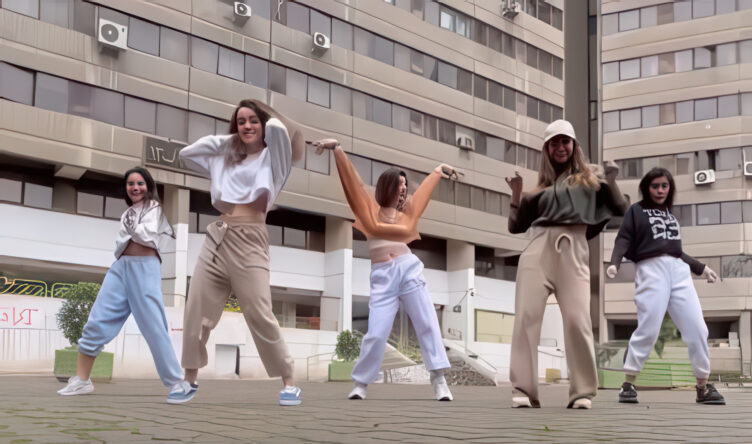
In March 2023, the five young women in western Tehran who became known as the Ekbatan girls created a video of themselves dancing unveiled to the Nigerian singer/songwriter Rema's tune "Calm Down" in celebration of International Women's Day that went viral. After they were arrested, another video emerged of the girls wearing veils while reading forced confessions on TV, Moqadam wrote. In response to Lojei's and the Ekbatan girls' videos and their stories, Moqadam said "youths, particularly women around the world, showed solidarity by posting hundreds of videos of themselves dancing to Rema's song in alleyways, parks and other settings."
Public domain photos
With repression and fragmentation increasingly being imposed across the global landscape, Moqadam wrote that the implications extend far beyond Iran. "After all, every social movement begins in moving bodies; it is through the rhythm of bodies in motion that the movement itself is set in motion."
"By underscoring the significance of women's moving bodies, my research demonstrates how embodied resistance becomes a catalyst for motivating communities, shifting public perceptions and generating new possibilities for social transformation," Moqadam said.


