Jane Austen's teenage niece may have inspired one of the most memorable comic details in her novel Persuasion, according to new research that reshapes what we know about the novelist's creative process.
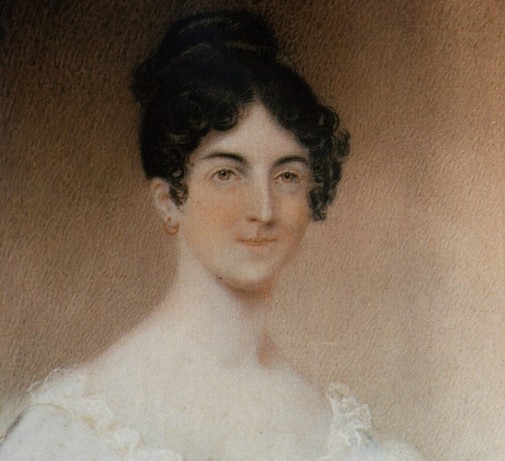 Fanny Knight had a sharp interest in social rank. Image credit: Chawton House
Dr Sophie Coulombeau, from the University of York's Department of English and Related Literature, argues that Austen's favourite niece, Fanny Knight, was almost certainly responsible for a set of careful genealogical annotations in a family-owned reference book.
It is thought that Austen would have encountered this book, which was printed in 1804, and later used it to inform Sir Walter Elliot's obsessively consulted "Baronetage."
A Baronetage was a form of 'status directory' - a printed list of Britain's baronets, their genealogies and alliances. In Persuasion, Austen famously critiques this culture through Sir Walter Elliot, whose vanity is stoked by endlessly consulting and updating his own family's entry.
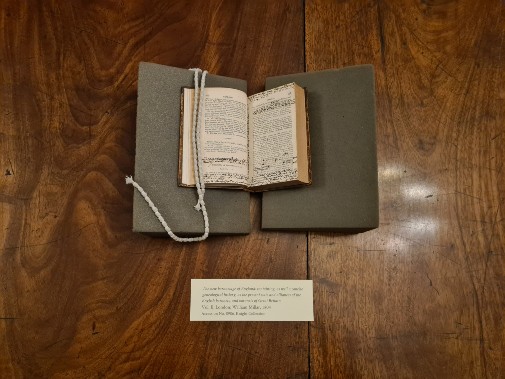
A Baronetage was a form of 'status directory. Image credit: Chawton House
Dr Coulombeau said: "Fanny Knight, then around 17–19 years old, was known in the family for her sharp interest in social rank and family connections. Her diaries from the period are filled with references to titled neighbours, long-established Kentish families and the steady stream of engagements, births and deaths that shaped their world.
"These are the very details she appears to have been adding, by hand, to her family's copy of the New Baronetage of England."
When Dr Coulombeau examined the Godmersham Park copy of the New Baronetage, now held at Chawton House Library, she discovered dozens of handwritten additions recording family histories, many involving people Fanny knew personally. The most heavily annotated entry is that of the Bridges family - Fanny's own relations on her mother's side.
By comparing handwriting samples, diary entries and family networks, she concludes that the annotations were almost certainly made by the teenage Fanny.
Meticulous updates
Dr Coulombeau added: "Fanny Knight was deeply plugged into the world that the Baronetage documented. Her diaries mention the same families, the same events and even the same dates recorded in the margins. And the handwriting matches closely. All the evidence points to her as the annotator.
"Austen herself spent several weeks at Godmersham in 1813 and made extensive use of the library. Although she never refers directly to the Baronetage in her surviving letters, certain cryptic references in her letters make it very plausible that she saw the annotated volumes, and encountered Fanny's meticulous updates roughly two years before she began writing Persuasion."
The Baronetage also contains a dramatic footnote recounting Lady Harriet Acland's remarkable wartime bravery, an episode Dr Coulombeau suggests may have influenced Austen's creation of Mrs Croft, the well-travelled and adventurous naval wife.
Heritage libraries
Dr Coulombeau said: "Heritage libraries, like the one at Chawton House, allow us to glimpse the everyday reading-lives of the past. They preserve not just rare books, but the scribbles, habits and interactions of real families. Without access to collections like these, we would miss the small but vital traces that change how we understand writers like Austen."
The conclusions of the research place Fanny Knight, often remembered mainly for her 'controversial' letter in later life reflecting on her Aunt's social standing, in a new light. She was Austen's beloved niece, but may also have been a quiet influence on the novelist's final completed work.
Dr Coulombeau's study suggests that the origins of Persuasion may lie as much in the shared bookshelves of the Austen family as in the broader literary and social traditions of the time, and that one teenager's handwritten notes helped shape one of English literature's most celebrated novels.