
What do foodborne bacteria, inflammatory bowel disease, stroke, Parkinson's disease and cancer have in common?
At Oregon Health & Science University, researchers are finding they share a connection through ubiquitin, a tiny cellular molecule that helps regulate some of the body's most essential functions. New investments totaling approximately $12.5 million from the National Institutes of Health and private foundations are allowing OHSU scientists to follow those connections, showing how a fundamental biological system may shape a wide range of diseases.
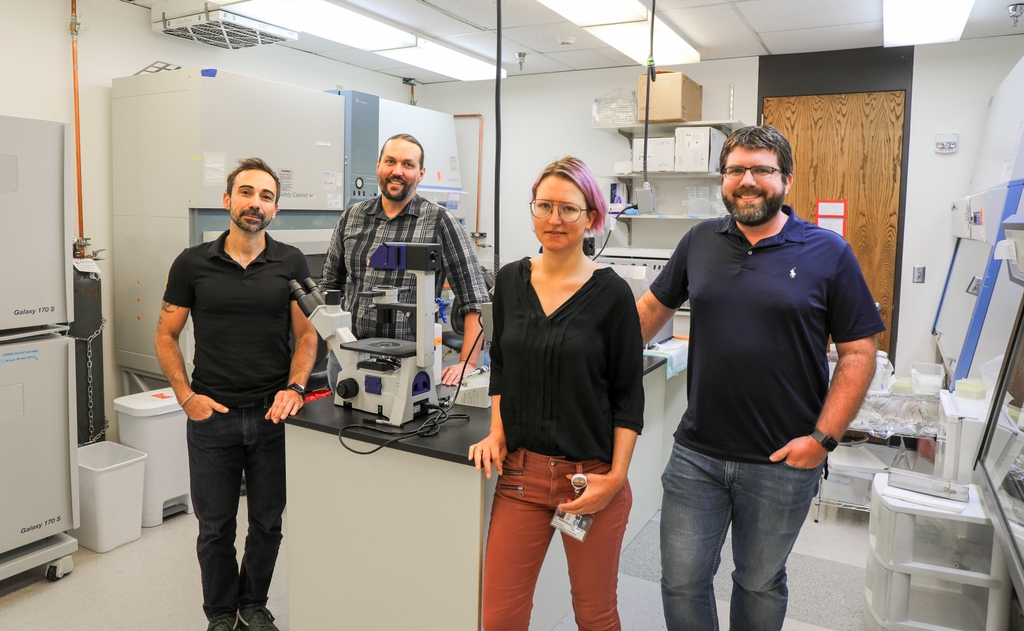
The awards support a growing collaboration among Jonathan Pruneda, Ph.D., associate professor of molecular microbiology and immunology; Michael Cohen, Ph.D., professor of chemical physiology and biochemistry; Isabella Rauch, Ph.D., associate professor of molecular microbiology and immunology; and Tim Nice, Ph.D., associate professor of molecular microbiology and immunology, all in the OHSU School of Medicine. Together, the researchers are studying how cells use ubiquitin to stay healthy, how bacteria and other germs hijack the system to cause disease, and what happens when the process goes wrong.
"Most people think of ubiquitin as a tag for protein degradation," Pruneda said. "But it can do a lot more than that, and a lot of what ubiquitin actually signals for is still a mystery."

Fikadu Tafesse, Ph.D., professor and chair of microbiology and immunology in the OHSU School of Medicine, said the collaboration across disciplines is critical to advancing science.
"We have the most creative and rigorous minds working on ubiquitin and various aspects of biology right here at OHSU," he said. "What sets them apart isn't just their individual brilliance, it's what happens when they bring their science together."
Learning from bacteria
Ubiquitin acts like a molecular tag, attaching to proteins and helping direct what happens to them inside cells. Scientists first recognized its role in protein recycling decades ago, but more recent research has revealed that ubiquitin also influences many other cellular processes.
Pruneda approaches the problem from one angle: infectious disease.
His laboratory studies bacterial pathogens that have evolved ways to manipulate the human ubiquitin system. By hijacking these cellular signals, bacteria can disable immune defenses and create conditions favorable for infection.
"Bacteria recognize the importance of manipulating that ubiquitin system," Pruneda said. "That allows them to rewire our cells to support infection."
Understanding how pathogens exploit ubiquitin provides insight into infection, and also offers a window into broader cell biology. The same pathways targeted by bacteria often play important roles in diseases that appear entirely unrelated to infection.
Breakthrough collaboration
One of those discoveries emerged from a collaboration between Pruneda and Cohen.
In 2025, the researchers reported the discovery of a previously unknown protein modification they named "MARUbylation," which combines ubiquitin with another cellular signal known as ADP-ribosylation. The finding challenged a long-standing assumption that proteins receive only one type of molecular tag at a time, and opened a new area of investigation into how cells communicate and respond to stress.
"We realized that two completely different fields" — infectious disease and chemical physiology — "are actually looking at the same thing," Cohen said.
The discovery has already attracted substantial support, including a new NIH award and funding from the G. Harold and Leila Y. Mathers Foundation to map where MARUbylation occurs, identify the enzymes that create and remove it, and determine its role in cellular signaling. Pruneda and Cohen hope the work could eventually provide insights into diseases driven by abnormal protein regulation, including cancer, inflammation and neurodegeneration.
Connecting discoveries to the gut
The collaboration expanded when Nice noticed that genes involved in the newly discovered pathway appeared altered in intestinal tissue from people with inflammatory bowel disease, or IBD.
"We found that genes involved in this pathway are altered in epithelial cells from individuals with IBD," Nice said. "That suggests this pathway might be altering either susceptibility to inflammatory disease or recovery from inflammatory disease."
With funding from the Kenneth Rainin Foundation, Nice, Cohen and Pruneda are conducting early investigations on whether disruptions in the pathway contribute to chronic inflammation in the intestine.
The work relies on a growing biobank of intestinal organoids, miniature laboratory-grown versions of the gut lining developed from tissue donated by both healthy individuals and people with IBD. These organoids allow researchers to study how human intestinal cells respond to inflammation and injury in ways that more closely mirror what happens in the body.
"This is a discovery project," Nice said. "We're exploring a totally brand-new question, and we don't know where it's going to lead us, which is really exciting."
Infection to inflammation
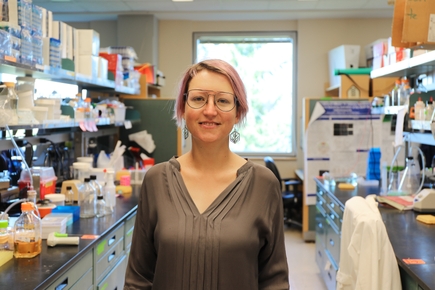
Rauch's laboratory uses many of the same organoid models to understand how disease-causing bacteria exploit ubiquitin pathways during infection. Her team studies how cells naturally protect themselves from harmful bacteria and other germs, and how those germs find ways to break through those defenses.
"We have found multiple examples where we know of a defense pathway in the human body, and Jonathan helped us find bacteria that mess with this to their advantage," Rauch said.
The NIH-funded collaboration between Rauch and Pruneda centers on pathogenic E. coli and the molecular tools the bacteria use to manipulate host cells. By understanding those mechanisms, researchers hope to identify potential therapeutic targets that could stop infection without relying on traditional antibiotics.
Beyond infection, Rauch believes the findings may also help explain what goes wrong in chronic inflammatory diseases, which is where her work intersects with Nice's.
"To a certain extent, the surface of the intestine in people with inflammatory bowel disease behaves as if they had an infection, although they don't," she said. "If we can understand better what's going on there, maybe we can find where to intervene and allow the tissue to heal."
Building connections
For Pruneda, the awards highlight more than scientific progress. They demonstrate the value of bringing together researchers with different areas of expertise to tackle common biological questions.
"I think what's emerging is the collaborative nature of research at OHSU and that conversations about what someone down the hall is doing can lead to new ideas, new funding and new discoveries," he said.
That collaborative spirit has turned a small molecular signal into a unifying research theme spanning infectious disease, immunology, neuroscience, cancer biology and gastroenterology. As the newly funded projects move forward, OHSU researchers hope that understanding one of biology's most fundamental signaling systems will reveal new opportunities to improve human health.
"This kind of collaborative research," Rauch said, "is what will lead to the best outcomes for patients."
This study was supported by the National Institute of General Medical Sciences of the National Institutes of Health, award number R35GM142486, National Institute of Allergy and Infectious Diseases of the National Institutes of Health, award numbers R01AI184933 and R01AI194691, and the National Institute of Neurological Disorders and Stroke, award number R01NS150625. Additional support was provided by an Innovator Award from the Kenneth Rainin Foundation and an award from the G. Harold and Leila Y. Mathers Foundation. The content is solely the responsibility of the authors and does not necessarily represent the official views of the funders.
All research involving animal subjects at OHSU must be reviewed and approved by the university's Institutional Animal Care and Use Committee (IACUC). The IACUC's priority is to ensure the health and safety of animal research subjects. The IACUC also reviews procedures to ensure the health and safety of the people who work with the animals. No live animal work may be conducted at OHSU without IACUC approval.


