
On the International Day of Women and Girls in Science, RMIT is proud to announce it has achieved its final two SAGE Cygnet awards, recognising the University's leadership in advancing gender equity, inclusion and safety.
Together, these awards acknowledge RMIT's progress in two critical and interconnected areas: enabling accessibility and building respectful cultures and behaviours.
This international day aims to spotlight the persistent structural and cultural barriers that limit the full participation of women and girls in science, technology, engineering and mathematics.
RMIT's Cygnet Awards demonstrate how organisations can address these barriers through sustained, evidence-based action that strengthens cultures, systems and everyday experiences.
Professor Kay Latham, Associate Deputy Vice-Chancellor, Gender Equity, said that these awards exemplify RMIT's ongoing commitment to fostering equality, promoting diverse participation, and creating a safe, supportive environment for all.
"Achieving the final two Cygnets not only recognises the dedication and hard work of our team, staff and students, but also demonstrates the power of sustained, university-wide commitment to equity and inclusion," said Professor Latham.
"These awards reflect our determination to remove barriers and create an environment where everyone can succeed, and they bring us one step closer to achieving the Athena Swan Silver accreditation."
Enabling accessibility through systems, culture and belonging
RMIT's fourth Cygnet Award recognises sustained and meaningful action to improve the experiences of staff and students with disability and neurodiversity.
On a day that highlights the participation of women and girls in science, this award underscores the role of accessibility as foundational to equity, retention and progression.
This work has been driven through a systemic approach, strengthening policies, redesigning systems and processes, and addressing cultural barriers that influence whether people can fully participate and thrive.
Qualitative feedback indicates growing capability and confidence among leaders and professional staff, with respondents describing personalised supports in practice. These include availability of accessibility technologies such as voice-to-text software, flexible working arrangements, and the provision of sensory-friendly spaces across campus.
Improved data collection and intersectional analysis have further strengthened RMIT's ability to understand how disability intersects with gender and other identities in shaping workplace experiences, enabling more targeted and informed action.
Building respectful cultures and behaviours
RMIT's fifth Cygnet Award recognises outcomes from its work to build respectful cultures and behaviours, with a strong focus on preventing and responding to sexual harassment and gender-based harm.
For women and gender-diverse people in science, who are disproportionately affected by sexual harassment and gender-based harm, these changes are critical.
Since 2021, RMIT has promoted a culture of respect and safety through campus-wide awareness campaigns. These campaigns helped to embed values and behavioural expectations into staff and student training. Furthermore, they incorporated the student voice and intersectional perspectives in prevention efforts and strengthened policies and processes to align with the National Higher Education Code to Prevent and Respond to Gender-based Violence.
Key initiatives underpinning this work include the establishment of the Safer Community team, the introduction of trauma-informed policies and processes, mandatory training modules, and innovative prevention initiatives such as the Working Together With Men program.
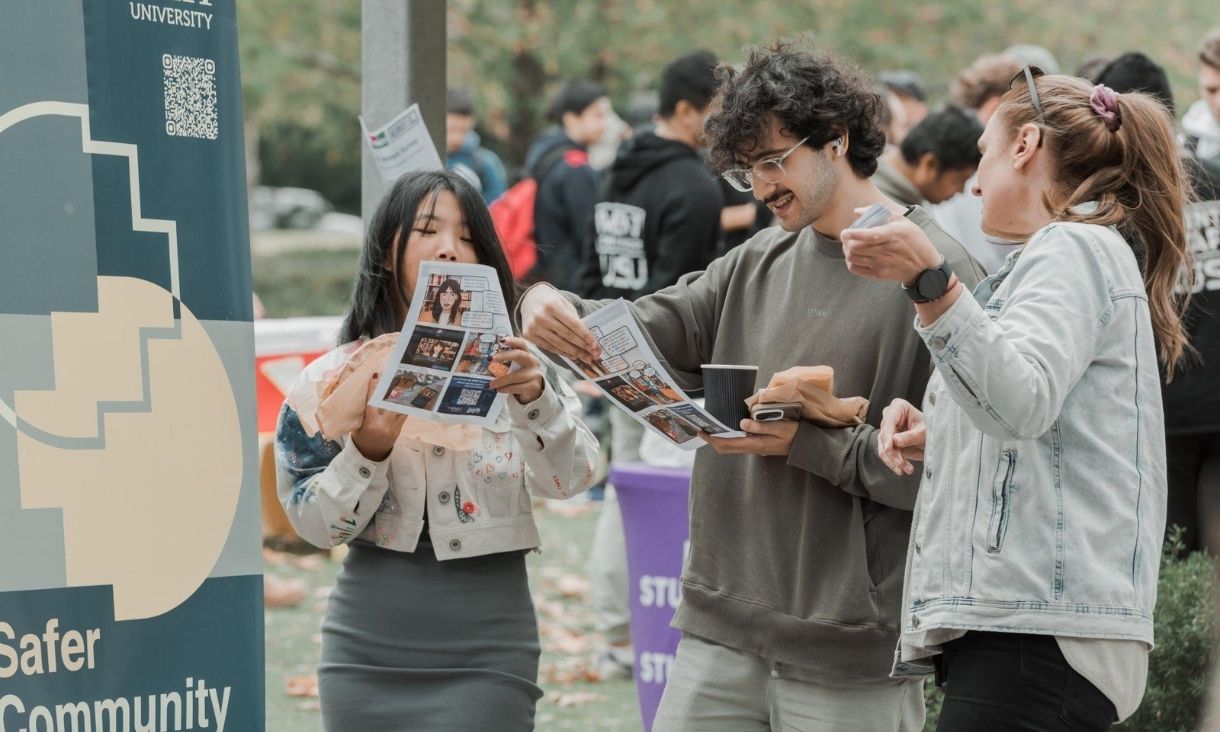
Students at our Bundoora campus engaging with the "Soy Boy and Friends" comic strip during Respect Week 2025
The bigger picture
While awarded in distinct focus areas, RMIT's two Cygnet Awards tell a shared story of systemic, interconnected change.
By working to embed respect, safety and accessibility into institutional systems and everyday practice, RMIT has addressed some of the most persistent structural barriers to equity in science and research careers.
Next steps
These final two Cygnets put RMIT on track to secure the Athena Swan Silver Award by 2027, having already been awarded for:
Recruitment of women and gender-diverse people into STEMM academic roles. Awarded in 2022.
Participation and career fulfilment: Supporting our parents and carers. Awarded in 2023.
Supporting LGBTIQA+ Communities. Awarded in 2024.
Silver accreditation will position RMIT as a national leader in diversity and inclusion and ensure the University has robust structures and systems in place to support people's growth and maintain a vibrant, inclusive and values-led culture.


