
A rare 'blackest black' silk from Vietnam's Mekong Delta and a fire-retardant jacket grown from fungal networks are among the standout commissions RMIT University has contributed to the National Gallery of Victoria's world premiere exhibition, Plant Life: The Nature of Design.
Opening on 28 August at NGV Australia, Plant Life is the second annual exhibition co-delivered by RMIT as NGV's 'Futures Partner', a designation established in 2025 when the two institutions renewed their decade-long partnership, celebrating a mutual interest in regenerative knowledge, creative practice and innovative design as a catalyst for social and environmental change.
Plant Life traces humanity's relationship with the plant world through design, from ancestral craft knowledge and devotional making, through industrial exploitation and the rupture of the petrochemical century, to the designers building a regenerative material future today. It features furniture, architecture, decorative arts, craft, photography and film from the NGV Collection, alongside new commissions, recent acquisitions and key international loans. Plants are presented not as passive resources, but as humanity's most essential material collaborators - the source of shelter, sustenance, utility, beauty and meaning across every culture and era of human making.
A vanishing silk, brought into the light
Among the RMIT-commissioned works is a traditional áo dài and trousers made from Lãnh Mỹ A, a rare and highly prized black silk textile woven and dyed in Tân Châu silk village in Vietnam's Mekong Delta. Commissioned and lent by RMIT University Vietnam, the garment showcases what is often described as the "silk queen of Vietnam" - a one-of-a-kind fabric produced through an extremely complex weaving and fruit-based dyeing process found nowhere else.
The knowledge behind Lãnh Mỹ A silk is held by only a small number of makers, many of them ageing, and has not yet been successfully passed to younger generations. Bringing the textile to an international stage is both a celebration of the craft and an act of preservation of intangible cultural heritage.
 A part of NGV Plant Life 2026, traditional áo dài and trousers made from Lãnh Mỹ A, 'silk queen of Vietnam'. The piece was commissioned and generously lent by RMIT University Vietnam.
 "It is an extraordinary plant-based material practice, and also a very fragile one," said Donna Cleveland, Dean of the School of Communication & Design at RMIT Vietnam and research advisor on the exhibition.
"This project connects closely to my broader research into sustainable material futures, craft knowledge, participatory design and regenerative textile systems. Through the Vietnam Design Research Studio, RMIT Vietnam is working to document and support traditional and place-based cultural practices not as static heritage, but as living knowledge systems that can inform more ethical, ecological and community-centred approaches to design."
Cleveland said the project also aligned with RMIT Vietnam's Country Commitment, particularly its focus on community-centred research, social innovation, regional collaboration and strengthening Vietnam-Australia cultural and research ties.
"By documenting this rare plant-based textile practice and its presentation through NGV in Victoria, the project brings Vietnamese material knowledge into an international design conversation about sustainability, cultural resilience and shared ecological futures."
A naturally derived, fire-resistant jacket
Also featured is the Mycelium Wildfire Jacket, a prototype exploring the potential of fungi-grown materials for future protective clothing. It is fabricated from mycelium leather, a biomaterial cultivated from fungal networks using agricultural waste, water and controlled growing conditions. The jacket was developed through a collaboration between RMIT designers and material scientists: Dr Judith Glover (Industrial Design), Dr Tien Huynh (Science), PhD candidate Mohamad Arekha Bentangan (Microbiology) and alumnus and Research Assistant, Alexi Freeman (Design).
The project investigates whether biologically grown materials could offer an alternative to the resource-intensive materials and synthetic chemical treatments commonly used in fire-resistant textiles today. Ongoing testing is examining the material's durability, fire resistance, thermal insulation and capacity to self-extinguish when exposed to flame. The mycelium leather has also achieved the global safety certification: OEKO-TEX® STANDARD 100 Product Class II.
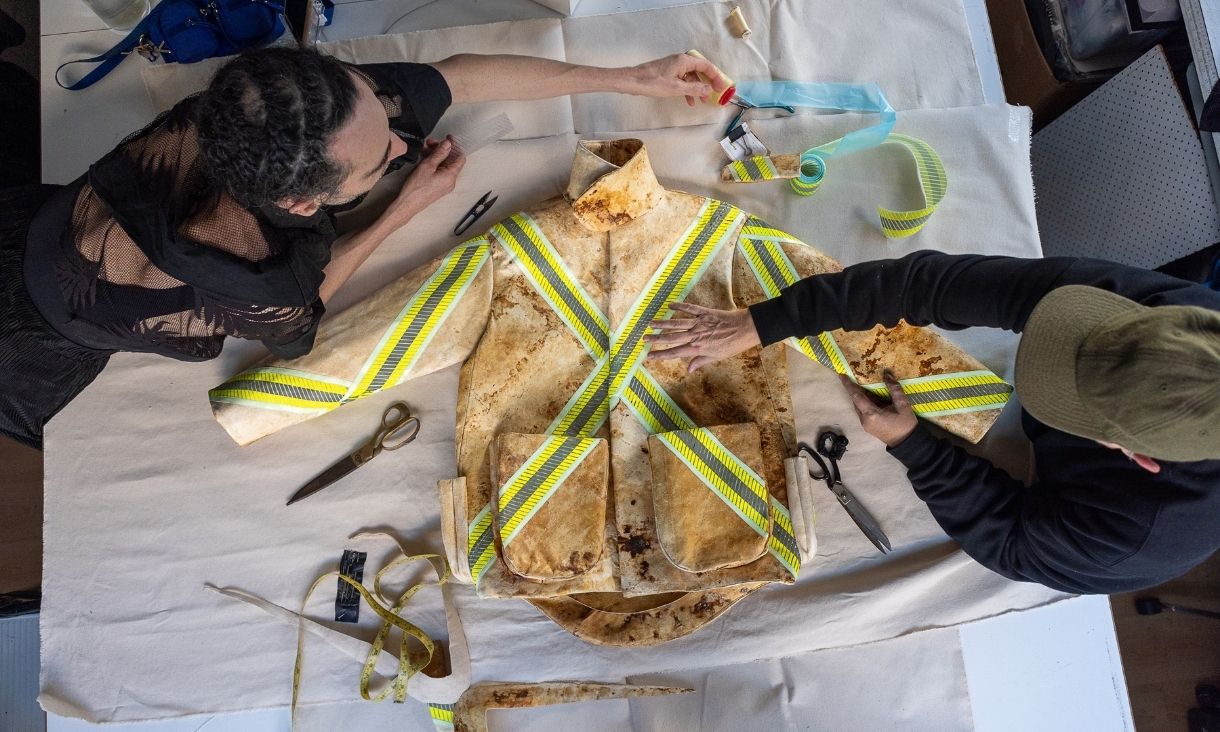 Also part of NGV Plant Life 2026, Fire Retardant lightweight mycelium leather jacket for Fire Fighting created by research team Associate Professor Tien Huynh, Dr Judith Glover and PhD student Mohamad Arekha Bentangan.
 Beyond its technical promise, the jacket carries a powerful ecological metaphor. While firefighters are among the first responders to wildfires, fungi are among the first ecological responders, helping landscapes recover through decomposition, nutrient cycling and regeneration.
Students shaping the exhibition's ideas
The exhibition's influence has also extended directly into RMIT's classrooms. In Semester 1, NGV Senior Curator Ewan McEoin co-delivered a studio in RMIT's Master of Design Innovation and Technology (MDIT) program alongside RMIT's Olivier Cotsaftis and Josh Riesel. The Plant Life Studio invited students to investigate alternative biomaterials and prototype regenerative products and experiences that position plants as relational collaborators in sustainable design practice.
McEoin delivered an opening keynote unpacking the ideas underpinning the Plant Life exhibition, followed by a Q&A and discussion with participating students, and returned for two check-in sessions to provide feedback as their work developed.
Final student outcomes ranged from paper made from green waste supplied by a local florist, to pet urns crafted from fallen leaves, to light fixtures made from discarded cotton textiles, each offering its own answer to the studio's provocation: what does it look like to design with plants as collaborators, rather than simply materials to be consumed?
The studio reflects a broader ambition of the RMIT-NGV partnership: connecting students directly with the ideas, curators and practitioners shaping major exhibitions, and involving them in imagining what a regenerative material future could look like.
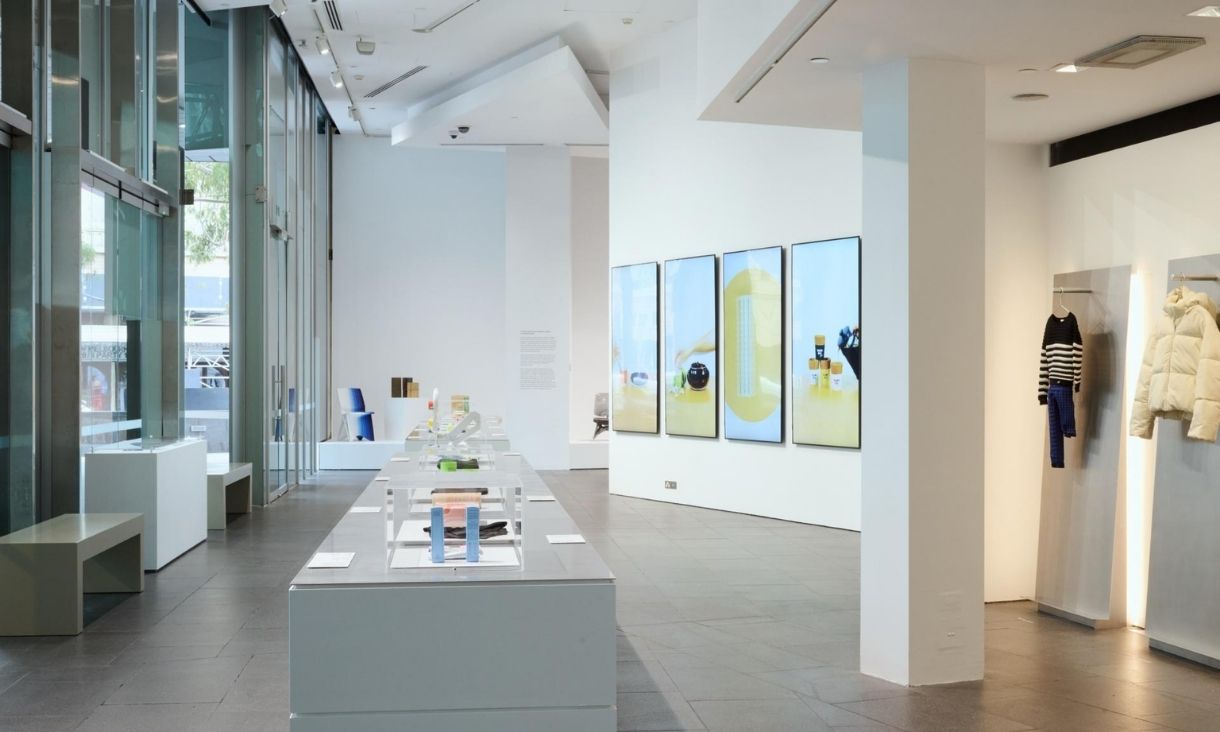
Making Good: Redesigning the Everyday | NGV and RMIT University
Look back on Making Good: Redesigning the Everyday, an exhibition exploring how contemporary design is reshaping everyday products and systems into solutions that are better for people and the planet.
Featuring work by more than 50 designers, Making Good: Redesigning the Everyday showcases objects that are equally functional, beautiful, sustainable and innovative, offering a hopeful look into how design can drive positive change.
In this video, hear from Professor Naomi Stead, Associate Deputy Vice-Chancellor of Engagement in RMIT's College of Design and Social Context, Gemma Savio, Curator of Contemporary Design and Architecture at NGV, and RMIT alumni and exhibiting designers Cathy Fan (Master of Architecture, 2024) and Maddison Ryder (Bachelor of Industrial Design, 2018).
Making Good: Redesigning the Everyday exhibited at The Ian Potter Centre: NGV Australia from 29 August 2025 to 1 February 2026, with thanks to Futures Partner RMIT University.
RMIT alumni speculate on the future of plant-based building elements
Master of Architecture alumnus Aaron Roberts, Director and Founder of Edition Office, has collaborated with artist/researcher Kate Scardifield on Biomasonary architecture, which speculates on what buildings made from plant matter might look like in a not-too-distant future, when algae is cultivated at vast agricultural scale and processed into building elements, storing carbon in the fabric of construction.
Plant Life follows NGV/RMIT's debut exhibition, Making Good: Redesigning the Everyday, which featured more than 50 projects exploring how designers are transforming the products and systems that shape daily life into solutions that better consider people and planet.
Plant Life: The Nature of Design, The Ian Potter Centre: NGV Australia | 28 August 2026 - 7 February 2027 | FREE


