
Key points
- Lanternfishes are one of the most abundant and important species in the world's oceans but are also one of the most mysterious.
- Largely found in the ocean's twilight zone, lanternfishes dominate fish biomass globally and play an important role in carbon cycling into the deep ocean.
- A new set of illustrated keys has been published to aid researchers in identifying the lanternfish species found in Australian waters.
These glow-in-the-dark, googly-eyed fishes perform the biggest daily migration of any animal on the planet and are one of the most abundant and important species in our oceans.
But they are also one of the most mysterious.
Now, Australian researchers finally have access to a comprehensive guide to aid in the identification of Australian lanternfishes.
What are lanternfishes?
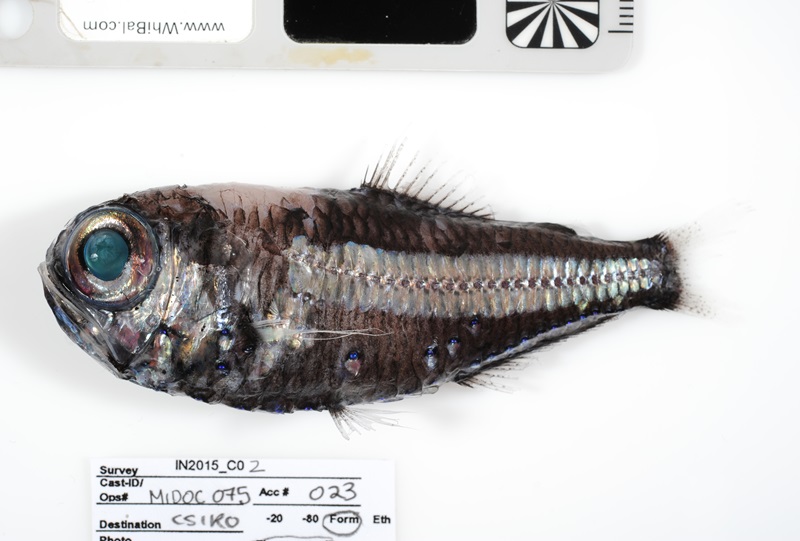
Lanternfishes (Family Myctophidae) are a diverse family of small oceanic fishes which dominate fish biomass in the world's oceans. Collectively, their biomass is enormous. It's estimated to be around 5 gigatonnes, which is 50 times the annual global commercial catch of all marine species.
There are at least 254 species of lanternfishes worldwide and they're found in all oceans and seas from the Arctic to Antarctica. However, while abundant, no comprehensive and regionally specific keys – essentially illustrated guides – were previously available to aid species-level identification of the Australian lanternfishes until now.
A new paper , published in Technical Reports of the Australian Museum, provides illustrated keys to 30 lanternfish genera and 141 species within Australia's Exclusive Economic Zone (EEZ) .
Putting lanternfishes in the spotlight
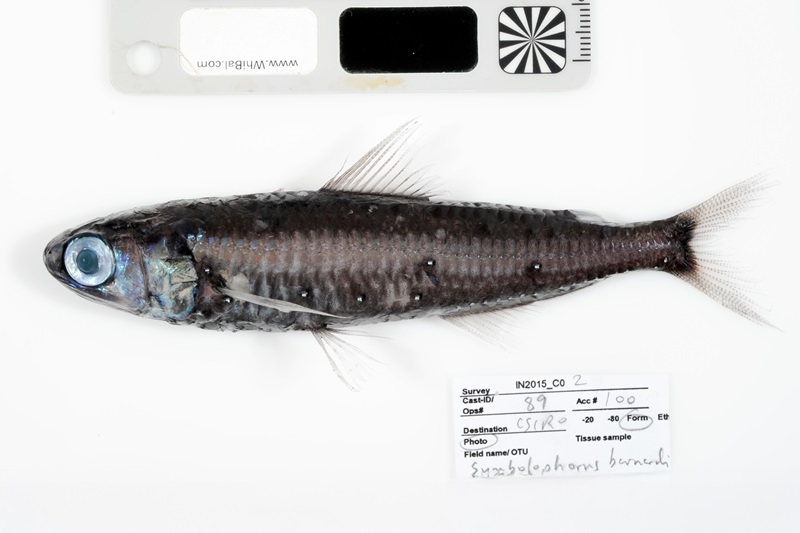
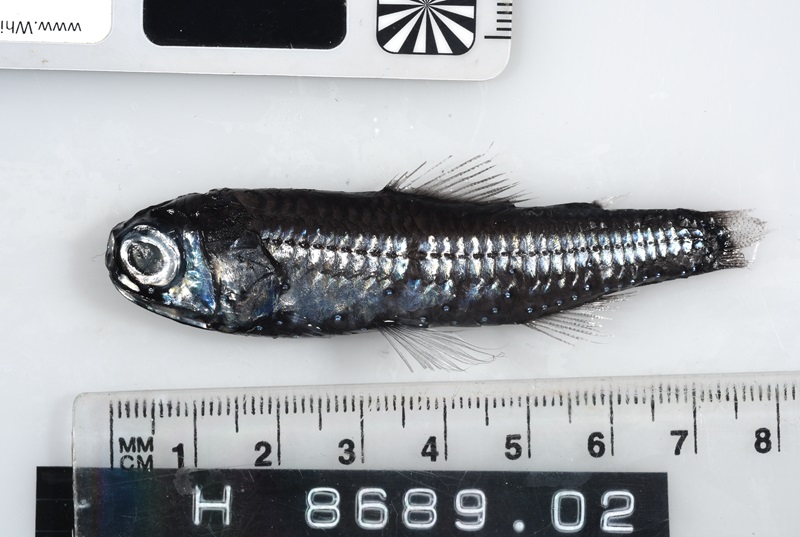
Lanternfishes are small – the largest growing to around 280 mm in length and the smallest only 25 mm. They typically have an elongated silvery-black body and a rounded head with large eyes. Giving rise to their common name, lanternfishes have light organs called photophores on their bodies and heads that allow them to produce their own light in a chemical process called bioluminescence .
The arrangement of photophores is the single-most useful feature for identifying species of lanternfish because the pattern is unique to each species. Photophores are also an important adaptation for the part of the ocean where lanternfishes live.
Most lanternfishes are found at depths between 200-1000 metres in the ocean's mesopelagic or 'twilight' zone, so-called due to the dim light that reaches these depths. For inhabitants of the twilight zone , being able to glow-in-the-dark is a handy way to attract food or a mate. It can also help avoid predators.
Bioluminescence is thought to be used by lanternfishes to signal the presence of a threat, such as a predator, through patterns of light flashes. It also offers a way to counter-illuminate and camouflage lanternfishes from predators in the ocean below them by using light to break up their silhouette against the faint light from above.
Basically, it's a biological cloak of invisibility.
Why are lanternfishes important?
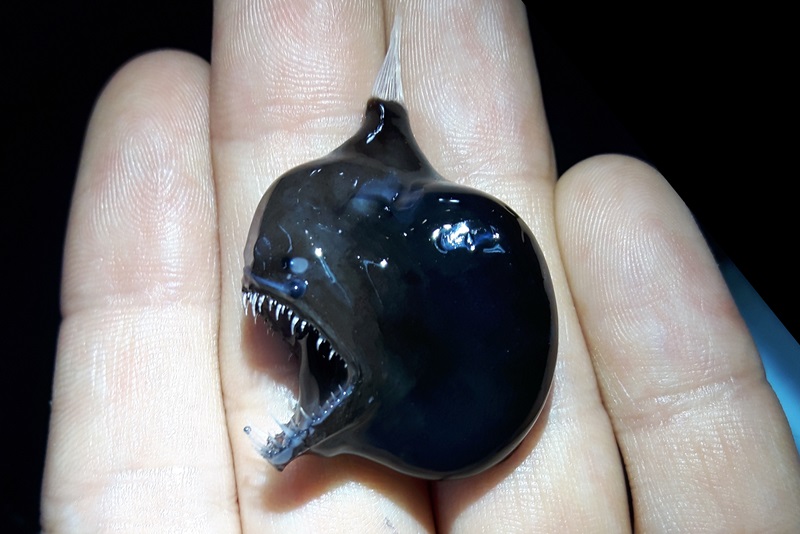
Lanternfishes are ecologically important as key prey for other species. Put simply, everything likes to eat them including numerous commercial fishes such as tunas, seabirds such as penguins and albatrosses, and marine mammals including seals, whales and dolphins.
Further, their importance in food webs is magnified because many lanternfishes make daily vertical migrations up and down in the water column. In fact, lanternfishes undergo the largest daily migration on the planet. As night approaches, lanternfishes migrate from the deeper waters of the twilight zone towards the ocean surface to feed under the cover of darkness when they're harder for predators to spot.
This movement of lanternfishes, and the sheer number of individual fish involved, even led to confusion for those using early sonar technology to map the seafloor. Looking at their soundings, the seafloor seemed to rise up towards them each night, which was the result of their sonar pulses bouncing off the millions of lanternfishes rising towards the surface.
In the surface waters, lanternfishes feed on prey such as zooplankton , their favourite food. Before the sun rises the next day, they return to the depths and the relative safety of the darkness of the twilight zone. This movement plays a crucial role in transferring energy and materials between the productive surface waters and the deeper layers of the ocean. It results in a major and rapid downwards flux of carbon, influencing deep-sea carbon cycling and storage.
For these reasons, the ecological role of lanternfishes in our oceans and their importance to marine ecosystems and food security are of increasing global interest.
Studying life in the twilight zone
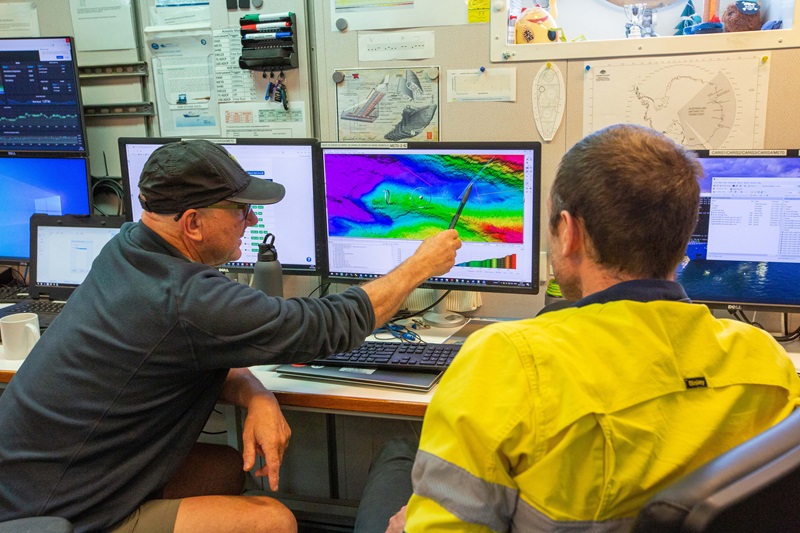
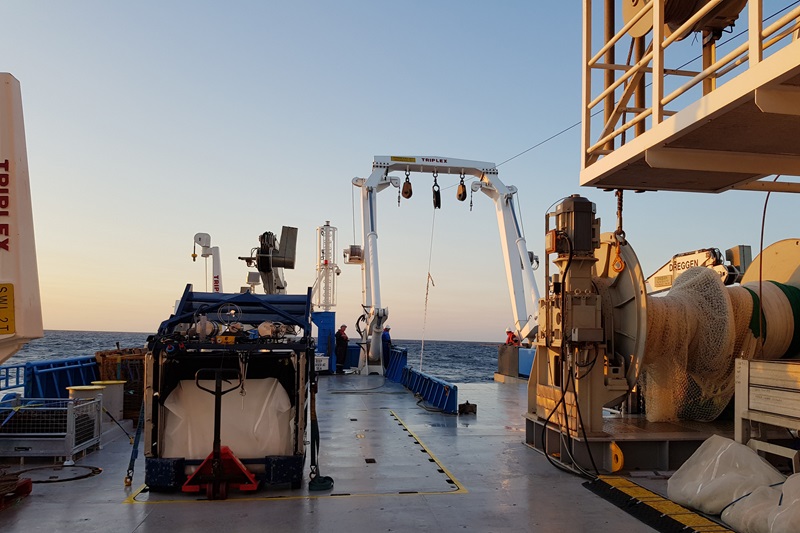
The daily migration of lanternfishes poses a particular challenge for those trying to study them. Marine biologists such as those onboard CSIRO research vessel (RV) Investigator have to be mindful of the fishes' movements when conducting ocean surveys and ecosystem studies.
Former CSIRO research scientist Dr Alan Williams was an author on the new key and has participated in 13 voyages on RV Investigator, all of which have contributed important data to build our knowledge of lanternfishes in Australian waters.
"Relatively little was known about lanternfishes in Australian waters before collections were made using CSIRO research vessels such as RV Investigator," Dr Williams said.
"Our key scientific developments were to map their vertical distributions through the water column using scientific echosounders , and then match the acoustic data with the collection of lanternfishes using a CSIRO-designed multi-net sampler that collected fish from known depths in the twilight zone.
"The datasets generated by these voyages were vital because the acoustic data were quantitative, giving us the ability to calculate biomass, and the numerous lanternfishes collected were in good condition and were able to be identified to individual species."
The data collected has resulted in important insights into the distribution, biology and ecology of lanternfishes in Australian waters. These insights have been captured in the new key.
The key to better management
Having the ability to identify and name a species is fundamental to ecological monitoring and biodiversity conservation. Without the accurate identification of species, effective management and conservation is impossible.
The new lanternfishes key will support researchers conducting biodiversity and population surveys, as well as health assessments of ecosystems. Importantly, these activities identify changes in species presence and abundance, help track the movement of species in response to climate change and detect new species.
This knowledge is vital for marine managers such as Parks Australia and feeds directly into the management of Australian Marine Parks .
"I expect all research voyages taking collections of lanternfishes or examining oceanic food webs will use our key to make species identifications," Dr Williams said.
"Many lanternfish species are broadly distributed in world oceans and, in areas such as Antarctica, almost all large marine animals eat them!"
Dr Williams explained that keys will also be important for species-level identifications if lanternfishes are harvested commercially.
"There is a growing demand for healthy fish oils, particularly from nations with developed aquaculture industries. Some lanternfishes have potential for human consumption, but their nutritional suitability varies from species to species," he explained.
Complimenting the new key, many specimens collected on research voyages are now housed in the Australian National Fish Collection in Hobart. This ' library of fish ' maintained by CSIRO is an important resource to support marine research and ecologically sustainable management.
"The creation of this comprehensive key was only possible because we had access to national collaborative research infrastructure such as RV Investigator, the Australian National Fish Collection, and the Australian Museum ," Dr Williams said.
"Without sustained access for Australian and international researchers to these important capabilities, and the accumulation of expertise and knowledge they enable, strategic projects such as this comprehensive key would not be possible."
This research was a highly collaborative project supported by Parks Australia and through grants of sea time on RV Investigator from the CSIRO Marine National Facility .


