
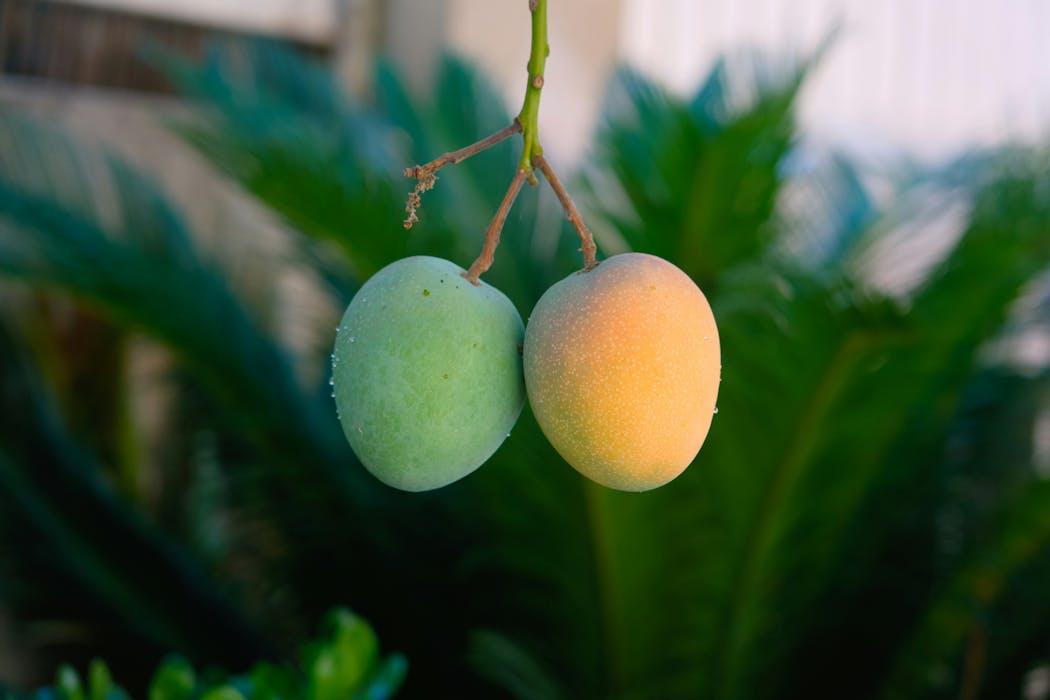
Ever wondered why your mango tree drops fruit before it's ripe? Each season, mango growers across Australia watch helplessly as millions of mangoes fall to the ground too early.
Author
- Sophie Jones
PhD candidate, School of Agriculture and Food Sustainability, The University of Queensland
These mangoes never ripen properly, never reach consumers, and represent a major loss - both economically and environmentally.
Premature fruit drop is a major contributor to low mango yields, with as little as 0.1% of fruits reaching maturity . This costs growers millions and wastes valuable resources.
As climate stress intensifies, understanding why fruit is lost before harvest has global significance. It affects everything from food security to farm profitability.
Mangoes are a high-value crop for Australia, with more than 63,000 tonnes produced annually contributing around A$220 million to the economy each year .
But its sensitivity to environmental stress makes it vulnerable in a less predictable and more extreme climate. Drought, heatwaves, and even leaf loss can influence a natural process that leads to fruit drop.
Our yet-to-be-published research aims to better understand this process and develop tools to help manage it.

Plants have hormones too - and stress throws them off
Just like humans, plants rely on hormones to keep things growing and functioning smoothly.
These chemical messengers help regulate everything from flowering to fruit development.
But when plants experience stress, hormone levels shift. The plant starts reallocating resources to survive. Dropping fruit is often one of the first sacrifices.
One key resource that plants reallocate is carbohydrates . Developing fruit requires a steady supply of sugars, but under stress - such as leaf damage or water scarcity - the tree may struggle to produce or transport enough.
This can trigger fruit drop, as the plant prioritises survival over reproduction.
In our research, we've found stress not only disrupts carbohydrate supply but also interferes with the hormonal balance in mango trees. This triggers what we call a molecular "quit signal": a message from the plant to let go of its fruit.
This signal is a part of a complex network of gene activity and hormonal cues that help the tree decide when to shed fruit.
Decoding the 'quit signal'
We're studying the molecular pathways behind this signal by analysing gene signals from mango pedicel tissue - the stem that connects the fruit to the tree.
This tissue acts like a control centre, managing the flow of nutrients and signals between the tree and the developing fruit. It's where the tree and fruit stay in touch, especially during stress.
By analysing which genes are turned on or off, we can pinpoint the molecular signals involved in fruit drop, particularly those related to hormones.
This helps us move from just observing fruit drop to developing tools to control it.
Fighting fruit drop
One promising solution is the use of plant growth regulators, which are synthetic versions of plant hormones.
These can be applied to mango trees to help stabilise hormone levels during stressful conditions.
It's a bit like giving the tree a hormonal pep talk, encouraging it to hold onto fruit even when times are tough.
In our trials, we found timing is critical.
Applying plant growth regulators during flowering, before fruit has fully emerged, was more effective than applying them later in the season.
This early intervention helped reinforce the hormonal signals that support fruit retention. Initial trials have increased tree yield by up to 17%.
We're also exploring how these treatments work across different mango varieties and growing regions. Not all seasons are the same, and not all trees respond the same way.
Our research is ongoing and hasn't yet undergone peer review. Once we finish our final season of trials, we aim to publish in the new year.
The focus isn't on breeding mango trees to be more resilient to environmental stress, but rather on better understanding the natural process of immature fruit drop, so growers can manage it.
Why this matters - for growers, consumers and the planet
While our research focuses on commercial orchards, the findings could eventually help home gardeners.
Even small-scale growers might one day use targeted treatments to help their trees hold on to fruit longer.
For consumers, reducing fruit drop means better access to fresh, affordable produce. For growers, it's about staying viable in an increasingly unpredictable climate. And for policymakers, it's about preparing the horticultural industry for the challenges ahead.
Importantly, fruit drop isn't unique to mangoes. Apples, citrus, and avocados also suffer losses due to hormonal imbalances triggered by environmental stress.
Better understanding the molecular mechanisms controlling fruit drop in mango, could benefit a wide range of fruit crops globally as the climate changes.

Sophie Jones' research is supported by the project 'Investigating the control of fruit drop in mango to support innovative solutions for Australian growers' (MG21004), funded by Hort Innovation using the mango research and development levy and funds from the Australian government. She is also receiving an RTP stipend scholarship through the University of Queensland.


