
In the intersection between the two KIRI fellows Claudia Kutter's and Erdinc Sezgin's research fields, new knowledge emerged about a rare genetic disease. Today, the two research groups collaborate closely, and both leaders point up the important role played by postdocs.
Despite their different scientific backgrounds, Claudia Kutter and Erdinc Sezgin quickly arrived at a shared project.
"We realised that we were heading into a similar research field in our labs, one that concerns how cells deal with fat, or lipids," she says.
He adds: "When Claudia presented her research, I felt we clicked straight away and we had a good idea of what we could do together."
Claudia Kutter , senior researcher at KI's Department of Microbiology, Tumour and Cell Biology has a scientific background in functional genomics and studies what occurs at a molecular level, that is, what the genes in the cells do when they respond to different types of anomaly.
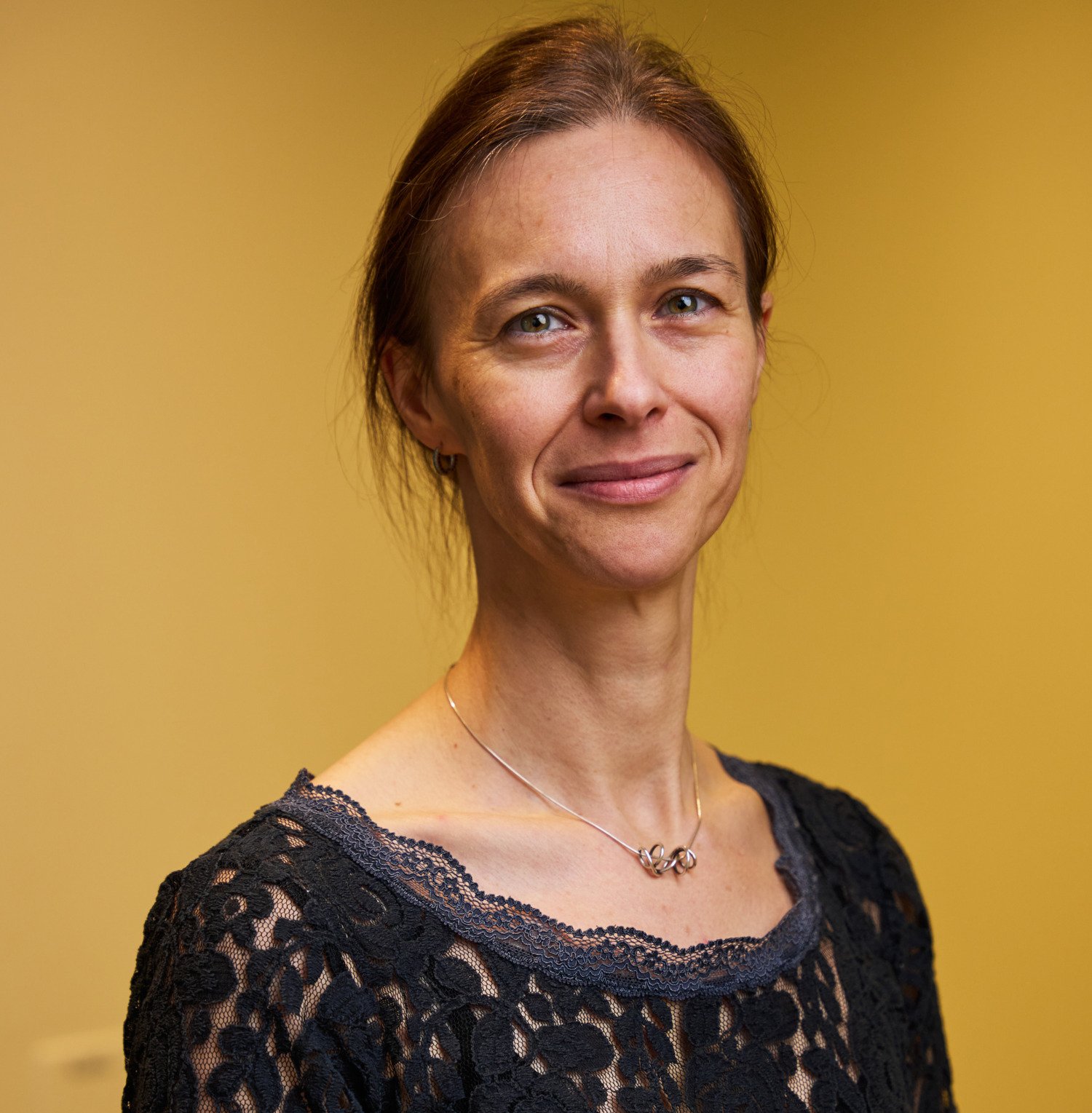
"My expertise lies in generating large amounts of data on a disease and then analysing these data," she explains. "In my research field, we take a fairly agnostic approach to the results and let the data guide us. We have amazing analytical tools that show us what we should look more closely at."
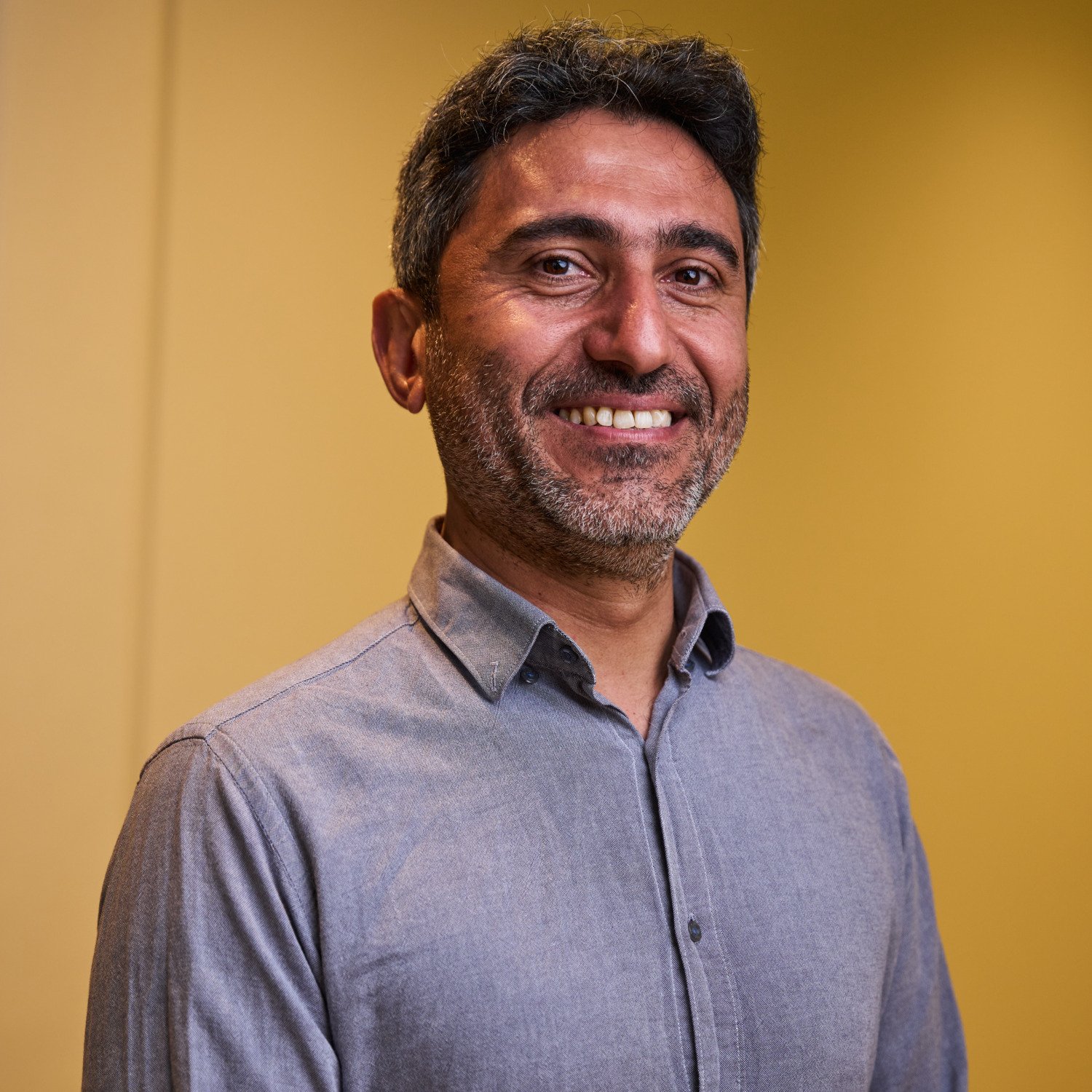
Erdinc Sezgin , docent at KI's Department of Women's and Children's Health is a trained bioengineer in cell biology and biophysics.
"I'm spent my entire career working on the physics of life, of the cell, and how diseases and anomalies change the properties of cells," he says. "We're examining whether we can use them as a measure of the cells' functional status."
Focus on a rare congenital disease
For both of them, it was a natural step as KIRI fellows to apply for a joint research grant. Their project focused on a rare congenital disease called Niemann-P disease type C (NPC).
NPC is characterised by the accumulation of cholesterol and other fats in the lysosome, a cell organelle that breaks down these molecules, causing cell damage and premature death. The disease affects one in 120,000 neonates at a rate, in Sweden, of about one per year, if that. But rare diseases also need to be studied.
"They can provide the keys to understanding other diseases more generally," says Dr Sezgin. "Besides, we talk about rare diseases, but if you add them all together, they're not so rare."
Dr Kutter picks up the thread:
"Since our goal was to be as interdisciplinary as possible we thought: let's combine genomics and transcriptomics, that is the sequencing and molecular part from my lab, with Erdinc's expertise in biophysics, microscopy and imaging."
Praise for the KIRI partnership
The results, which are awaiting publication, concern ways of comparing healthy and morbid lysosomes and new drug targets. And the two research groups are continuing their collaboration.
"My lab now thinks in terms of 'How can we use microscopy and biophysics as analytical tools?'," says Dr Kutter. "So they simply go two floors down to have a chat with Erdinc's group. Similarly, they wonder how they can better understand what goes on at a molecular level, and come up to us."
Both of them have nothing but praise for the interdisciplinary KIRI partnership.
"Don't be scared to think outside the box, to leave your comfort zone and explore new methods, techniques and issues," says Dr Sizgen. "It almost always pays off."
Dr Kutter agrees.
"It's the same for me, all this about exploring new questions. For instance, I'd never heard of NPC before we started working together, and now rare diseases are a bigger part of my research."
One unexpected advantage for her was delving into new results together:
"It was exciting every time we analysed new data. Looking at something new and thinking: 'What does this mean?'. I really got a lot out of the joint brainstorming."
Innovative and important initiative
For Dr Sezgin, it was particularly rewarding to learn how to design experiments with patient material.
"As a microscopist and biophysicist we hadn't considered the sex aspect, for example, of whether the cells had come from a man or a woman. But that's imperative in genetic analysis, of course, as the chromosomes are different."
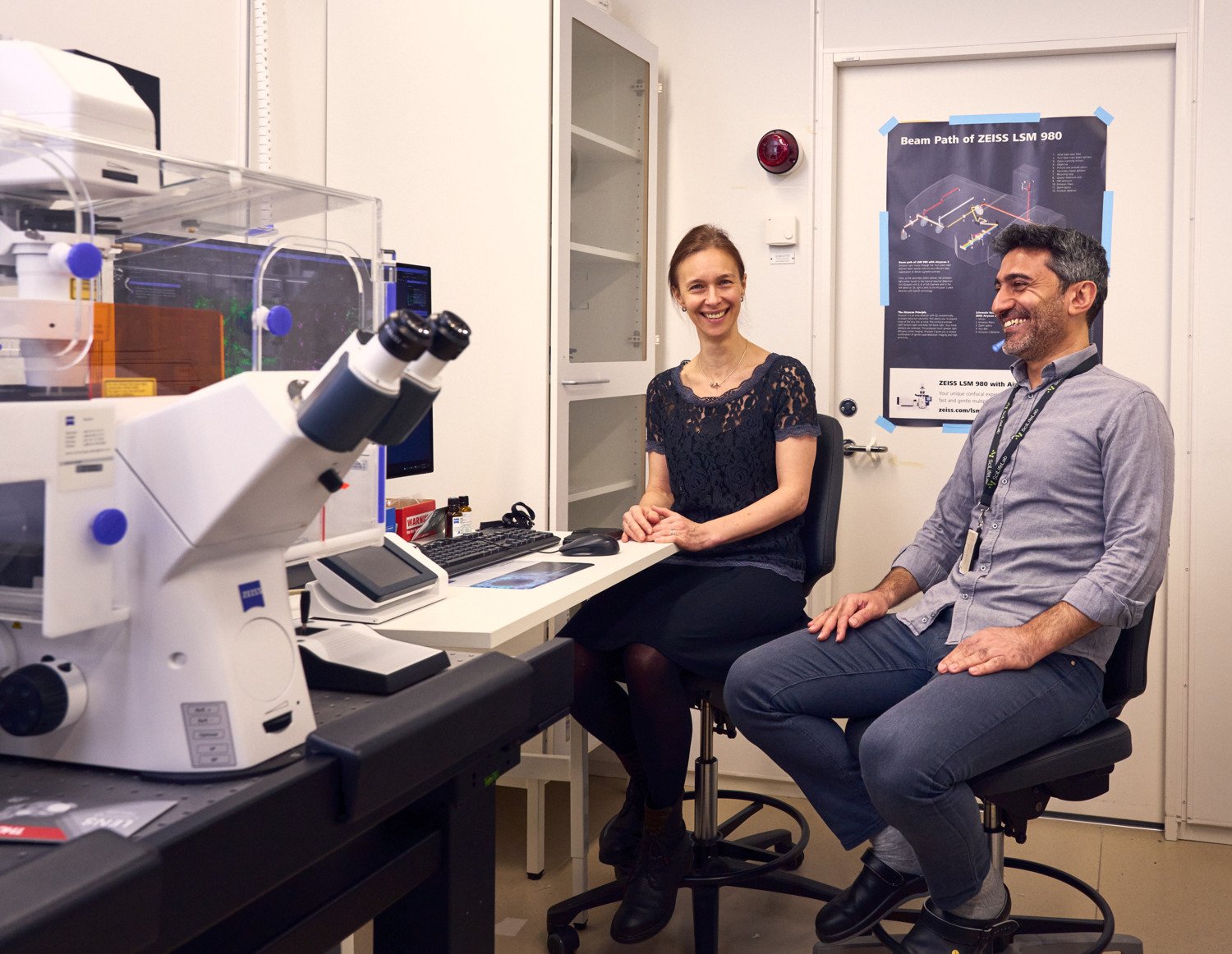
The shared leadership posed no problem, as their fields of expertise were so clearly delineated.
"I just have good memories, from the initial project draft and application to the recruitment of our joint postdoc, our research and all our social activities, such as a barbecue evening that everyone from both groups came to," says Dr Kutter, who reserves some praise for the programme organisers.
"I wasn't aware of any previous such initiative. It's innovative and based, of course, on the engagement of the participants, but giving us this platform was an important initiative."
Dr Sezgin welcomed the possibility of getting to know other KIRI fellows.
"Now I know what everyone does and who to contact if I need something. Everyone works with really exciting things - I'd like to work with them all, but one must of course acknowledge one's limitations".
The collaborative project was also a success for their postdoc, Pablo Carravilla.
"He's now a professor in Spain and leads his own research group," says Dr Kutter. "So our research network has been expanded from Sweden to Spain. We still keep in touch and plan to exchange students and continue to learn from each other."
A challenging environment
Dr Sezgin says that it can be taxing for a postdoc to work in two laboratories under two professors - "I daresay it can be difficult enough with just one."
"But if it works, it's a goldmine. You get supervised by two experts in their respective fields," he says.
Dr Kutter explains that Pablo's original research background was closer to Dr Seagin's field, but they deliberately placed him in her lab "out of Pablo's comfort zone", as she puts it.
"What you bring to the table yourself and the situation you find yourself in is always a combination of nature and nurture," she says. "We offered him an environment that challenged him and he seized the opportunity and made something very nice of it."
The social impression he made was almost as important.
"He would always go down to the café after lunch and chill on the sofa to recharge - and now my lab does the same," says Dr Kutter.
"Mine too, and they meet your group," says Dr Sezgin, who ends by making special mention of the important role played by KIRI postdocs in general:
"We KIRI fellows are group leaders who already have financing and established careers. The real outcome of such a programme is the next generation of researchers - which is why we need to highlight them and stress the importance of their role in KIRI."
Text: Lotta Fredholm
Translation: Neil Betteridge
KIRI in brief
• The Karolinska Institutet Research Incubator ( KIRI ) is a platform for young researchers to meet and forge interdisciplinary partnerships.
• KIRI was conceived in KI's Strategi 2030 steering document and was launched in 2022.
• Young researchers who are assistant professors (BUL) can apply to be a KIRI Fellow. In 2025, 20 international BUL positions were advertised, compared to the previous 8 to 10 a year.
• Two KIRI Fellows may apply for grants for a joint project, gaining access to a postdoc who works in both their laboratories.
• On 23 March 2026, the first cohort of KIRI Fellows celebrated concluding their four years on the programme.
• Since inception in 2022 and its intake of just over 30 Fellows, KIRI has grown to over 80 Fellows, 20 active postdocs and 28 different interdisciplinary research projects - some in the process of starting up, others concluded.


