
At the end of a history-laden path winding through palm trees and scattered ruins - remnants of once-vibrant villages destroyed by cattle raids - lies a rare sight in this dry part of Terekeka county in South Sudan: a sparkling, fresh water source.
The artificial lake is one of the latest outcomes of a quick impact project, initiated by the UN peacekeeping mission in South Sudan ( UNMISS ).
While UNMISS is mandated by the Security Council to protect civilians in restive parts of the country, part of its tasks include supporting the communities peacekeepers serve, from building roads to building peace.
Cattle conflicts
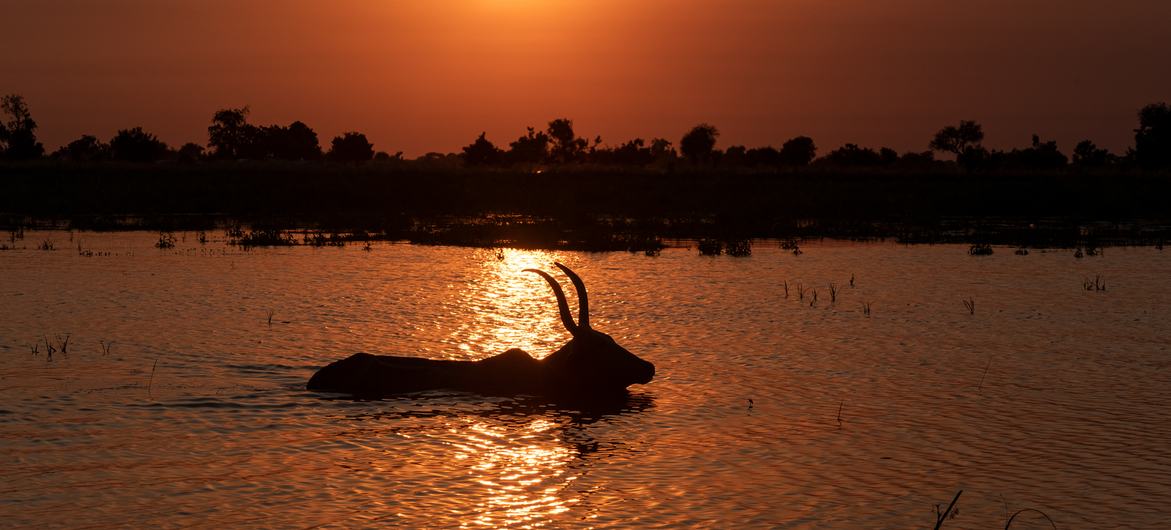
The reservoir project in Terekeka responds not only to the chronic lack of water in the area, but also to a key driver of conflict, with ongoing competition between farmers and cattle keepers over scarce water and grazing resources.
The intention was clear from the outset: provide farmers with a reliable water source for their crops while reducing the need for cattle keepers to venture onto farmland in search of water for their livestock, a perennial source of tension and violence.
"This project is particularly close to our hearts as it directly addresses both humanitarian challenges and conflict triggers, and the impact is already visible," said UNMISS Civil Affairs Officer Lawson Assagaya at a recent ceremony handing over the reservoir to the community.
Location is key
The location was carefully chosen, far enough from farms to reduce competition, yet close enough for farming communities to benefit, UNMISS said.
The hope is that the reservoir will create new opportunities for herders and farmers to co-exist peacefully, and signs of change are already emerging.
New cattle camps have already begun to settle around the reservoir, encouraging those displaced by conflict, including members of the Wonduruba Mundari community, to begin returning home.
Brighter future
Cattle keeper John Kenyi, a father of three who is expecting his fourth child, has long hoped to see changes that would, among other things, give his children a brighter future.
"It's devastating to see how our peaceful people end up fighting over scarce resources and lack of coordinated migration patterns rather than working together," he said. "Every day I hope for unity to return."
For Mr. Kenyi, cattle are not simply a status symbol, but an investment that can help pay for his children's education, an approach he says he learned from neighbouring farming communities.
"I don't know if I would say that we were brothers, but we are certainly one community," he said. "It gives us pride that this county is now re-emerging as a place people can call home."
Working together
This sense of unity also emerged during the reservoir's construction, according to the Point Investment Company, the project's local partner.
When workers arrived at the site, they found no road suitable for the heavy machinery needed to begin work.
As news of the project had spread, farmers and herders from surrounding communities quickly arrived with tools to help clear and build a pathway to the site.
"What was particularly special about constructing this project was the excitement of the Rego payam community," said Point Investment Company project manager Juman Emmanuel. "You could really see how energised everyone was about this new water source."
Boost from nature
Nature also provided an unexpected boost to the project when workers struck an underground water source that began naturally filling the roughly 3,200-square-metre reservoir.
The discovery meant the cement lining originally planned was no longer an option as it could contaminate the clean groundwater.
"When we saw the water coming out from underground, we were all relieved," the construction workers said. "This meant that the Rego communities will have an even more sustainable opportunity to be safe now."
Renewed hope
The project was completed in just one month, leaving the community with a sustainable water source that can continue replenishing the reservoir even when rainfall becomes scarce during the dry season, UNMISS said.
Whether the reservoir will ultimately help reduce cattle-related violence remains to be seen, but its impact is already extending well beyond supplying water.
In a community long divided by competition over scarce resources, the project has brought farmers and herders together around a shared resource and fostered renewed hope that Rego can once again become a place people call home.


