
James Mills, a cardiologist for 35 years, knew he wanted to be a doctor when he was in first grade.
"I was always fascinated by medicine," said Mills, an associate professor of medicine at Robert Wood Johnson Medical School and a cardiologist at Robert Wood Johnson University Hospital (RWJUH). "I don't know exactly what triggered it, but I remember having my own first-aid kit and being drawn to the idea of taking care of people even as a little kid."
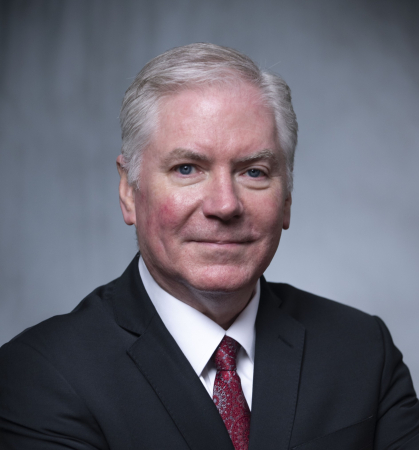
His determination and early sense of purpose continued through high school, college and medical school. It is what brought Mills, the director of general and preventive cardiology in the Division of Cardiovascular Diseases and Hypertension of the Department of Medicine at the medical school, where he is helping to launch a preventive cardiology program designed to transform how cardiovascular disease is identified, treated and prevented.
The new program, developed through Rutgers Health and RWJBarnabas Health, brings together preventive cardiology, cardiac genetics and sports cardiology under a unified, academic vision. Cardiologists trained in this program will bring a holistic perspective to the practice, helping people live heart-healthy lives.
"Historically, if patients in New Jersey wanted care through a university-based preventive cardiology program, they often had to go to New York or Philadelphia," said Mills, who served in a similar capacity at West Virginia University School of Medicine. "We're working to expand those opportunities here, so patients can receive advanced, comprehensive care close to home."
Mills described the opportunity to help build the program as deeply motivating.
"This was very enticing for me," he said. "I wanted to spend the later years of my career taking on a meaningful challenge where I could help build something that can really make a difference."
While many cardiology practices offer strong preventive care, Mills said patients with complex or genetically mediated cardiovascular disease have often needed to travel out of state for specialized evaluation and treatment. The program at Robert Wood Johnson Medical School will change that by expanding access to advanced preventive services within New Jersey, he said.
A major focus of preventive cardiology is the evaluation and treatment of inherited lipid disorders, such as familial hypercholesterolemia, Mills said. These conditions can cause heart attacks at unusually young ages and often require aggressive, multidrug therapy beyond standard cardiology approaches. Mills said in one recent case, a patient in his 30s required bypass surgery because of a genetic cholesterol disorder.
"Early detection and family-based risk assessments are vital in keeping people healthy and protecting at-risk relatives before cardiac disease develops," Mills said.
As a general cardiologist treating adults, Mills manages both advanced cardiovascular disease and everyday risk. Preventive care begins with identifying and addressing major risk factors, including hypertension, diabetes, high cholesterol, smoking, obesity, family history, inflammatory diseases and chronic kidney diseases.
Lifestyle interventions, including regular physical activity, heart-healthy diets such as the Mediterranean diet, smoking cessation and individualized care plans, are critical for good health, he said.
"The people who live the longest from a cardiovascular standpoint are the ones with excellent control of their risk factors and consistent heart-healthy habits," Mills said.
Modern cardiology, he said, includes interventional cardiology, electrophysiology, advanced heart failure and transplant cardiology and noninvasive or general cardiology. Mills, a general cardiologist, serves as the first point of contact for patients and coordinates care across subspecialties.
He is board-certified in multiple advanced cardiac imaging modalities, including adult echocardiography, cardiac computed tomography and nuclear cardiology. His clinical interests center on preventive cardiology, cardiac genetics and sports cardiology.
These cardiac fields increasingly intersect as cardiovascular care shifts from treating disease to identifying risk earlier and more precisely, Mills said.
Over the course of his career, including many years practicing in West Virginia, Mills has witnessed one of the most transformative periods in modern medicine.
When he was in medical school in the late 1980s, angioplasty was still relatively new. At the time, heart attack treatment relied heavily on thrombolytic, or "clot-busting," medications, which restored normal blood flow only about 50% to 60% of the time. Those medications still are used today, but only in rare circumstances, typically in remote hospitals without access to cardiac catheterization labs, Mills said.
Since then, cardiology has evolved dramatically. The development of coronary stents fundamentally changed heart attack treatment, with advances in stent design and medication-coated technologies now restoring normal blood flow more than 90% of the time.
"If you're going to have a heart attack," Mills said, "you'd much rather have it in 2026 than in 1985."
Preventive cardiology, Mills said, not only treats heart disease but, more importantly, prevents heart disease before it begins.
"The future of cardiology isn't about treating heart attacks," Mills said. "It's about identifying risk earlier, intervening sooner and giving people the opportunity to live longer, healthier lives. That's the vision we're building here."


