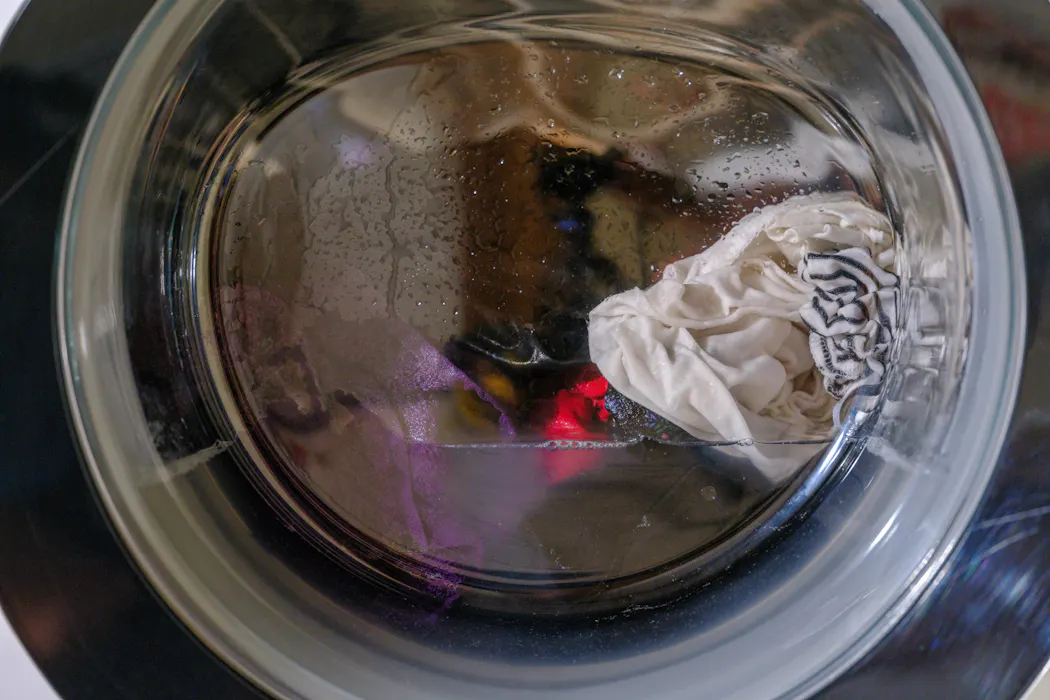
You forget a load in the machine overnight, and by the morning it smells worse than before you washed it.
Author
- Saniyat Islam
Associate Professor, Fashion and Textiles, RMIT University
Most of us are familiar with that "wet dishcloth" smell. Worse, once it's settled into your clothes, it can be difficult to get rid of.
So what's going on, and how to fix it? The answers lie both with biology and with textile science, which helps explain why some fabrics are worse affected than others.
The hidden living things in the water
Damp fabric at room temperature is close to an ideal microbial habitat. They have warmth, moisture and abundant food in the form of skin cells, sebum (skin oil) and sweat residues that may survive a normal wash cycle.
The bacterium most responsible for the "wet rag" smell is called Moraxella osloensis. A Japanese study in 2021 traced the smell to a compound this bacterium produces.
It also found the species tolerates drying and ultraviolet exposure unusually well - more proof that bacteria can indeed survive the wash and start thriving in a wet load that hasn't been promptly hung out.
It isn't only the clothes that harbour microbes, either. A 2025 study found household washing machines themselves host persistent microbial biofilms (colonies that detergent alone struggles to remove), especially around door seals and in the detergent drawers of front-loaders.
Each cycle, that biofilm can reinoculate freshly washed laundry, so clothes can emerge from a "clean" wash already carrying the seeds of the smell.
If laundry is left wet long enough, or dries too slowly in a poorly ventilated room, fungi can join the bacterial party. Mould and mildew produce their own volatile compounds, notably geosmin , the molecule behind the "earthy" smell of rain-soaked soil.
Human noses are extraordinarily sensitive to it, detecting it at concentrations of just a few hundred parts per trillion .
Some clothes will smell worse than others
Cotton is hydrophilic ("water-loving"): it binds water readily, leaving fewer places for the oily residues of sweat to lodge inside the fabric.
By contrast, polyester is hydrophobic - it repels water. Unfortunately, it's also lipophilic, which means it readily absorbs oily compounds in sweat and sebum, the same ones that odour-causing bacteria feed on.
This feature is a problem for trapping smells. A recent Canadian study modelled how odour compounds migrate from sweat into fibres, confirming polyester retains substantially more of them than cotton or viscose.
Research on moisture-repelling textiles has found that with all those oils trapped in the polyester, bacteria have a field day feasting on it. The more hydrophobic the fabric, the more likely it is to trap smells , which is how polyester and nylon consistently outsmell cotton and wool.
That's why so many sportswear and athleisure garments - which rely on synthetic fibres for moisture-wicking - are prone to stubborn "permafunk" that survives repeated washing.
So how do I fix my musty laundry?
If you accidentally end up with a smelly load of laundry, the only way to fix it is to wash it again, preferably at as hot a temperature as possible. Before the wash, consider soaking it in a concentrated household vingear solution, as vinegar is a good antimicrobial agent.
Prevention is better than the cure. Move laundry from washer to dryer or washing line within roughly 30-60 minutes. Dry everything fully and as quickly as possible, with good airflow - this will halt bacterial and fungal growth as the drying takes away the perfect conditions for the microbes to thrive.
Boost the wash, and clean the machine itself. You can add laundry boosters containing oxygen bleach and various enzymes (proteins that target different types of stain) to give your laundry an extra cleaning boost, and to break down biofilms in the washing machine. A hot maintenance cycle and wiping seals and drawers periodically breaks the reinoculation cycle of the bacteria.
Wash hot when you can. Washing clothes in cold water saves energy, but it also gives odour-causing bacteria a chance to thrive not just in your washing, but in the machine itself. Studies on hospital laundries show the best way to reduce bacterial loads in laundry is to combine heat with thorough drying.
Not all textiles can be washed at 60°C, so check your labels carefully, but it's worth a shot if your laundry smells funny. Additionally, enzymes in laundry detergent will have different temperatures for optimal performance , so that's something to take into account as well (check the label of your detergent for more info).
Ultimately, fibre choice, laundering behaviour and garment lifespan are more entangled than most of us realise. From a sustainability perspective, it's a tricky balance: on one hand, you may want to wash things in cold water to prolong their life, but if your clothes always smell even after washing, you may end up tossing them earlier than they deserve.

Saniyat Islam is affiliated with The Textile Institute.