
UC Davis Children's Hospital is expanding access to pediatric specialty care through its Pediatric Mobile Clinic, a community-centered clinic on wheels. The vehicle delivers specialty medical and mental health services directly to schools, mental health organizations, and other community agencies across the Sacramento region.
Launched in 2024, the Pediatric Mobile Clinic provides free health care services to historically marginalized and underserved populations by partnering with school districts and community-based organizations to reduce barriers to care for children facing access challenges. The clinic currently provides general pediatrics, mental health, developmental-behavioral pediatrics and asthma care in a mobile clinic setting.
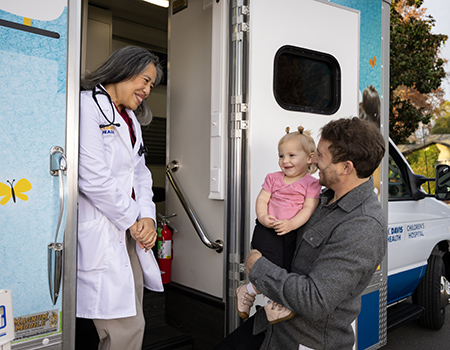
This includes acute care, assessments for autism and other neurodevelopmental conditions and care for depression, anxiety and other childhood conditions.
"This program is about meeting families where they are," said Serena Yang, division chief of general pediatrics and vice chair of community engagement at UC Davis Health. Yang is part of the mobile clinic team made up of clinicians and staff from the MIND Institute, CAARE Diagnostic and Treatment Center and Children's Hospital. "By bringing specialty services into schools and community spaces, we're improving access, building trust and supporting children's health together." The Pediatric Mobile Clinic is entirely funded by a grant from Children's Miracle Network at UC Davis Children's Hospital.
School-based partnership shows early impact
In its first year of regularly scheduled clinics from July 1, 2024 to June 30, 2025, the Pediatric Mobile Clinic established a weekly presence at the Cordova Lane Center in partnership with Folsom Cordova Unified School District. Clinics served children with developmental concerns, mental health needs, asthma and school-entry health requirements – many of whom had not previously accessed specialty care.
Key results from the first year include:
- 52 children received specialty consultations directly at school sites, ranging in age from 3 to 15 years old.
- No-show rates were low (less than 10%), reflecting improved access and reducing transportation barriers to care.
- Nearly half of children served were insured by Medicaid or had pending coverage, but many were not connected to primary care.
- Families rated their experience an average of 4.95 out of 5, citing convenience and support.
This program is about meeting families where they are. By bringing specialty services into schools and community spaces, we're improving access, building trust and supporting children's health together."-Serena Yang

Growing reach through community partnerships
Beyond schools, the Pediatric Mobile Clinic collaborates with community organizations to deliver care at health fairs, youth sports events, and cultural events. During the past year, the clinic provided:
- Free health assessments for young athletes
- Free flu vaccinations at community festivals
- Free health screenings at rural and urban community health fairs and student-run clinics
In 2025, the clinic expanded its specialty medical services to see children at La Familia Counseling Center in South Sacramento and HeartLand Child & Family Services in Del Paso Heights.
The Pediatric Mobile Clinic also serves as a hands-on training site for UC Davis School of Medicine students, pediatric residents, psychology and social work interns, and undergraduate community health interns. This workforce focus helps prepare the next generation of health professionals to practice community-focused pediatric care.
Next steps
With early success and strong community demand, UC Davis Health plans to continue expanding the Pediatric Mobile Clinic model, bridging health care, education and community to support the health of children and families.
"Our findings show mobile clinics can close longstanding gaps in care," Yang said. "They also help identify unmet needs and create a path to care for families."
The program's early outcomes will be presented at the 2026 Pediatric Academic Societies Meeting in Boston this month, highlighting its potential to bridge specialty care access gaps while also identifying ongoing social and structural barriers to care in under-resourced communities.


