
The Bible contains far more exciting, brutal, and meaningful stories than those most children - and adults - know from traditional children's Bibles. In collaboration with his wife, Associate Professor Frederik Poulsen from the Faculty of Theology has written a book featuring alternative biblical stories.
In his daily work, Associate Professor Frederik Poulsen focuses on the Old Testament. He is particularly interested in themes of exile and migration, and he also works with translating the Hebrew source texts.
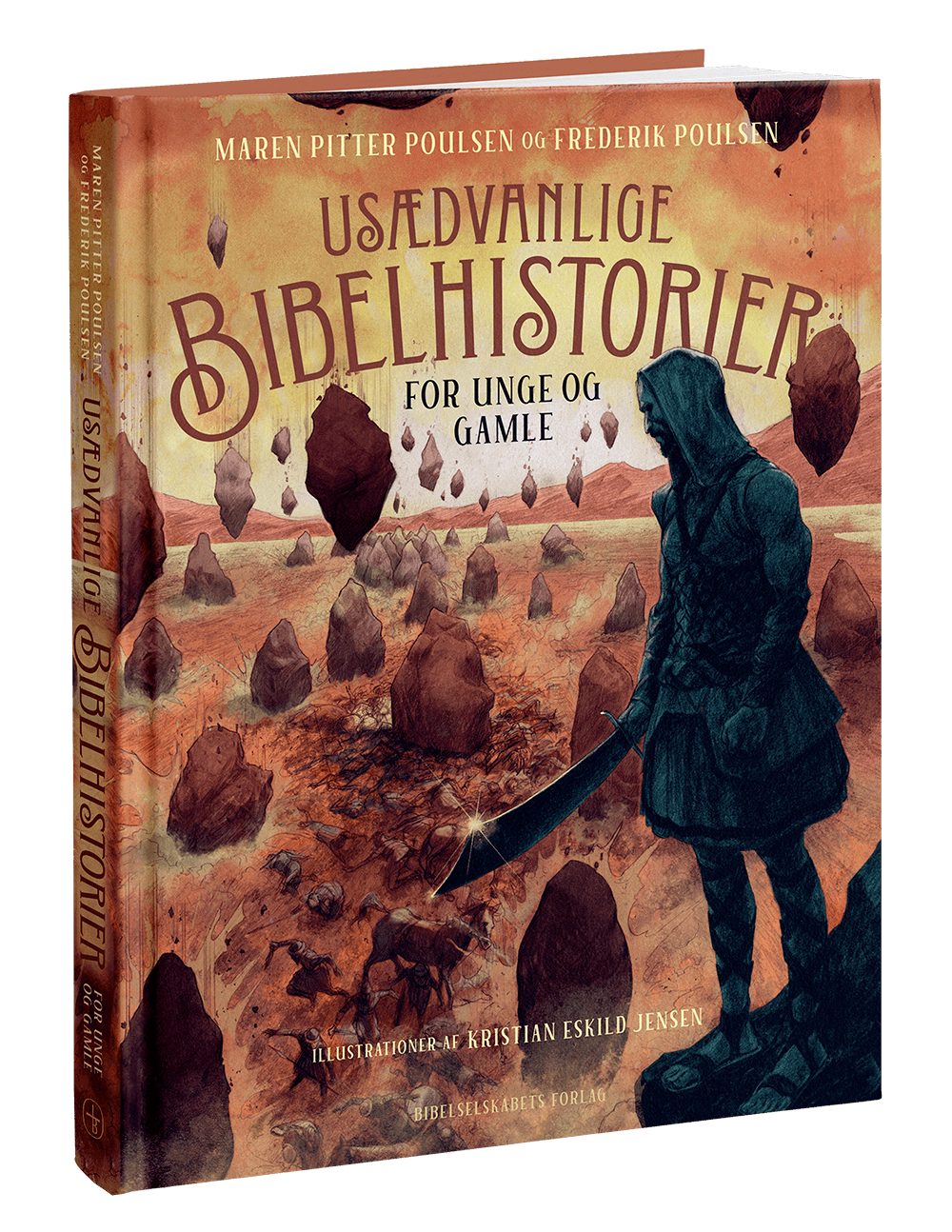
Now, he has ventured into a new form of research communication. Together with his wife, Maren Pitter Poulsen, a pastor in the Danish Church, he has written the book 'Usædvanlige Bibelhistorier' (Unusual Bible Stories).
The book contains biblical stories that will be unfamiliar to many readers. Among other things, one can read about Peter attempting to cast out a demon, the terrifying sons of God, and King Saul's pursuit of David.
Here, Frederik Poulsen explains how the book came about.
How did you get the idea to write a book of biblical stories?
Back in the summer of 2023, I taught an elective course on how the Old Testament is used in art and culture. Together with the students, I looked at various children's Bibles, and we quickly saw that the same stories tend to appear again and again - often even told in the same way.
So I came home to my wife and said that someone ought to make a Bible with retellings of different stories to show that the Bible is much more than what you encounter if you have only read the standard children's Bibles.
Our idea is to keep the Bible's overarching chronological narrative - from the creation story to the end of the world - but to tell that grand storyline through other, unusual stories.
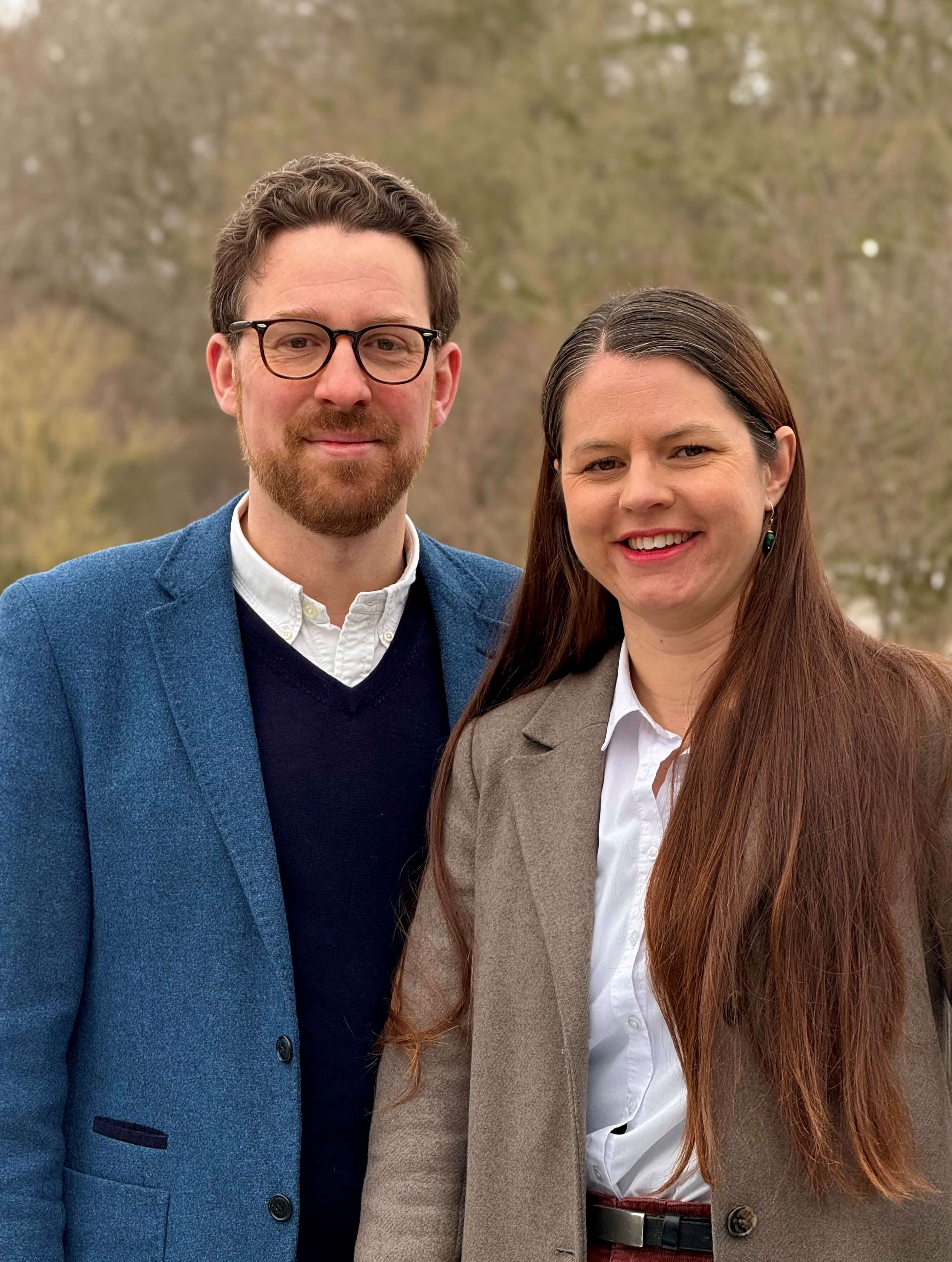
Photo: Johan Pitter Poulsen
How did you choose which stories to include?
Our first criterion was "a good story." The stories had to be compelling and able to appeal to a broad audience. Some of them are both dramatic and brutal. And in some of them, you meet God in roles very different from those in the most familiar biblical narratives.
For instance, the first two stories in the book deal with the creation of the world. Most people know the account of how God created the world in six days and rested on the seventh. But the Old Testament actually contains several other ideas about creation. One of them imagines the beginning as a state of great chaos, in which God must battle the sea and a seven‑headed sea monster to create space for life. We have woven the various poetic and mythological fragments from the Old Testament into a story about God's fight with a sea monster.
The Old Testament also includes the idea that God created the world with the help of wisdom. That wisdom is portrayed as a woman. The female figure is called Hokmah, and if you look at the ceiling of the Sistine Chapel, where God reaches out to touch Adam's finger, you can see that God has his arm around a woman - most likely Hokmah. She is unfamiliar to many, yet she appears in the Book of Proverbs, and we have included a story about her as well.
Who is the book for?
The book's full title and subtitle are 'Unusual Bible Stories - For the Young and the Old', because we believe that many readers can enjoy it. I would say you can read it from about age ten. My wife, for example, reads it aloud in her confirmation classes. But it can just as well be read by their parents and grandparents who want a deeper understanding of the Bible and the mythology embedded in its stories - the parts we rarely hear about.
How do you remain faithful to the Bible's original texts when rewriting them for the young readers of today?
Every retelling involves a certain degree of freedom. In some cases, we had to simplify very large amounts of material - cut it down to the essentials. In other cases, we had to expand just a few verses into a full short‑story narrative.
When we do this, we do it with great respect for the original text. I went back to the old Hebrew texts and drew inspiration from the source material so we could use elements from it to craft new stories. For example, we portray the woman Deborah as surrounded by a swarm of bees whose buzzing intensifies when she is in contact with God. The Old Testament does not say this, but it is an interesting image inspired by the fact that Deborah means "bee" in Hebrew.
So many of the elements we have added actually come from interpreting the source texts - the kind of work I do as a researcher. That is why I also see this as a form of research communication, even though we are clearly working within a more literary genre. But the whole time, it is grounded in a deep scholarly engagement with the material.
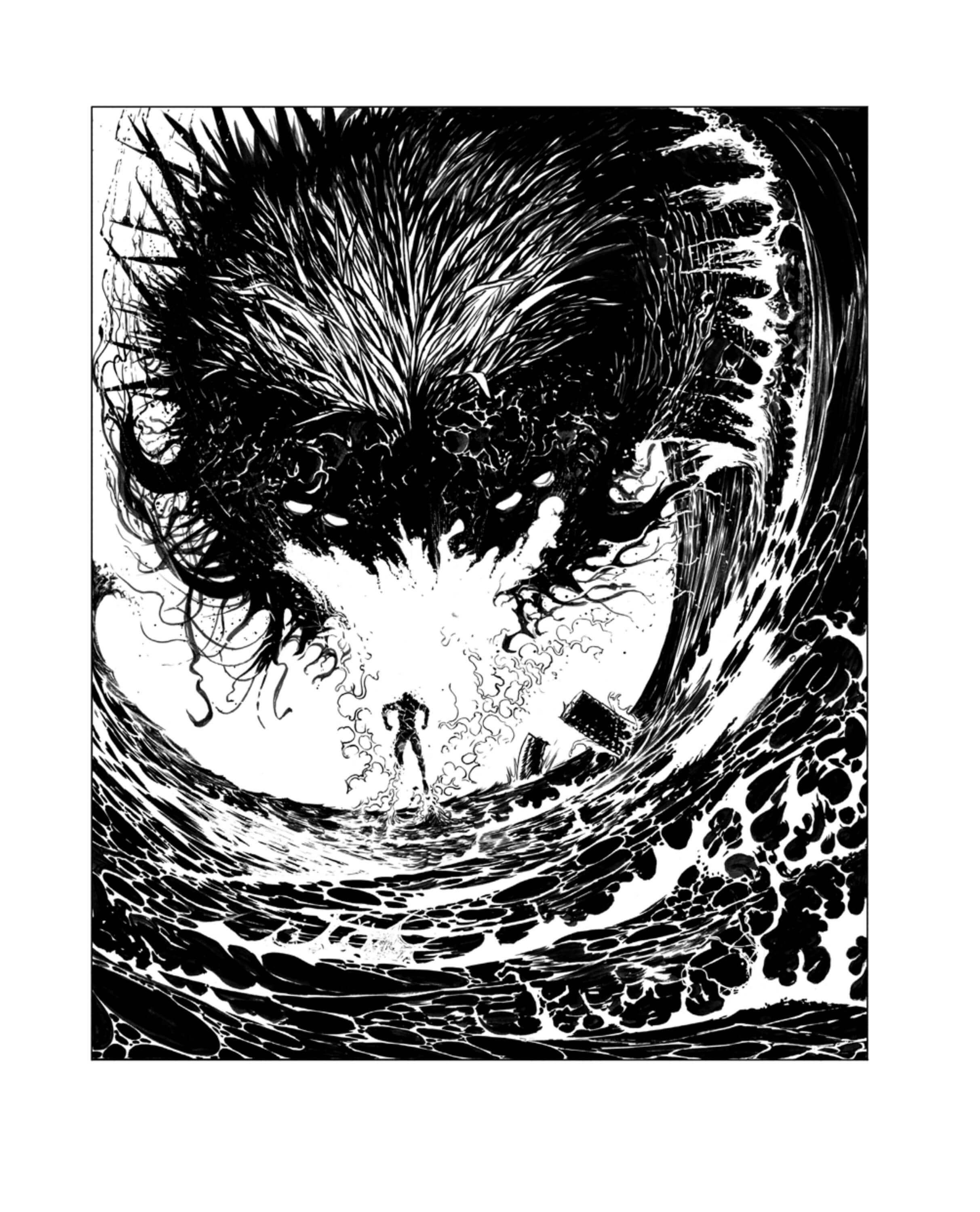
Illustration: Kristian Eskild Jensen
What did you think of communicating your research in this format?
It was a lot of fun. The kind of research communication I usually do is mostly books, textbooks, and public talks. In many cases, my audience is people aged 60-70 or older, so it is interesting to try to communicate my research to young readers.
We published the book with the Danish Bible Society (Bibelselskabet), which assigned us an excellent editor with a background in writing children's books. That meant we received a completely different form of feedback than what I normally get as a researcher when publishing a text. And that has been a truly exciting part of the process.
About the Book
'Usædvanlige Bibelhistorier' consists of 12 stories from the Old Testament and 8 from the New Testament. All stories are written in short, novella‑style formats. They can be read individually, but the book follows the Bible's chronological structure.
The book is published by the Danish Bible Society's Publishing House.
The authors are pastor Maren Pitter Poulsen and University of Copenhagen associate professor Frederik Poulsen.
Illustrations by Kristian Eskild Jensen.


