
While in Sweden for psychological rehabilitation through the Repower project, Ukrainian combat medics visited Stockholm for a day of discussions and experience-sharing with Swedish healthcare professionals, decision-makers, and other actors within the Swedish total defence system.
In mid-December, over a hundred Ukrainian combat medics visited Karolinska University Hospital for an exchange of experiences with Swedish healthcare professionals, decision-makers, and other actors within Sweden's total defense.
The visit, organized by Region Stockholm together with the Centre for Health Crises at Karolinska Institutet, provided opportunities for discussions, presentations, and panel discussions on how healthcare is conducted under the extreme conditions at Ukraine's frontline. The combat medics were invited to Sweden through the organization Repower .
A daily life marked by constant danger
The day began with a presentation of the experiences that Karolinska University Hospital has gathered since Russia's full-scale invasion of Ukraine in February 2022. Since then, the hospital has received over 100 Ukrainian patients, focusing on advanced care for severely injured patients in need of reconstructive surgery.
Next, combat medics and doctors shared their experiences of how they care for, stabilize, and transport the wounded from the site of injury to the hospital. They described a daily life marked by constant danger and rapidly changing conditions that continuously required new working methods. Drones are used regularly, and healthcare personnel, transports, and hospitals are subjected to systematic direct attacks, making the work extremely dangerous and difficult to plan, while patient evacuations are often prolonged. Shortages of materials, limited resources, and varying levels of training were also highlighted as recurring challenges.
Other diseases do not pause
At the same time, the participants emphasized that healthcare needs extend far beyond acute trauma injuries. Soldiers are often older, and the war has been ongoing for more than three years - civilians, elderly people, and other vulnerable groups also require care and support. Somatic illnesses such as cancer, diabetes, and heart disease do not pause, and it is important to have a structure in place to address these healthcare needs as well. This was also highlighted as something that can be planned for even in peacetime, serving as a lesson for Sweden.
Mental health, for both soldiers and civilians, was also emphasized as a priority. In particular, "peer support" and the role of family were highlighted as important for coping with the difficult work. Humor was another method described as a coping mechanism to manage the demands of the job.
Notably, it was the combat medics themselves who built and equipped the so-called "stabilization points," where advanced care is provided under difficult conditions and where the wounded may remain for several days due to challenges in evacuating them to hospitals.
Important lessons
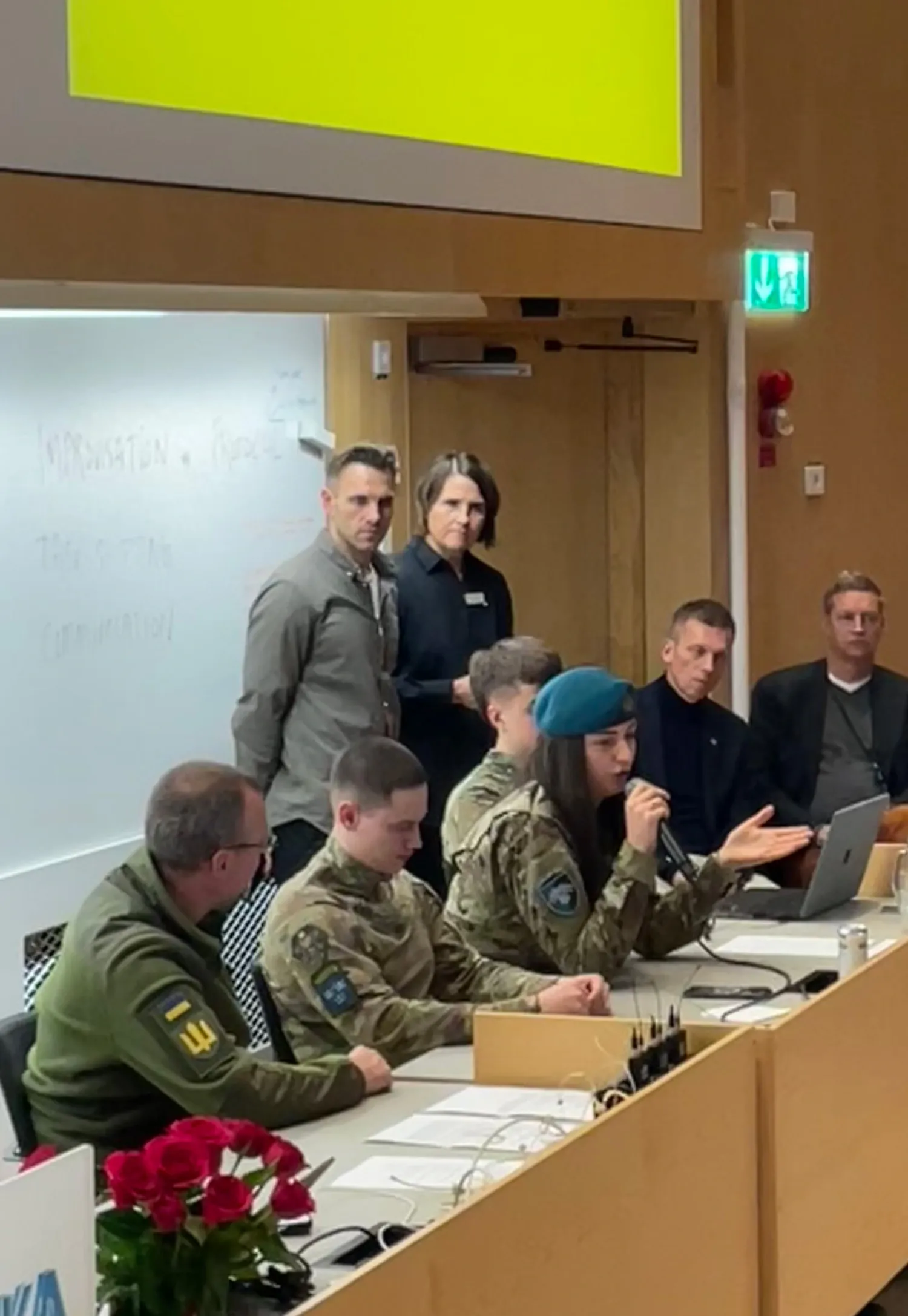
The day concluded with a panel discussion and a conversation between the Ukrainian combat medics and Swedish representatives from the Armed Forces, Region Stockholm, and the National Board of Health and Welfare. Several important lessons emerged from the discussions.
A key conclusion was that the state and authorities need to be responsive to needs on the ground and quickly adapt working methods, treatment protocols, and find new solutions as conditions change. The participants also emphasized the importance of a cohesive approach in which all actors collaborate within the total defense system and listen to the needs expressed by those working on the frontline.
Regarding training for Ukrainian combat medics, the need for better access to educational and training materials was highlighted. Flexible training solutions are also required, such as adapted admission procedures, the possibility of temporary study breaks from the frontline, as well as digital courses and new specialized training programs. These experiences also provide valuable lessons for Swedish higher education institutions, where universities can play a crucial role in future crises by rapidly adapting education, providing expert knowledge, training materials, and digital solutions.
Ukrainian resilience was highlighted as a decisive factor for healthcare to function under the extreme pressures of war. Despite constant danger, heavy losses, and limited resources, the combat medics continue their work with perseverance, adaptability, and strong determination - experiences that provide important insights for the continued development and preparedness of Sweden's total defense.
About Repower
Since 2022, Repower NGO has worked to support Ukrainian healthcare professionals by providing help, rehabilitation, recovery, and a break from their frontline duties in the war in Ukraine.
Each project includes a program with various elements such as sessions with psychologists, mindfulness, outdoor activities, and cultural and nature experiences. Ten psychologists from a Ukrainian volunteer organization participate in each project.
Activities and programs are carried out in collaboration with local actors, businesses, and associations. The content provides participants with tools to strengthen both physical and mental health. After twelve days, the group returns to the war zone. So far, around 700 doctors and healthcare workers have taken part in Repower's projects.
Funding comes from donations by individuals, as well as sponsorships from companies and organizations.


