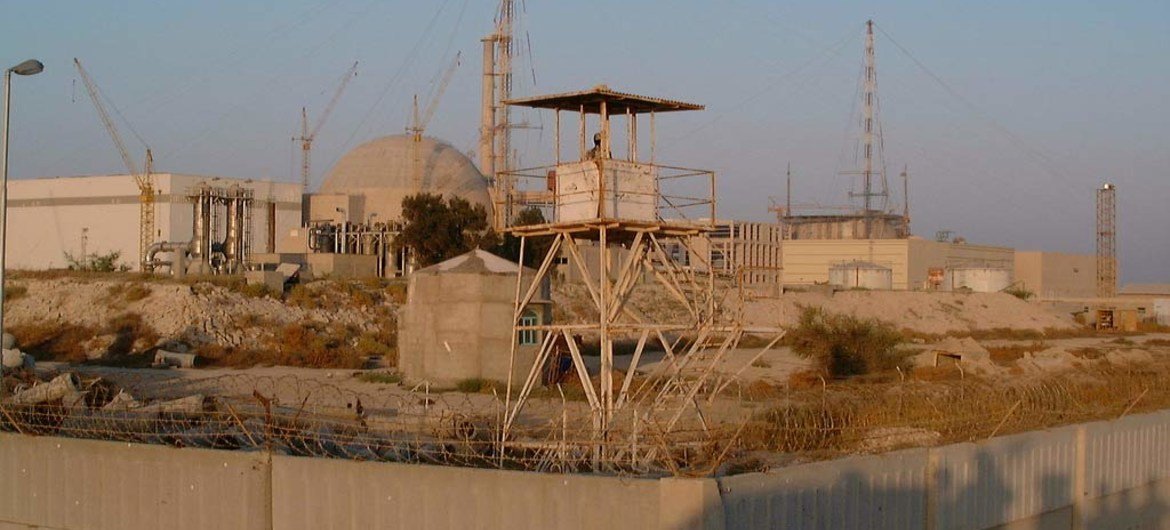
The head of the International Atomic Energy Agency (IAEA), Rafael Grossi, called on Friday for a swift return of inspectors to Iran, warning of growing fragility in the global nuclear non-proliferation regime.
The technical groundwork has been done and "the bases on which a diplomatic agreement could be concluded exist," he told the UN General Assembly.
He urged the parties to "redouble efforts", adding that inspectors' return "requires a return to the negotiating table".
Iran has sharply restricted access since the June 2025 strikes on its nuclear sites during a 12-day war with Israel.
Non-compliance concerns
The IAEA estimated in March that just over 200 kilogrammes of uranium enriched to 60 per cent remained at Isfahan, with more at Natanz.
In September, the agency's board of governors referred Iran's non-compliance to the Security Council , which Tehran contests.
"The global non-proliferation regime…depends on dialogue," Mr. Grossi said, pointing to successful efforts in Syria and war-torn Ukraine, where IAEA has brokered eight localised ceasefires to repair power lines at the Zaporizhzhia nuclear plant and deployed 287 missions since Russia launched a full-scale invasion in 2022.
UN chief condemns deadly church attack in Jordan
The UN chief António Guterres on Friday strongly condemned a deadly attack on a church in Hmoud, Jordan.
The terrorist attack on a funeral service at a church in Hmoud in Jordan left seven people dead and many more injured, UN Spokesperson Stéphane Dujarric said.
"The Secretary-General expresses his deep condolences to the families of the victims and wishes a speedy recovery to all those injured," he added.
"An attack not only on a place of worship but during a funeral procession, is especially heinous."
The Secretary-General also called for all those responsible to be found and to be held accountable, Mr. Dujarric said.
"Attacks against civilians and places of worship are unacceptable," he said. "Places of worship must be places of peace and must be safe for all."
Read his full statement here .
Sudan's El Fasher survivors, one year since city fell
One year since paramilitary forces rampaged through Sudan's El Fasher, the legacy of fear and trauma continues to haunt thousands of survivors.
That's the message from gender equality agency UN Women , which reported that nine in 10 Sudanese aid organizations it surveyed had found women or girls in distress who had received no mental health, psychosocial or legal support since fleeing the Darfuri city.
The war in Sudan erupted in April 2023 between the Sudanese Armed Forces (SAF) and the paramilitary Rapid Support Forces (RSF), former allies who had jointly seized power in a 2021 coup.
On Friday, UN Women regional director Anna Mutavati told reporters in Geneva that some people have started to return, "but the fear of violence is constant".
'Scars have not faded'
"The scars of the violence in El Fasher have not faded," she said. "Women and girls continue to live with the trauma of sexual violence, the disappearance of their daughters, their sisters, their mothers, their husbands, and their sons, the killing of family members, and the loss of their homes, property, and livelihoods."
Reports of deadly strikes on civilians, rape and violence continue, said Ms. Mutavati, emphasising that drone attacks are increasing across Blue Nile, Khartoum, West Kordofan, Gedaref and Kassala.
"Most of those killed or injured are women and children," she said. "Many had already fled violence, including sexual violence."