By Joey Garcia, University Communications and Marketing
As Florida continues to face one of its worst dengue outbreaks in nearly a century, an innovative mosquito trap created by USF startup Digitomy is helping curb the spread of the virus and other mosquito-borne diseases. The smart trap contains patented AI technology and has achieved more than 98% accuracy in identifying mosquito species during laboratory testing.
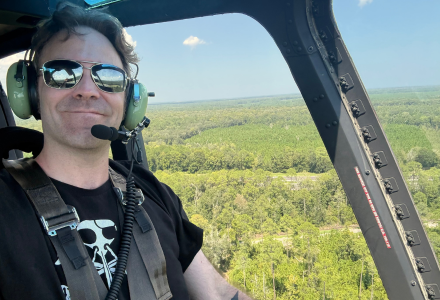
USF Associate Professor Ryan Carney in the College of Arts and Sciences [Photo courtesy of Ryan Carney]
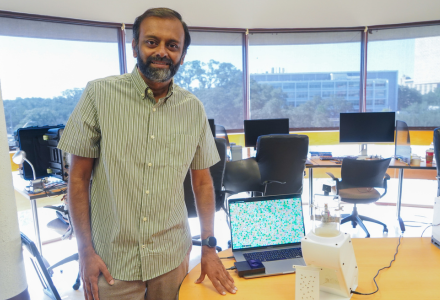
USF Professor Sriram Chellappan in the Bellini College of Artificial Intelligence, Cybersecurity and Computing
National Science Foundation-supported research behind Digitomy has been underway at USF since 2018. The technology, created by Associate Professor Ryan Carney and Professor Sriram Chellappan, uses artificial intelligence to identify mosquito species, gender and whether they have fed on blood. Paired with cloud computing and a mapping dashboard, the system aims to help public health officials track disease-carrying mosquitoes for more timely, targeted control.
The mosquito is the deadliest animal on the planet. While there are 3,500 mosquito species, it's primarily only one, Aedes aegypti, that is spreading dengue in Florida. We can use the data from our smart traps to construct a habitat model, as well as to monitor the species' presence and abundance in real time, to strategically mitigate its spread.
Ryan Carney
USF Associate Professor
CREATING AN EFFECTIVE TRAP
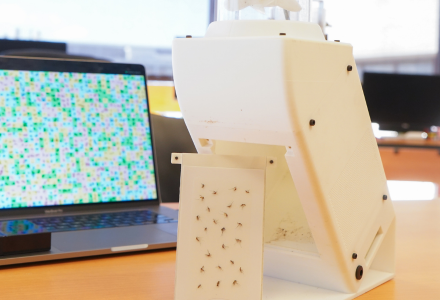
Digitomy's trap works by hanging it on a low tree branch or placing it on the ground. Either a light or bait at the top can be used to attract mosquitoes, while a fan draws them inside. Once captured on a sticky pad, two built-in cameras photograph the insects, allowing the AI technology to identify their species using a vast database of mosquito images.
"Traditional mosquito surveillance requires a long manual approach by specialists, which can take two to three days under a microscope," Chellappan said. "The AI in our trap speeds up the process and can lead to more targeted disease interventions, while still being human led."
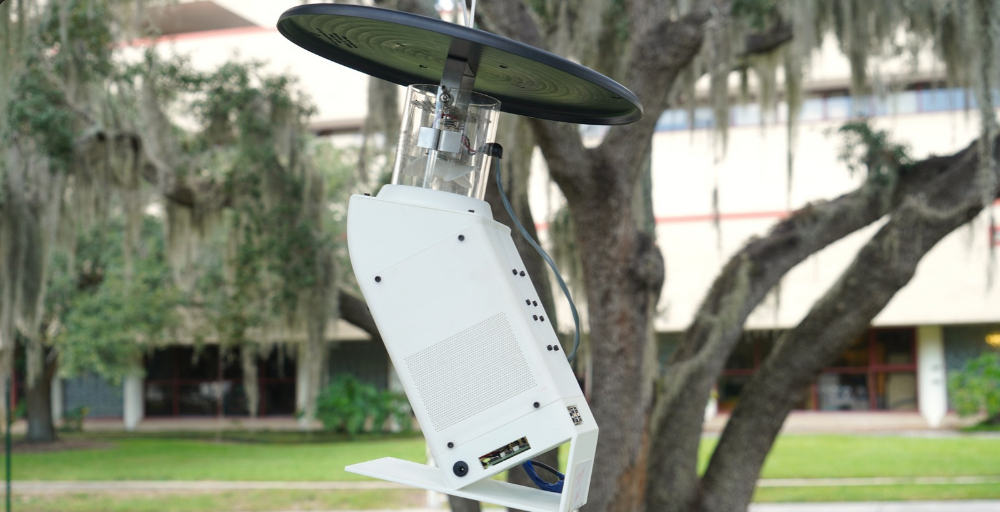
While smart phones can be used to help identify a mosquito by its physical characteristics, laboratory testing calculations suggest the Digitomy is highly efficient, requiring less energy to identify an entire sticky pad of mosquitoes than sharing a single Instagram post.
Testing at USF and the research team's partnership with St. Johns County's Anastasia Mosquito Control District, which includes St. Augustine, have helped advance the technology.
Collaborating with Digitomy and USF will benefit our programs by helping us explore and adopt new artificial intelligence technology. We will then be able to greatly monitor vector mosquito populations and promote future public participation in mosquito surveillance.
Rui-De Xue
Anastasia Mosquito Control District Executive Director
SURVEILLANCE AND PUBLIC EDUCATION
Beyond identifying mosquitoes, Digitomy could help public health officials pinpoint where disease-carrying species are concentrated and direct control efforts more effectively. The technology could also complement Carney's earlier DYCAST early warning system for dengue and West Nile virus outbreaks.
The team has also integrated trap data into a private layer of its Global Mosquito Observations Dashboard, combining trap information with more than half a million citizen science reports. The system could eventually help mosquito control districts monitor populations across different locations and respond more quickly during outbreaks.
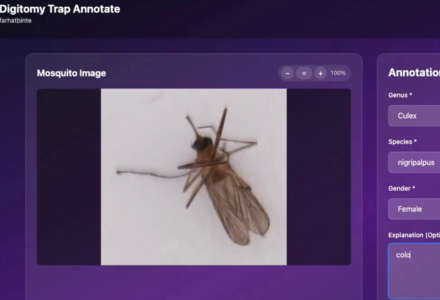
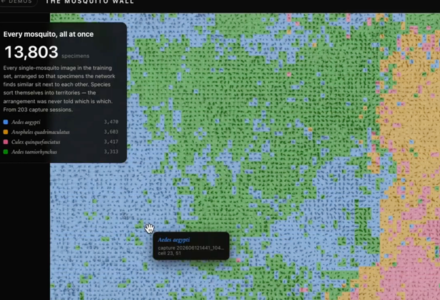
Digitomy is also developing a cloud-based education platform for mosquito control professionals and the public. Users can examine mosquito images, identify species and receive AI-generated feedback to improve their identification skills without attending in-person training sessions.
"Education is our secondary line of defense," Carney said. "While our smart traps provide the macro-level data, the public should practice the three D's: Drain standing water, dress to cover skin and wear DEET. Pairing automated AI data with mosquito control and engaged communities can help us conquer these outbreaks."
The researchers hope to work with mosquito control districts, including Anastasia and Hillsborough, to incorporate the platform into professional training and public education programs.
SCALING SMART TECH TO GLOBAL MARKETS
As Digitomy moves closer to consumer sales, the researchers are preparing for field validation with Hillsborough County while working to bring the technology to market.
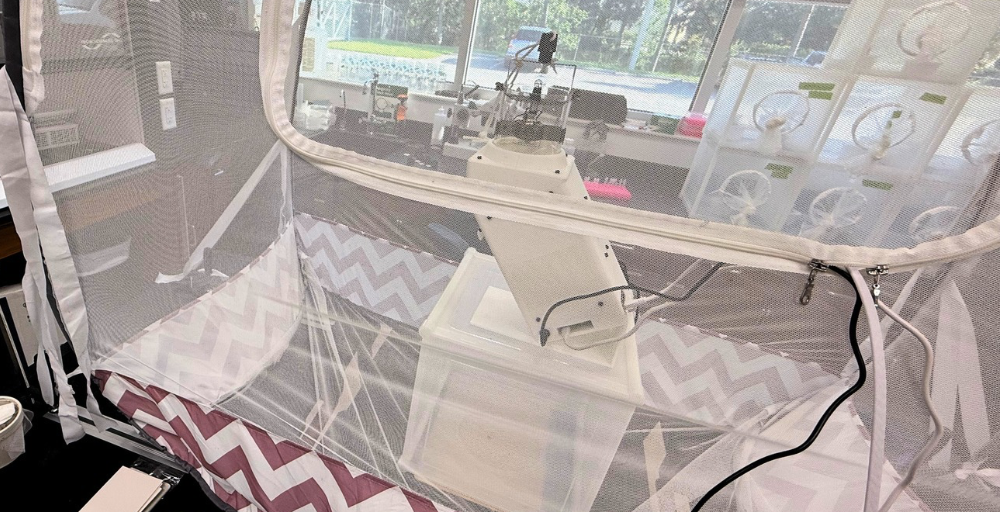
Carney and Chellappan are now working with the USF Technology Transfer office to license Digitomy to established mosquito trap manufacturers who can combine their existing equipment with USF's AI identification system.
"Mosquito-control programs wait days to learn what is in their traps," said Diana Shapiro, chief operations officer of Digitomyand operator for several USF ventures in USF Technology Transfer's Launch Program. "Our technology is built to tell them the same day, and to reach the places with the least to spend and the most at stake."
This summer, USF Innovation & Commercialization awarded Digitomy $25,000 through its Ventures Launch program - a new initiative that helps accelerate the licensing and commercialization of USF technologies.