
The Convention on Biological Diversity, or CBD, is one of the three conventions signed at the 1992 Rio Earth Summit. Every two years, representatives from 196 countries, and many non-governmental actors like Indigenous Peoples and civil society meet to discuss, negotiate and decide on measures to promote the protection of Earth's biodiversity. This year, the CBD's COP17 is happening in October, in Yerevan, Armenia.
While these meetings can sound like something very distant from our everyday lives, they are gatherings where crucial decisions, that directly impact our lives and the future of the planet, are taken. From deadly heatwaves to floods, extreme weather events are wreaking havoc on the world, taking thousands of lives and threatening millions more. So the COP is a moment where governments must listen to our voices and take action for the planet.
The world's forests are being devastated by industrial agriculture, logging, and by a new rush for minerals. Oceans are plundered by industrial fishing, and deep sea mining is threatening to destroy an area of our planet that has barely been studied. Healthy oceans and functioning forests are vital to maintain the planet's web of life. Protecting Earth's ecosystems is also crucial in the fight against the climate crisis, for the lives and livelihoods of Indigenous Peoples and local communities, and for the survival of thousands of species, including ourselves.

What is the most recent progress at the CBD?
In 2022, COP15 delivered the landmark Kunming-Montreal Global Biodiversity Framework (KM-GBF) to "take urgent action to halt and reverse biodiversity loss" by 2030. Protecting and restoring at least 30% of land and sea by 2030, the 30×30 targets, are key targets of the framework. This global commitment is not just an environmental aspiration, it is necessary to prevent irreversible ecosystem collapse and biodiversity loss and limit warming to 1.5°C. But the 30×30 target progress review must look beyond area coverage, and there is an equally important need to establish much better policy coherence with other conventions and agreements such as the Paris Agreement and the Global Ocean Treaty.
Other key targets of the KM-GBF are stressing the need to mobilise enough finance to implement the framework – through increasing public finance and finding innovative ways to do so, and through phasing out and reorienting harmful subsidies.
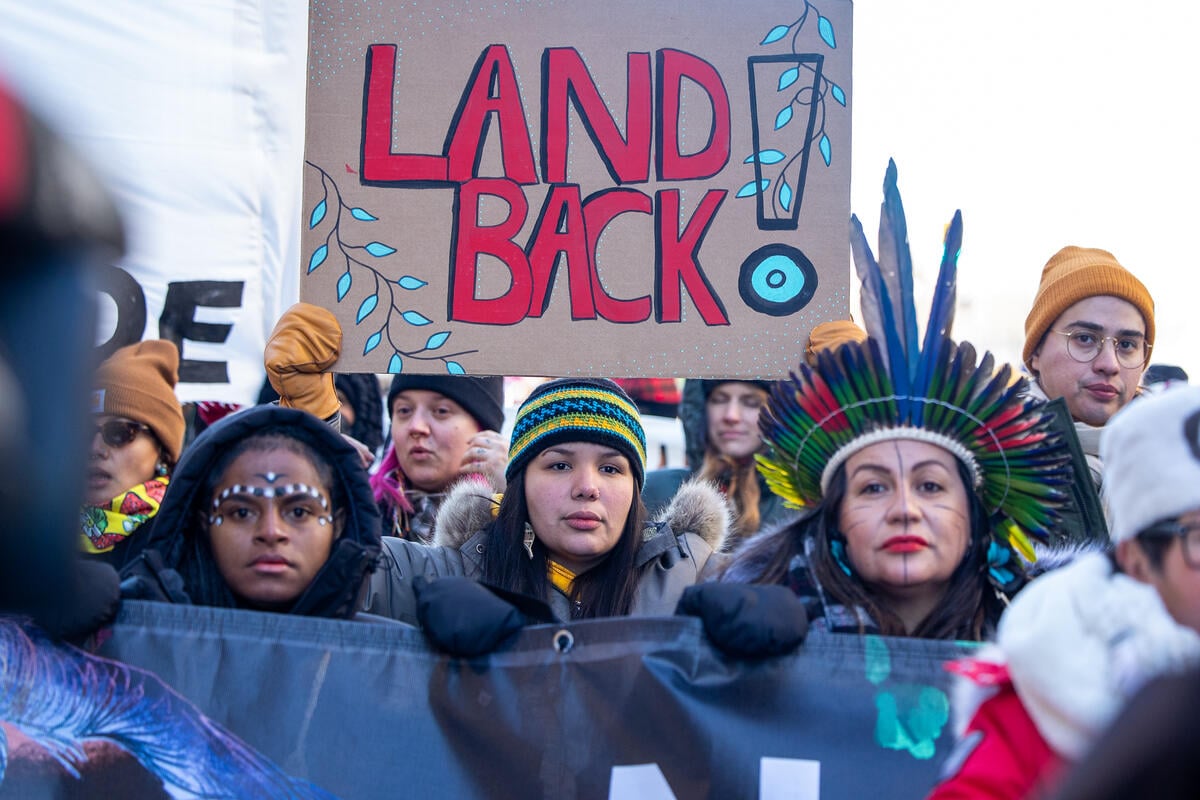
In 2024, COP16 established a new body (SB8j) dedicated to Indigenous Peoples' and local communities' rights, roles, territories and knowledge. Indigenous Peoples and local communities have protected Earth's vital ecosystems for generations while resisting colonialism and the extraction of the planet's natural resources. Their knowledge and relationship with nature demonstrate that ecosystems are most resilient when local peoples who depend on them have the power to defend and manage their territories. Yet, their participation in decision making processes related to their lands have been historically sidelined.
Recognising and respecting Indigenous Peoples' and local communities' rights, and recognising their contribution to conservation action is the foundation for closing the 30×30 implementation gap through a human rights-based approach, and the creation of the SB8j is a major step to ensure Indigenous Peoples' and local communities' equitable participation in decision-making at the CBD.

What governments must do at the CBD COP17
This year, governments will review the collective progress in the implementation of the Kunming-Montreal Global Biodiversity Framework, providing a critical moment to assess whether or not the world is on track to achieve its 2030 goals and targets. Governments must take this opportunity to deliver on their commitments by prioritising the protection and restoration of high integrity ecosystems through a human rights-based approach, and by closing the biodiversity finance gap with truly innovative approaches, such as the reform of global and national economic and fiscal policies.
Greenpeace is calling on governments to:
- Align their national biodiversity plans and strategies, spatial planning and conservation laws with international human rights standards, including the UN Declaration on the Rights of Indigenous Peoples (UNDRIP), Free, Prior and Informed Consent (FPIC) and equitable governance principles.
- Recognise and scale up Indigenous and local community-led conservation initiatives to close the implementation gap of the KM-GBF, particularly Goal A, Target 3, Target 22 and Section C, and support the recognition of Indigenous and Traditional Territories (ITTs) as a distinct, rights-based contribution to Target 3 implementation, without forcing them into protected areas or Other Effective Area-Based Conservation Measures (OECM) models.
- Support equitable, predictable and rights-based direct access finance mechanisms for Indigenous Peoples and local communities through existing and future biodiversity finance mechanisms, including the Global Biodiversity Framework Fund (GBFF), the Cali Fund, the Tropical Forests Forever Facility (TFFF) and other international funding structures.
- Ensure a coordinated approach between the Rio Conventions for Parties to meet the KM-GBF objectives, enhancing cooperation and policy coherence among the Conventions and maximising synergies between national plans and strategies and monitoring and reporting, to align implementation at the global level and prioritise action where it is most needed.
- Improve consistency across climate, biodiversity, human rights and trade-related reporting systems through a harmonised approach to definitions, monitoring methodologies, degradation indicators and ecosystem integrity metrics.
- Establish legal and regulatory frameworks that demonstrate due diligence to achieve the 2030 targets, including enforceable mechanisms for monitoring, transparency, accountability and remediation. Such frameworks should include a non-deterioration principle for primary and high-integrity ecosystems, preventing activities that cause measurable declines in ecosystem integrity.
- Align financial systems with due diligence obligations and ecosystem integrity objectives
- Phase out harmful industrial activities, rejecting offset-driven, extractivist, destructive approaches that damage ecosystems and biodiversity, undermine rights, or enable continued marginalisation of local people.
- Recognise forest degradation as a major driver of ecosystem loss, moving beyond narrow approaches to deforestation and forest-cover loss and adopting ecosystem-integrity-based approaches.
- Enhance synergies between the CBD and the Global Ocean Treaty (BBNJ) to drive a seamless network of fully and highly protected ocean sanctuaries across the blue planet, from coastal waters to the high seas, while safeguarding marine ecosystems against high-risk destruction such as deep sea mining through applying the precautionary principle and the phase-out of harmful public finance, subsidies and incentives.
How to correct the course on ecosystem protection
Indigenous Peoples, local and coastal communities' ways of life have always been shaped by a deep connection to their territories. They are proof that the path to healthy oceans and forests runs through the people protecting them. Two recent Greenpeace International reports showcase real solutions led by Indigenous Peoples, local and coastal communities, with examples of initiatives that can be strengthened and multiplied:
- The Real Community Solutions is an interactive map showing case-studies that demonstrate practical and effective pathways to forest protection through community-led initiatives, while highlighting how direct access to financial resources is essential to promote such initiatives with a decolonised approach to conservation.
- The report Global Ocean Justice Now makes the case that the world's '30×30′ ocean protection targets cannot be met through top-down conservation models that sideline coastal communities. Drawing on four in-depth case studies from Chile, Senegal, Sri Lanka, and Thailand, the report documents both the cost of exclusion and the results of community-led stewardship while arguing that rights-based conservation is not only the most just approach, but the most effective one.
The briefing Beyond Deforestation: Ecosystem Integrity and the Emerging Legal Paradigm, argues that existing legal and policy frameworks continue to underestimate the significance of forest degradation by focusing primarily on deforestation, while failing to adequately address the loss of ecosystem integrity caused by logging, extractive activity, and global commodity supply chains. This disconnect between ecological reality and legal governance has become increasingly clear, with the defining question for forest governance in the coming decade not simply being whether forests remain standing, but whether they remain functioning.
Greenpeace International, together with Mighty Earth, Rainforest Foundation Norway and Fern, released an indicative global Restricted Areas Map and Framework, which provides a prime example for why high integrity ecosystems need to be protected against extractive activities, and these activities need to be regulated, by making the argument that the proposed framework is a crucial step to ensure mining does not destroy essential biodiversity, natural ecosystems, carbon storage and freshwater systems.
Diego Gonzaga is a Communications Manager with Greenpeace International.


