Under Secretary of the Air Force Matt Lohmeier implored Airmen to pursue continuous personal growth, authentic leadership and intentional intellectual development during a keynote address at the Air Force Sergeants Association Professional Airmen's Conference.
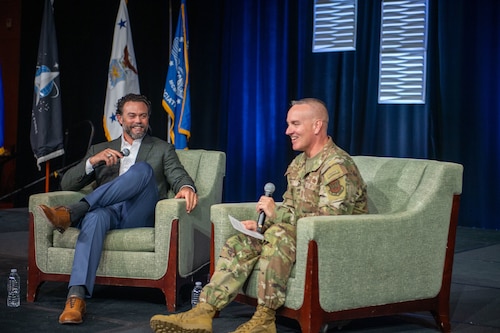
Lohmeier turned directly to the leader he would later share the stage with for a question-and-answer session: Chief Master Sgt. of the Air Force David R. Wolfe. As he centered his remarks on the third edition of Wolfe's "Why Series" essay on deliberate learning, integrating his own thoughts to illustrate why the Chief's message resonated deeply with him.
Reading Wolfe's words aloud to the crowded forum, Lohmeier highlighted a central premise that he believes defines modern military readiness.
"The most decisive advantage is no longer just physical or technological; it's cognitive," Lohmeier said, quoting Wolfe's text. "For members of the United States Air Force, the mind isn't simply a supporting asset; it's a primary weapon system, and like any weapon system, it must be deliberately developed, maintained, and strengthened."
While acknowledging the military's ongoing efforts to train and adapt to artificial intelligence, Lohmeier put a finer, more human point on the cognitive domain.
"AI will soon do things that even some of our best minds cannot," Lohmeier said. "But your minds, your values, and your psyche should be capable of doing things that AI will never accomplish. If we fail to do that, then we are failing as an Air Force, as an institution, and as human beings."
Lohmeier's insights are informed by his routine of breaking bread with frontline Airmen during installation visits. Meeting small groups of junior enlisted members for a lunch or breakfast session allows him to use those forums to gather feedback to carry back to the senior leadership team in the Pentagon.
"Overwhelmingly, I have received positive feedback from our youngest Airmen about the NCOs that they work with, our senior NCOs, and their chain of command," Lohmeier shared. "One of the things I've learned in my time meeting with these Airmen is that they resonate with authentic leadership. They crave authenticity in the workplace. When they get it, they respond appropriately, and they'll give you everything that they have to solve the tough challenges we're facing."
To illustrate what it means to lead authentically and from the front, Lohmeier-a former fighter pilot and Space Force officer-shared a lighthearted but pointed anecdote from a recent physical training session with student pilots at Vance Air Force Base, Oklahoma.
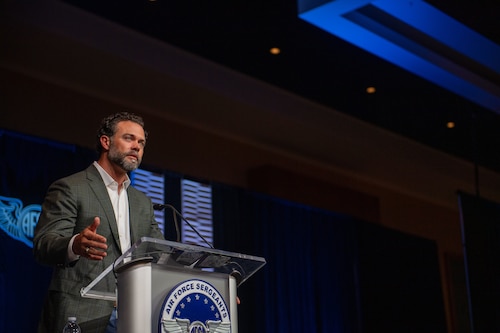
After a PT session, Lohmeier challenged the attendees to face him in a pull-up competition. Knowing he was facing a younger, more fit Airman, Lohmeier humorously admitted that he turned to "psychological warfare." He insisted they both jump onto the bar at the same time, allowing Lohmeier to control the pacing.
In Lohmeier's recounting of the challenge, he described inserting long, agonizing pauses in the hang position and asking his competitor mid-pull-up if he could perform behind-the-neck variations to break his opponent's focus. His opponent dropped off the bar just one repetition shy of the Under Secretary.
"I share that to say that I think they're inspired by your examples," Lohmeier told the conference attendees. "Our Airmen do best when they're led by NCOs and senior NCOs who are out leading in the front. You need to hold them accountable to the standards that we've set. It has to do with leaders and how they lead, serve, and set an example."
Reading as an act of service
A self-described avid reader, Lohmeier joked that younger Airmen are "big video gamers, but they're not big readers." He challenged the audience to reframe reading from a passive, box-checking activity into a critical component of combat readiness and moral character.
He argued that intellectual discipline is directly tied to the Air Force's first core value: Integrity First.
"Without this disciplined effort to read deeply, it's not entirely possible to become the most authentic version of yourself," Lohmeier explained. "If you've not accomplished the work that is necessary to fully develop yourself and fully discover and ground yourself in the values that define you, how can you ever truly have integrity? Rigorous study isn't just about intellectual stimulation; it's about values, about character development, and about pursuing the best version of yourself as you lean forward and serve others."
Lohmeier emphasized that this intellectual preparation is the foundation of military resilience, providing the mental clarity required to withstand disinformation campaigns from adversaries who seek to exploit fear, anger, and historical ignorance.
"As leaders, our job is to foster a culture that values and makes room for continuous learning," Lohmeier said. "Organizations that encourage Airmen to invest in their cognitive readiness create a force that is agile, innovative, and prepared-transforming learning from an individual effort into shared strength."
Following his prepared remarks, Lohmeier was joined on stage by Wolfe for a fireside chat, during which, Wolfe tacked onto the theme of reading, officially announcing the release of his latest reading list, the CMSAF Leadership Library: August 2026.
Lohmeier closed his remarks by giving the conferencegoers a reminder of their influence on the future of the force.
"You are the beating heart of the Air Force," Lohmeier said. "If I questioned it before this job-and I really didn't, because I was a squadron commander once too, I truly do believe that you are the beating heart. Your leadership is important, and your personal development is absolutely important as we try and shape the minds and hearts of those that you lead and serve."