Crooked teeth or a misaligned bite can cause a whole host of problems, including speech issues and/or difficulty eating or properly cleaning teeth. What many don't consider, however, is how a bad bite or crowded teeth can affect the health of other teeth in the mouth.
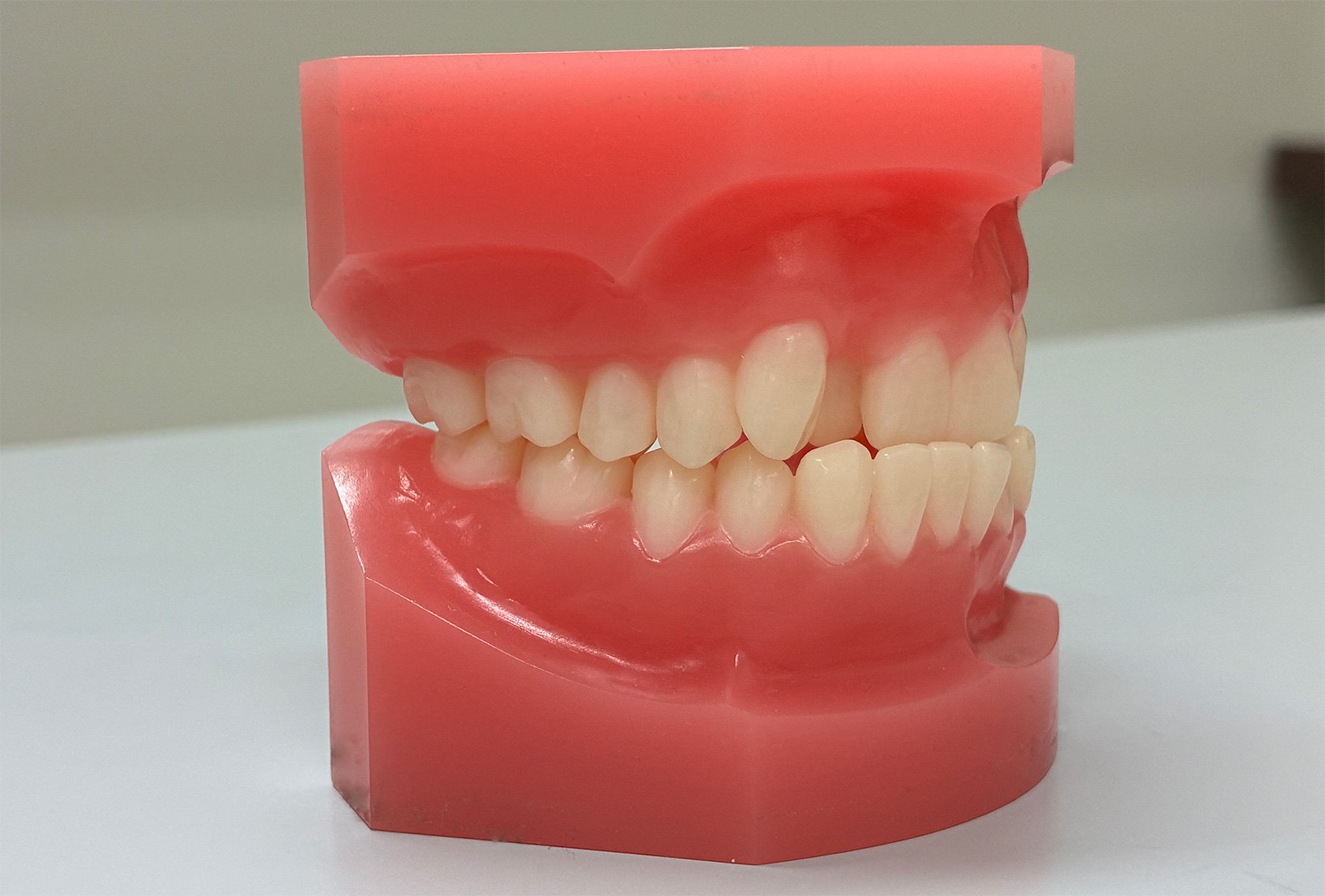
Malocclusions, or misaligned bites, refers to a condition in which the upper and lower teeth do not align properly when the mouth is closed. It can arise from a variety of factors, including tooth position and jaw relationships.
Previous studies have established associations between specific malocclusions and tooth loss. Two malocclusions in particular--crossbite and open bite--can change the way force is distributed to other teeth in the mouth when chewing food, which could influence the risk of tooth loss. To examine whether anterior crossbite or open bite are associated with tooth loss-related outcomes in adults aged 40 years and older, a group of researchers from Tohoku University designed an observational study.
The team published the study on January 8 in the journal Clinical Oral Investigations.
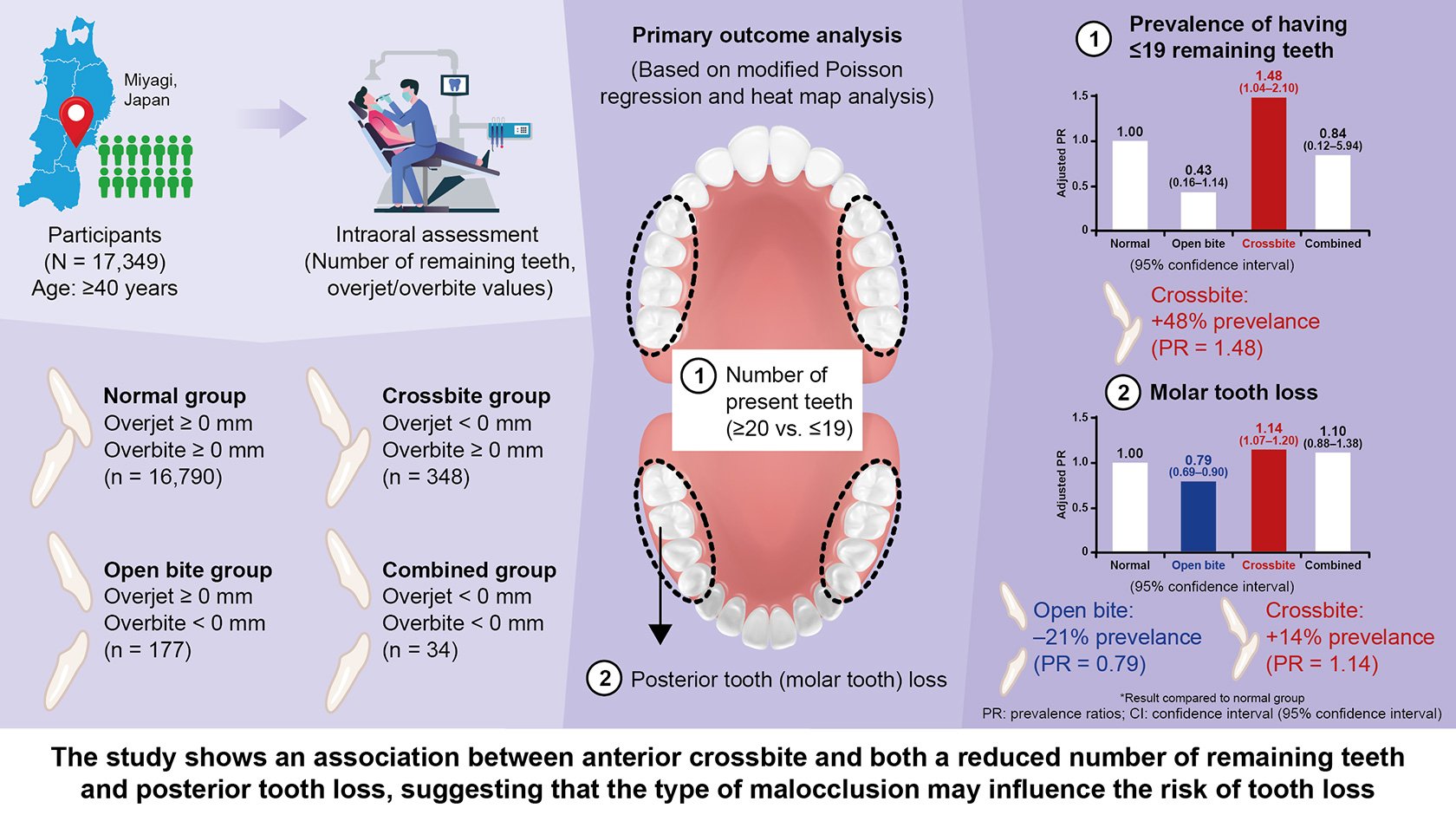
The research team compiled data from 17,349 adults aged 40 years and older from the Tohoku Medical Megabank Project Community-Based Cohort Study and categorized them into four groups--normal occlusion, anterior open bite, anterior crossbite and combined malocclusion--based on oral measurements. The team then determined whether patients had ≤19 remaining teeth and posterior (back of the mouth) tooth loss to assess the potential effects of anterior crossbite and open bite compared to a normal bite.
"Using one of the largest general population-based datasets, this study shows that anterior crossbite is associated with a higher prevalence of tooth loss in adults. Having fewer than 20 teeth affects chewing, nutrition, frailty, and healthy life expectancy; therefore, identifying this risk is important for public health. Our findings suggest that bite alignment, in addition to cavities and gum disease, may be related to long-term tooth retention. This highlights the importance of regular dental checkups and appropriate orthodontic evaluations," said Kento Numazaki, assistant professor in the Division of Orthodontics and Dentofacial Orthopedics at Tohoku University Graduate School of Dentistry and first author of the research paper.
Specifically, the study found that adults with an anterior crossbite (but not anterior open bite) exhibited a higher likelihood of tooth loss and a 1.14-fold higher risk of losing molars after adjusting for age, sex, oral hygiene, caries, periodontal disease and lifestyle factors. Further age-stratified analyses showed that differences in molar retention between occlusal groups were more pronounced in older age groups.
In contrast, adults with an anterior open bite had a lower prevalence of posterior tooth loss in the study, suggesting that different anterior malocclusions may influence tooth retention in distinct ways.
The study leveraged one of the largest general population-based cohorts (the Community-Based Cohort Study and Three-Generation Cohort Study)[真千1] and provides the first clear population-level evidence linking anterior crossbite to tooth loss. Armed with these initial findings, the research team plans to further investigate the effects of anterior crossbite on tooth loss and oral health beyond Japan.
"The next step will be to conduct longitudinal studies to better understand how tooth loss progresses over time in individuals with anterior crossbite," said Numazaki. "In the longer term, we hope to explore whether the associations observed in Japan are also seen in other populations, potentially through future international collaborations."
- Publication Details:
Title: Association of anterior crossbite and open bite with the number of remaining teeth: A cross-sectional study from the Tohoku Medical Megabank Cohort
Authors: Kento Numazaki, Toru Tamahara, Takamasa Komiyama, Takako Numazaki, Maki Goto, Ritsuko Shimizu, Itaru Mizoguchi, Kaoru Igarashi, Hiroyasu Kanetaka
Journal: Clinical Oral Investigations