
New funding will enable a University initiative to help more small manufacturers access affordable digital technology and improve productivity.
Key facts
- The Government has committed up to $475,000 per year for three years from 1 April 2026 to expand the University of Auckland-led Digital Manufacturing Light programme.
- Digital Manufacturing Light is delivered by researchers from the University's Laboratory for Industry 4.0 Smart Manufacturing Systems and supports SMEs to adopt practical, low-cost digital technologies.
- The programme was first piloted in 2022 in partnership with Auckland Council.
A University of Auckland initiative that helps manufacturers adopt low-cost digital technologies is set to expand under a new three-year Government funding commitment.
From 1 April 2026, funding of up to $475,000 per year will support the expansion of the University-led Digital Manufacturing Light programme, enabling more small and medium-sized enterprises (SMEs) to increase digitalisation in their operations. The programme will continue in Auckland and expand into parts of Waikato, Northland and the Bay of Plenty, reaching around 55 percent of New Zealand's manufacturing businesses.
Digital Manufacturing Light is led by Dr Jan Polzer and Professor Xun Xu from the Faculty of Engineering and Design's Laboratory for Industry 4.0 Smart Manufacturing Systems (LISMS). It builds on the Digital Manufacturing on a Shoestring framework developed by the team led by Professor Duncan McFarlane from the Institute for Manufacturing at the University of Cambridge.
Between 2022 and 2025, LISMS worked in partnership with Auckland Council to test and adapt the Shoestring programme for the New Zealand market, launching a 12-month Digital Manufacturing Light pilot on 1 July 2025 with 12 Auckland companies. The programme development has also involved Advanced Manufacturing Aotearoa and the Employers and Manufacturers Association.
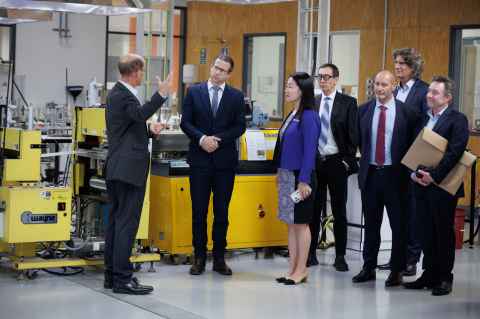
The work drew the attention of Small Business and Manufacturing Minister Hon Chris Penk, who visited the Faculty of Engineering and Design in July 2025 to meet the researchers and learn more about the programme.
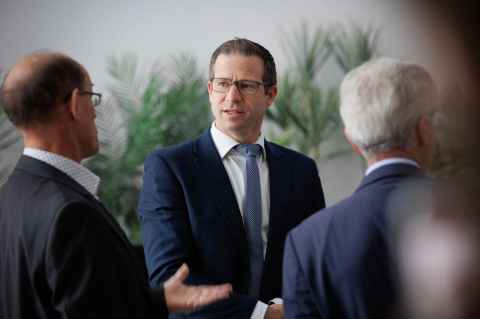
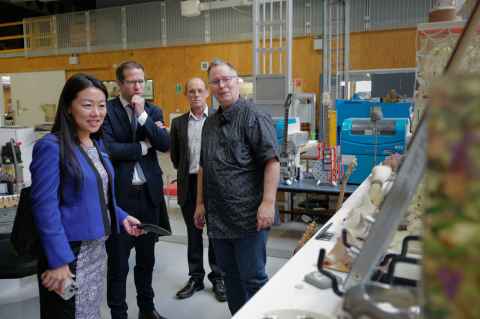
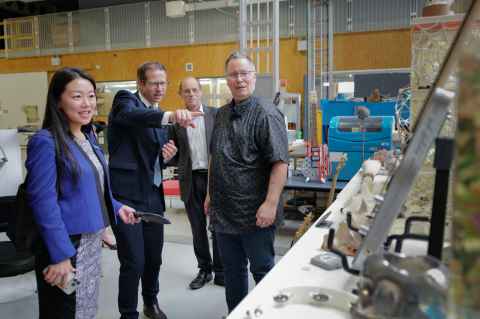
Xu says the pilot demonstrated how the University's engineering expertise could translate international best practice into practical solutions for New Zealand SMEs.
"Most manufacturing firms are small, operating with limited capital and older machinery. Our Auckland pilot showed that accessible, low-cost digital tools can quickly improve productivity, operational visibility and product quality."
Polzer says Digital Manufacturing Light helps SMEs take their first steps into digital tools without the high costs or complex systems that often hold them back.
"Our focus is on helping New Zealand manufacturers develop practical digital capability and apply proven technologies to improve operations. This programme is a clear example of how we can work directly with industry to solve real problems and strengthen technical capability across the sector."
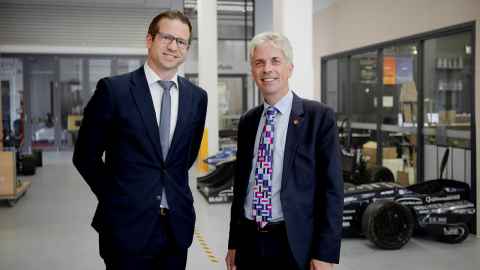
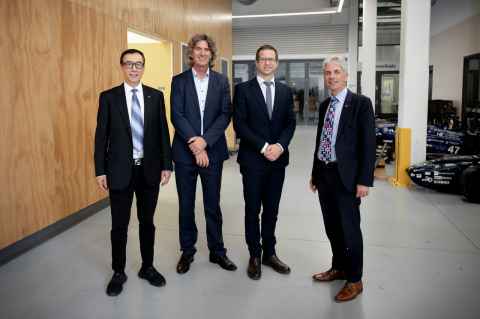
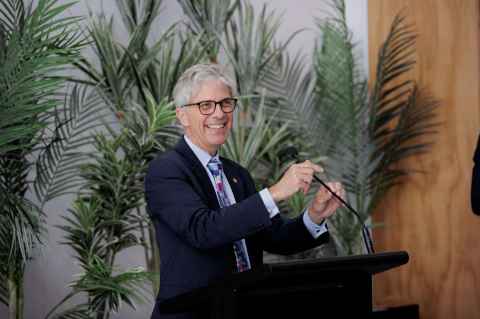
The investment was announced by Minister Penk at the University's Newmarket Innovation Precinct on 24 February.
"Backing programmes like Digital Manufacturing Light is a smart, targeted investment that helps smaller firms grow, innovate, and contribute to our economy and communities," he says.
Pam Ford, General Manager of the Economic Development Office at Auckland Council, says it's rewarding to see the next phase of Digital Manufacturing Light come to life to benefit small-to-medium-sized manufacturing businesses.
"After four years' investment and collaboration with the University of Auckland, the University of Cambridge and other partners, our team looks forward to seeing these innovative digital solutions make a positive impact on businesses in Tāmaki Makaurau and across the country. By adopting these cost-effective digital solutions, businesses can be part of the future of manufacturing."


